STA Urges SEC to Set Rules for Tokenized Stocks
The industry group says only issuer-approved tokens should fall under new SEC rules to protect ownership, voting rights, and custody risk.
Key Takeaways
- The STA wants the SEC to give issuer-sponsored tokenized securities priority over tokens issued by intermediaries in any new rules.
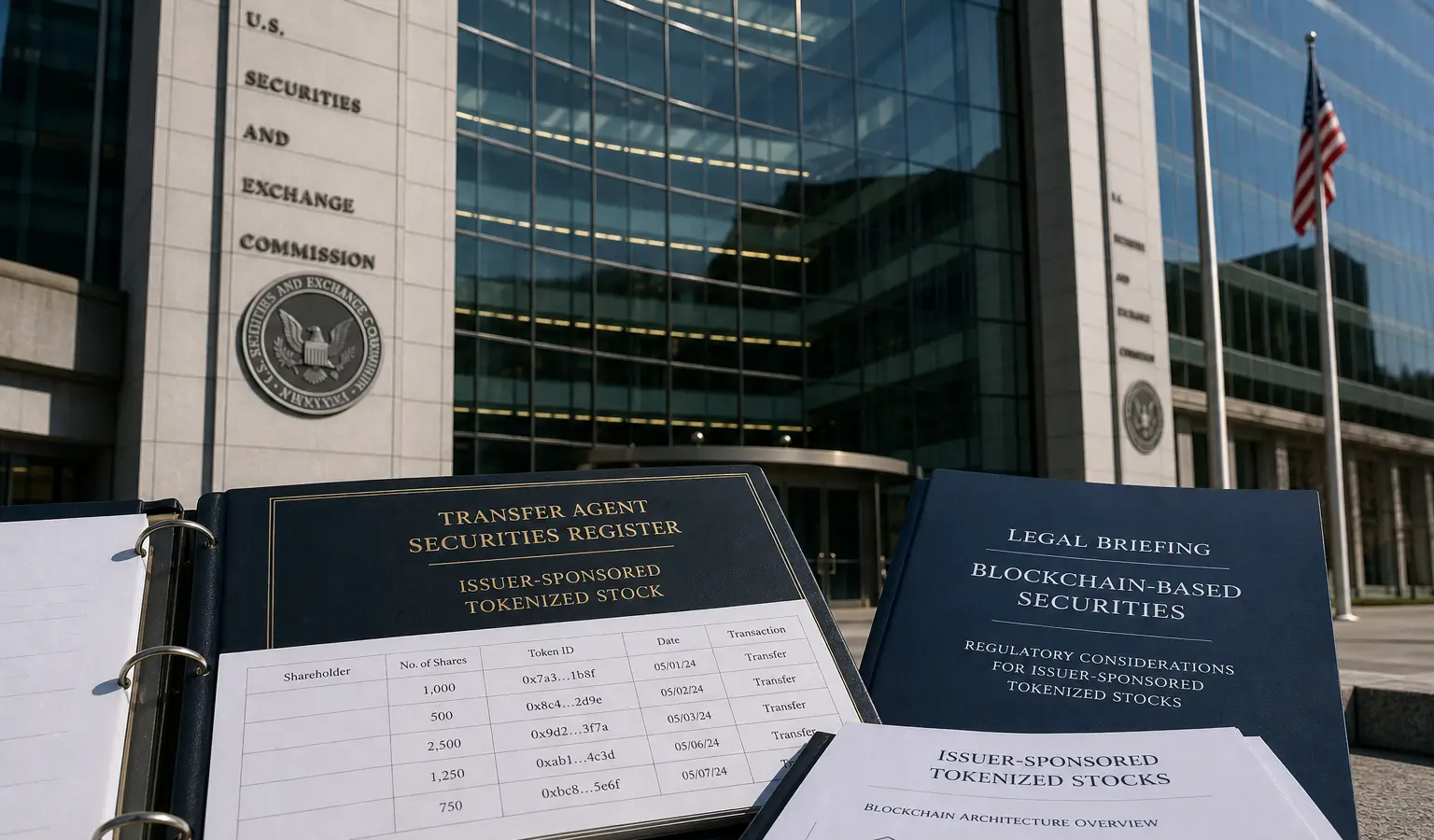
- The group says tokenized stocks should be approved by the issuing company and recorded in the official shareholder register.
- The outcome could also matter in Europe, since the U.S. approach may influence how real ownership and synthetic exposure are separated globally.
The push to bring stocks onto blockchain rails is now heading to Washington. The Securities Transfer Association (STA), a trade group for transfer agents whose members include major Wall Street firms, is asking the SEC to make sure issuer-sponsored tokenized securities come before third-party tokens in any new framework.
Who Owns What
At the center of the issue is a basic question: who actually has legal control? The STA says blockchain-based stocks should be genuine securities approved by the issuing company and reflected in the official shareholder register, not tokens minted by an outside platform.
That puts transfer agents in a key position. They keep the official shareholder records, handle ownership changes, and determine who legally owns securities. In the STA’s view, that makes them a necessary part of how tokenized equities should function.
The SEC already drew a distinction in January between issuer-sponsored and third-party tokenization, although that staff guidance does not have formal legal force. Even so, it signals that the regulator does not view the market as a single product, but as several structures with different rights and risks. In June, the agency also floated a temporary tokenization path in a separate proposal for tokenized securities.
Pressure on Synthetic Models
The STA warns that third-party tokenized stocks could leave investors exposed to credit, custody, and operational risks tied to the platform that issues the tokens. The group also says these products could muddy the waters around voting rights and other shareholder rights, since they are not directly entered on the issuer’s books.
That concern is growing as tokenization becomes a bigger theme across crypto and traditional finance. Asset managers, crypto firms, and brokerages are all working to move stocks, bonds, and funds onto blockchain networks. Citi has previously estimated that tokenized securities could reach a $5.5 trillion (€4.8 trillion) market by 2030 in a base-case scenario.
Different models are already competing in that space. Under an issuer-sponsored setup, the company itself authorizes the tokenized shares and records them in the official register. Other approaches rely on a custodian or on synthetic products that mainly track a stock’s price rather than represent direct ownership.
Why This Matters for Europe
For European crypto readers, this is not just an American regulatory debate. The final outcome could help shape how quickly tokenized stocks move from a test case to a regulated market worldwide, especially as major exchanges and brokerages continue experimenting with onchain securities. For companies already building tokenization products in Europe, the U.S. approach could also influence how sharply the line is drawn between real ownership and synthetic exposure.
That is why the STA wants the SEC to limit any innovation exemption, pilot, or permanent framework to issuer-sponsored models only. The group is also calling for an update to the Direct Registration System, arguing that the current process between DTCC and transfer-agent records is too slow for tokenized markets.
The debate has become more urgent after earlier cases involving synthetic stock tokens. Last year, OpenAI publicly distanced itself from a Robinhood tokenized product tied to its shares, saying it had not approved the product and that the tokens did not represent actual equity.
The SEC has not yet put forward formal tokenized securities rules. But with Coinbase, Robinhood, Nasdaq, the New York Stock Exchange, and DTCC all moving toward onchain stocks, the regulator’s decision could end up setting the standard for which models take hold in the U.S. and what rights investors receive.