Standard Chartered Sees ARB Reach $10 on Robinhood Chain
Standard Chartered points to Robinhood Chain as a growth driver for Arbitrum, but ARB holders do not get a direct claim on that revenue. The upcoming token unlock is also still a risk.
Key Takeaways
- Standard Chartered started coverage of Arbitrum and sees ARB rising to $10 by the end of 2030.
- The bank mainly ties that outlook to Robinhood Chain, which pushed Arbitrum’s monthly revenue to about $5 million.
- ARB holders have no direct claim on that revenue, while another 92.6 million ARB will unlock on September 16.
Standard Chartered began covering Arbitrum’s ARB token on Tuesday and sees the price climbing to $10 (€8.66) by the end of 2030. That is about 70 times the current price of around $0.14 (€0.12). The bank mainly links that outlook to the revenue Arbitrum gets from networks from parties like Robinhood.
Robinhood Chain Drives Revenue Higher
According to Geoffrey Kendrick, global head of digital assets research at Standard Chartered, Robinhood Chain has pushed Arbitrum’s September revenue toward a monthly run rate of about $5 million (€4.3 million). That is more than five times higher than before the chain launched in July. ARB rose nearly 7% over the past 24 hours, while the broader crypto market fell.
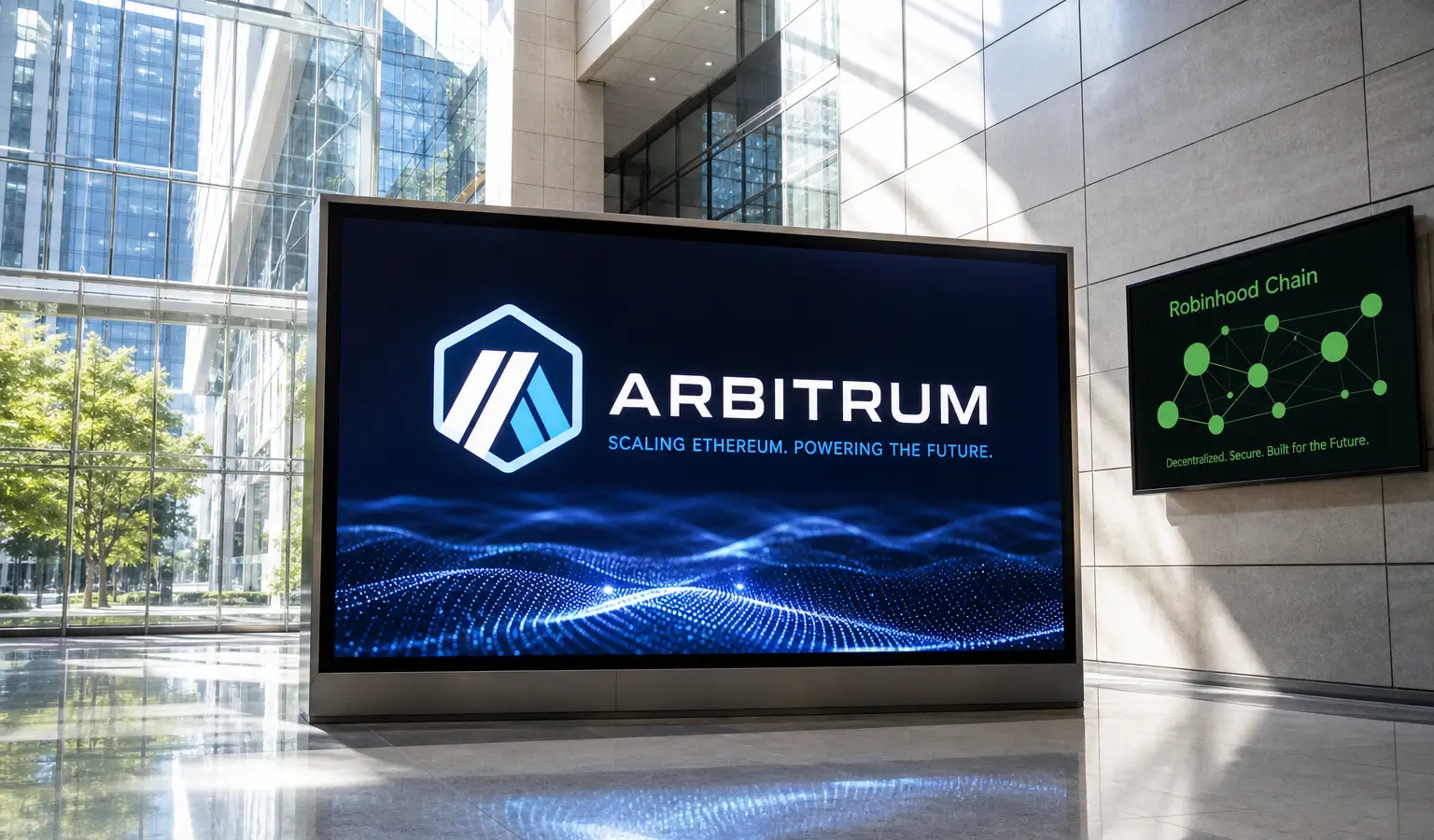
The bank sees Robinhood Chain as an important example of how traditional financial firms can bring assets on-chain. Kendrick wrote that the recent launch shows Arbitrum could become a preferred network for TradFi. At the same time, there is a clear caveat: ARB holders do not currently have a direct claim on that revenue.
Revenue and Unlocks
Robinhood Chain pays 10% of its net protocol revenue to the Arbitrum ecosystem. Of that, 8% goes to the DAO treasury and 2% goes to a development fund. According to earlier reporting, none of that flows directly to token holders. The chain paid about $360,000 (€311,700) in licensing fees in July and was generating $3.75 million (€3.2 million) in user fees per day in early September, with around $370,000 (€320,300) going to Arbitrum in 24 hours.
The Arbitrum DAO reported income of $6.19 million (€5.4 million) in the first half of 2026, with gross margins on protocol revenue of more than 97%. That highlights how large the margins can be in this kind of infrastructure, even if that revenue does not automatically translate into direct value for ARB holders.
Kendrick expects around $4 trillion (€3.5 trillion) in traditional assets could be tokenized by the end of 2028. He sees Arbitrum providing a bigger share of the infrastructure for that. The bank does flag risks, including slower tokenization and competition from other Arbitrum rally.
What Investors Can Take Away
For European crypto followers, the key point is that a major bank is looking at Arbitrum not just as a token, but also as infrastructure for tokenization. That fits into a broader trend where traditional firms are experimenting with on-chain products and their own networks. At the same time, the analysis shows that revenue growth in an ecosystem does not automatically mean token holders benefit directly.
Timing matters too. Robinhood is subsidizing gas fees for users of the official Robinhood Wallet for another 90 days, a setup that expires around the end of September. On top of that, another 92.6 million ARB is set to unlock on September 16.