Swiss Franc, Gold, and Bitcoin Stand Out in Savings Study
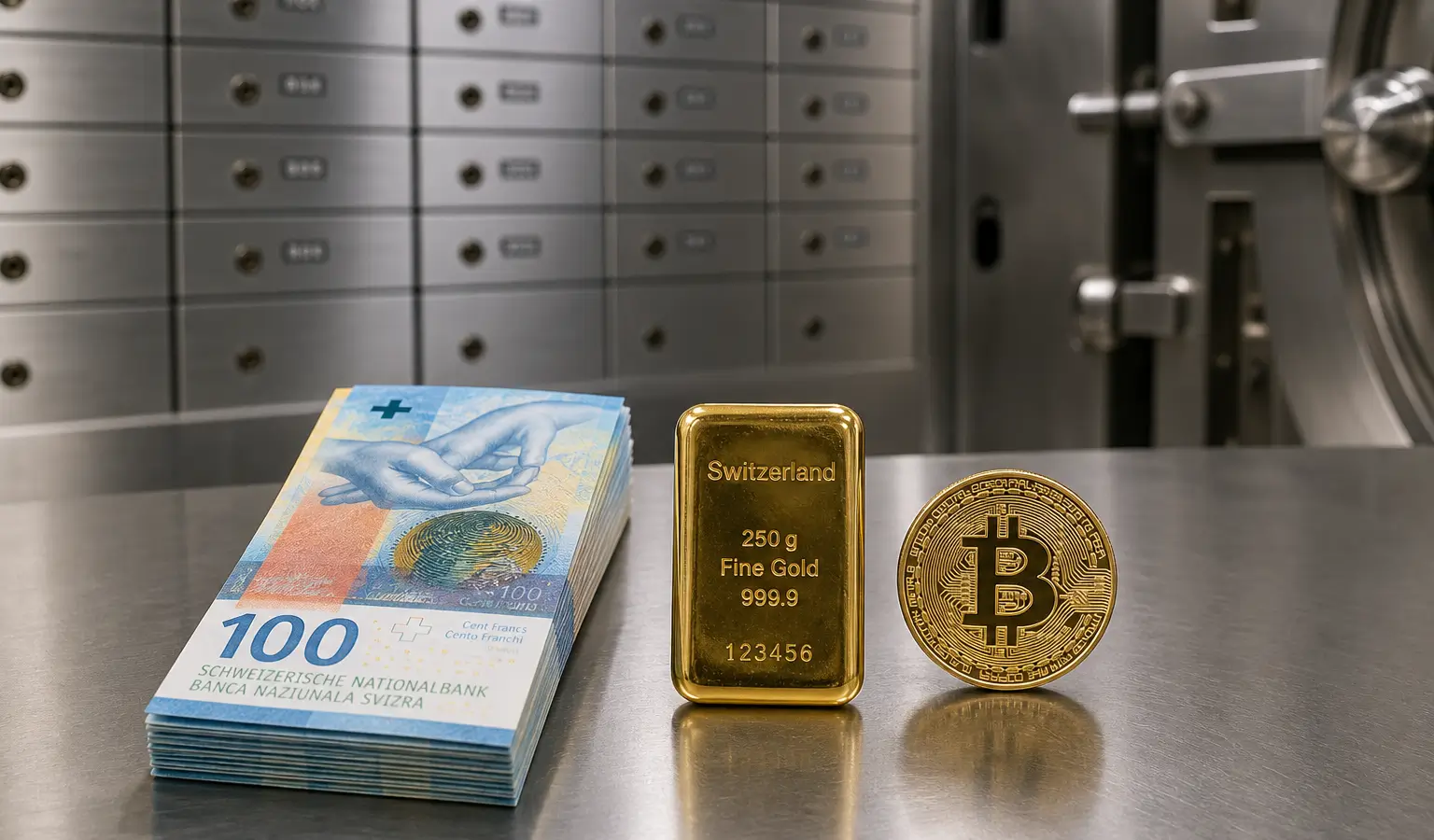
The study places Bitcoin alongside gold and the Swiss franc as savings tools, while the dollar mostly keeps its role as a liquidity currency. For long-term purchasing power, inflation is still the deciding factor.
Key Takeaways
- A 55-year test shows that no single currency is the best savings option in every situation.
- The Swiss franc came out as the strongest government-backed currency, but it still usually did not keep up with U.S. inflation.
- Gold offered long-term protection, and Bitcoin delivered high returns, but with steep drawdowns along the way.
There is no one-size-fits-all currency for saving. Over a 55-year test, the U.S. dollar came out as the main liquidity tool, gold as the better long-term store of value, and Bitcoin as the high-risk, high-upside option. The Swiss franc ranked as the strongest government-issued currency in the study, but even it failed to outpace U.S. inflation across most long stretches.
What the Test Measures
The study went beyond simple price performance and focused on what money is actually supposed to do. It compared seven government currencies with gold and Bitcoin across purchasing power, crisis usefulness, maximum drawdowns, portability, and the ability to hold value without relying fully on one institution.
That makes the findings more useful than a basic exchange-rate comparison. A currency can look steady and still lose buying power, while an asset with strong returns may still be a poor choice for emergency cash. For savers, the main takeaway is that the right option depends on the job the money needs to do, not on a single universal winner.
Dollar, Gold, and Bitcoin
In the study, the dollar mostly functioned as the working currency. That reflects its deep liquidity, its status as the world’s reserve currency, and its broad use in trade, debt, and emergency funding. Even so, the research also showed that holding dollar cash was a weak way to protect against inflation over the long run.
Gold, by contrast, held up well as a long-term hedge. It preserved purchasing power more consistently than most fiat currencies and benefited from being scarce and not tied to any central issuer. In Switzerland’s case, that stands out even more: the country has long been viewed as a safe haven, with a history of low inflation and a central bank that still holds a large gold reserve.
Bitcoin posted the strongest return in the shorter test period that began in late 2013, though it also came with sharp drawdowns along the way. The study notes that in the four available 10-year windows, it beat U.S. inflation every time, but that sample is still limited. For money that may be needed soon, those swings remain a serious drawback.
Why This Matters
For European crypto readers, the study is a reminder that Bitcoin is often compared with gold, but it does not serve the same purpose as cash. If you live in euros, the first question is the currency you use every day, and only after that comes the question of what to hold for the long term. That makes the savings debate less about ideology and more about practical use.
The research also lines up with a broader trend: digital dollar products such as stablecoins and tokenized Treasuries are expanding the dollar’s reach on blockchain networks. That does not change the dollar’s core role, but it does show how traditional money and crypto are increasingly sharing the same financial rails.