Switzerland Approves First Spot Bitcoin ETF on SIX
FINMA is making an exception to Switzerland’s diversification rules, allowing BBIT to offer direct exposure to Bitcoin through SIX. Banks and brokers outside Switzerland can also take part.
Key Takeaways
- Switzerland approved its first spot Bitcoin ETF on the SIX Swiss Exchange on October 20.
- FINMA made an exception to the diversification rules for investment funds for the Bitcoin Fund ETF.
- About 90 banks and brokers can take part in the ETF through the trading platform.
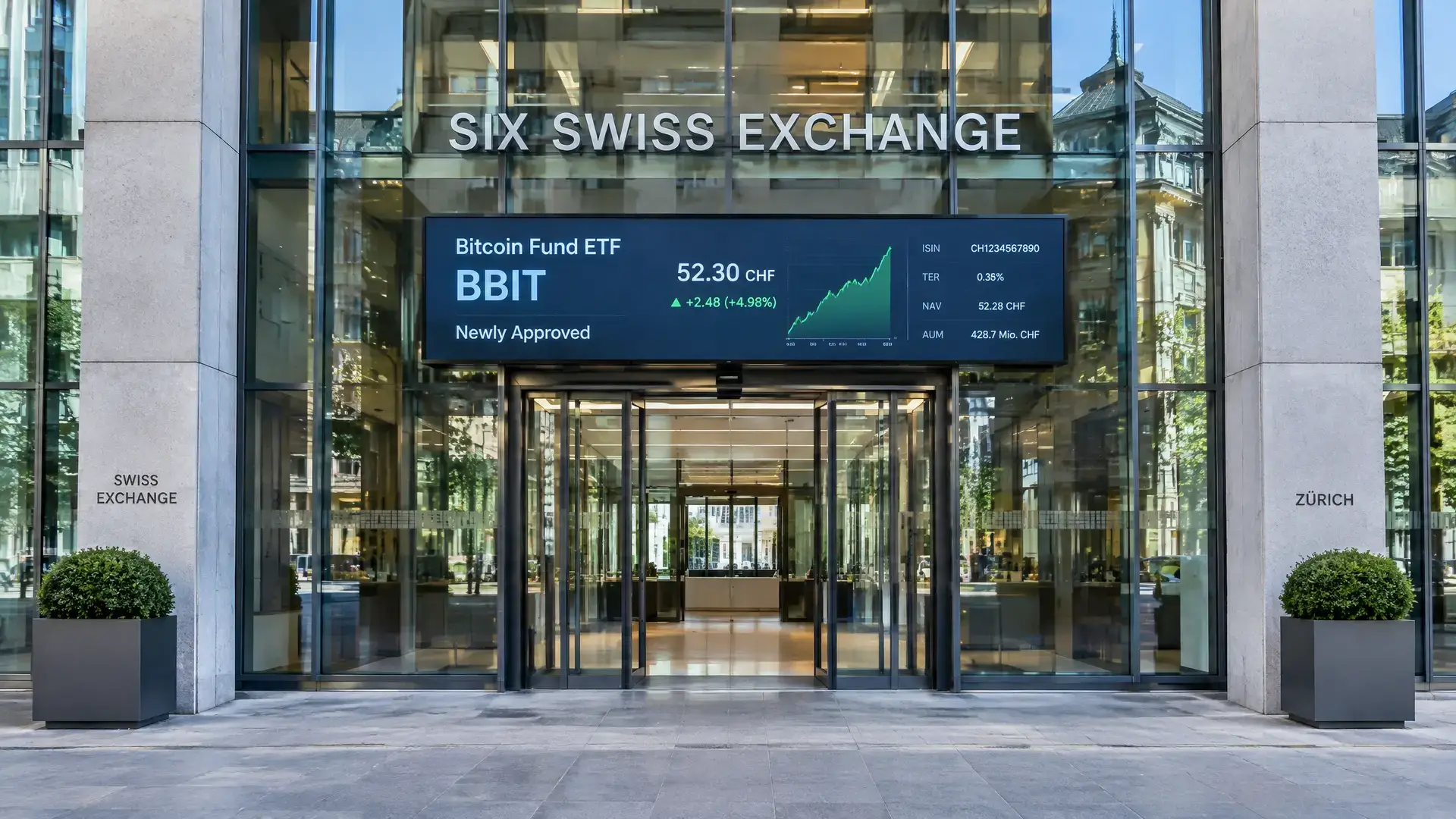
Switzerland has approved its first spot Bitcoin ETF on the SIX Swiss Exchange. The FINMA regulator gave the green light on October 20 for the Bitcoin Fund ETF, or BBIT for short. That means the fund can invest directly in Bitcoin and could attract both retail and institutional investors once the listing goes live.
Rules Loosened for Bitcoin
The approval stands out because Swiss investment funds normally have to spread their money across multiple assets. FINMA made an exception for BBIT, partly because of Bitcoin’s long trading history and high trading volumes. According to the regulator, that decision does not automatically mean that funds in other cryptos, such as Ethereum or Solana, can follow the same path.
BIT Asset Management says the fund gives everyday investors access to Bitcoin through a regulated fund, without them having to buy or store the coin themselves. That’s different from many existing Bitcoin products in Europe, which are set up as debt instruments from financial companies. With BBIT, the Bitcoin holdings are kept separate from the manager’s assets, which could give investors extra legal protection if that company runs into financial trouble.
What This Means for Investors
For European crypto followers, this is especially relevant because Switzerland is taking a different route than the European Union. The European Systemic Risk Board says regular retail funds in the EU are not allowed to invest directly in Bitcoin. Switzerland’s move shows that national regulators in Europe still have room to take their own approach to crypto investment products. The question is also still open elsewhere in Europe about how far regulators want to go: in Thailand, Bitcoin and Ethereum ETFs were recently opened up to the local exchange, although different rules still apply there for access and distribution.
Access Through Banks and Brokers
According to SIX, about 90 banks and brokers from Switzerland and abroad can take part through the trading platform. International firms can access the ETF directly or through an existing trading participant, but whether they can also offer the shares to clients depends on the rules in those clients’ country. FINMA also said that other companies already have applications pending for similar crypto funds, although it is not known exactly how many cases are being reviewed right now.