Taiko Restores Bridge After $1.7 Million Hack
After the hack tied to a leaked SGX signing key, reserves have been topped up and the bridge is open again, with strict withdrawal quotas and a post-mortem coming soon.
Key Takeaways
- Taiko brought its cross-chain bridge back online ten days after the June 22 hack.
- The attack used a compromised SGX signing key, which let the attacker drain about $1.7 million.
- Taiko says all users have been compensated and the bridge is open again with conservative withdrawal quotas.
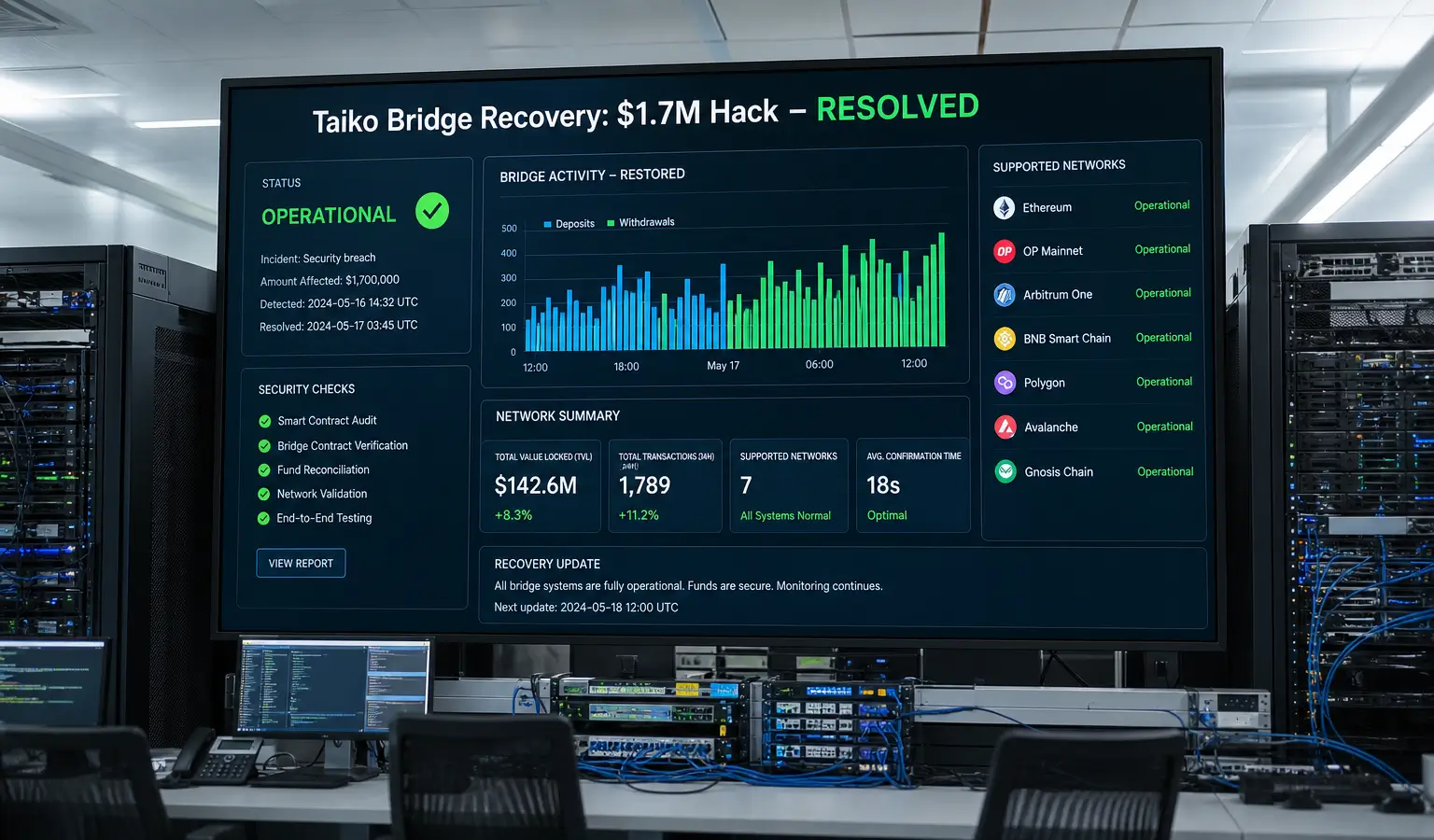
Taiko has reopened its cross-chain bridge ten days after the Ethereum layer-2 network was hit by a hack on June 22. The fast turnaround stands out in a year when bridge exploits remain one of crypto’s most persistent security problems, with hundreds of millions of dollars already lost to these attacks in 2026.
How the Hack Happened
Taiko said the breach started with a compromised SGX signing key that was accidentally exposed on GitHub. With that key, the attacker was able to forge withdrawal proofs and drain about $1.7 million (€1.5 million) from the bridge and the ERC20 Vault contracts. After the attack, the protocol shut down operations so it could patch the issue and contain the fallout.
The team says the bridge is now fully restored after a multi-step recovery process. That included refilling reserves so they were back to full 1:1 backing, bringing layer-2 activity back online, and getting the fix cleared through an independent security review. The bridge has also been reopened with conservative withdrawal quotas to reduce the risk of instability.
What Taiko Has Restored Now
On Thursday, the project said on X that the bridge is live again and that users can once more move funds in and out of Taiko. It also said every affected user has been compensated, while warning that the team never reaches out by DM first and that there is no claim site. Taiko added that it will publish a full post-mortem on the incident soon.
That response lines up with a wider shift in DeFi, where teams are leaning more heavily on tighter controls, trust-minimized cross-chain tools, and stronger risk models after bridge exploits. The sector is under added pressure from a steady run of attacks on bridges and other infrastructure, which has pushed security higher on the priority list for both users and developers. In June alone, crypto platforms lost tens of millions of dollars to hacks, including several incidents where private keys were a key part of the breach.
Why This Matters for Europe
For European crypto investors, the incident is a reminder that a protocol can recover quickly after a hack, but it also shows how much still depends on key management and security procedures. That is especially important for users of layer-2 networks and cross-chain products, since bridge risk directly affects how tokens move between networks.