Taiwan Approves Crypto Law With Licenses and Reserves
The Virtual Asset Service Act requires exchanges and other providers to get FSC licenses, while stablecoins must hold 100% reserves and keep them in local custody.
Key Takeaways
- Taiwan has passed the Virtual Asset Service Act, bringing crypto providers under tighter licensing, reserve, and compliance rules.
- Stablecoin issuers need approval from both the central bank and the FSC, and must keep 100 percent reserves at domestic financial institutions.
- Violations can carry steep prison terms and fines, while existing firms will get a grace period to apply for licenses and secure full approval.
Taiwan has moved crypto regulation forward with a new law that places exchanges and other service providers under much tighter oversight. The Virtual Asset Service Act is designed to formalize the industry through licensing, reserve rules, and strict penalties for violations.
Licenses for All Providers
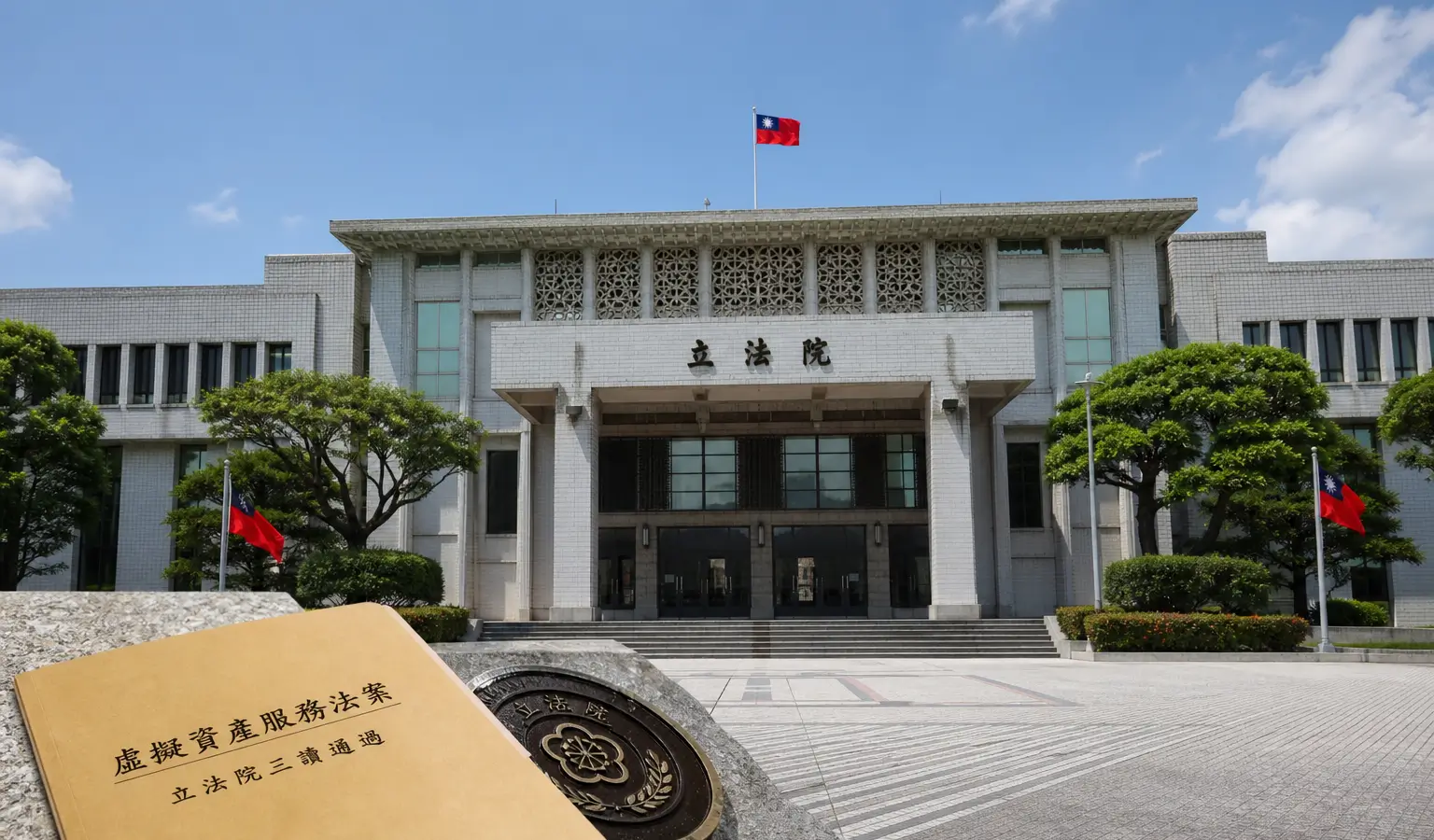
The parliament, the Legislative Yuan, passed the law on Tuesday in its third reading. It now goes to President Lai Ching-te for formal signing, which is expected within ten days. After that, the Executive Yuan will set the date when the rules officially come into force.
Under the law, every virtual asset service provider must receive explicit approval from the Financial Supervisory Commission, or FSC, before operating legally. That covers exchanges as well as other platforms and services that fall under the new licensing regime. The FSC has served as Taiwan’s main virtual asset regulator since 2023, and until now its work has largely centered on anti-money laundering and counter-terrorism financing rules.
Stricter Requirements for Stablecoins
Taiwan is taking an even tougher approach to stablecoins. Issuers will need approval from both the central bank and the FSC, and they must maintain 100 percent reserves at all times. Those reserves have to be held in trust at domestic financial institutions, which keeps them separate if an issuer runs into bankruptcy.
The move also reflects a wider global debate over the risks tied to dollar-pegged stablecoins. The Bank for International Settlements recently flagged currency risks linked to this kind of token, since its value depends on an outside reference such as the U.S. dollar or another fiat currency.
Heavy Penalties for Violations
Taiwan is backing the new licensing framework with serious penalties. Anyone offering crypto platforms or stablecoin services without authorization could face up to seven years in prison and fines of up to NT$100 million (€87.8 million), or about $3.14 million (€2.8 million). For market fraud or price manipulation, the punishment is even harsher: three to ten years in prison and fines ranging from NT$10 million (€8.8 million) to NT$200 million (€176 million).
Existing firms will get time to adjust. Companies already registered for AML compliance will have 12 months to file a license application and up to 21 months to obtain full approval from the FSC and any other required licenses.
What This Means for the Region
For European crypto readers, the main point is that Taiwan is adopting a model that combines licensing, custody rules, and enforcement in a single law. It also shows how regulators outside Europe are increasingly treating crypto more like a regulated financial market than a loose tech sector.
Other jurisdictions are tightening their own entry rules as well. In Australia, for example, a new Travel Rule for crypto transfers is set to take effect, requiring regulated firms to connect identity data to transactions.
The law also includes a nonbinding request for the FSC to deliver a plan for crypto derivatives within a year. That does not change policy right away, but it could be an early sign that Taiwan’s regulatory framework will keep expanding in the months ahead.