
Thailand Plans Audits for USDT Transactions in New Crackdown
The central bank and Thailand's SEC are linking stablecoins to anti-money laundering checks, alongside tighter rules for large cash deposits and gold trading.
Key Takeaways
- Thailand is tightening oversight of USDT transactions and large cash flows even further.
- The central bank is working on new rules for deposits starting at 5 million baht, along with joint audits with the securities watchdog.
- Gold trading and banknote exchanges will also face stricter oversight to make suspicious money flows easier to spot.
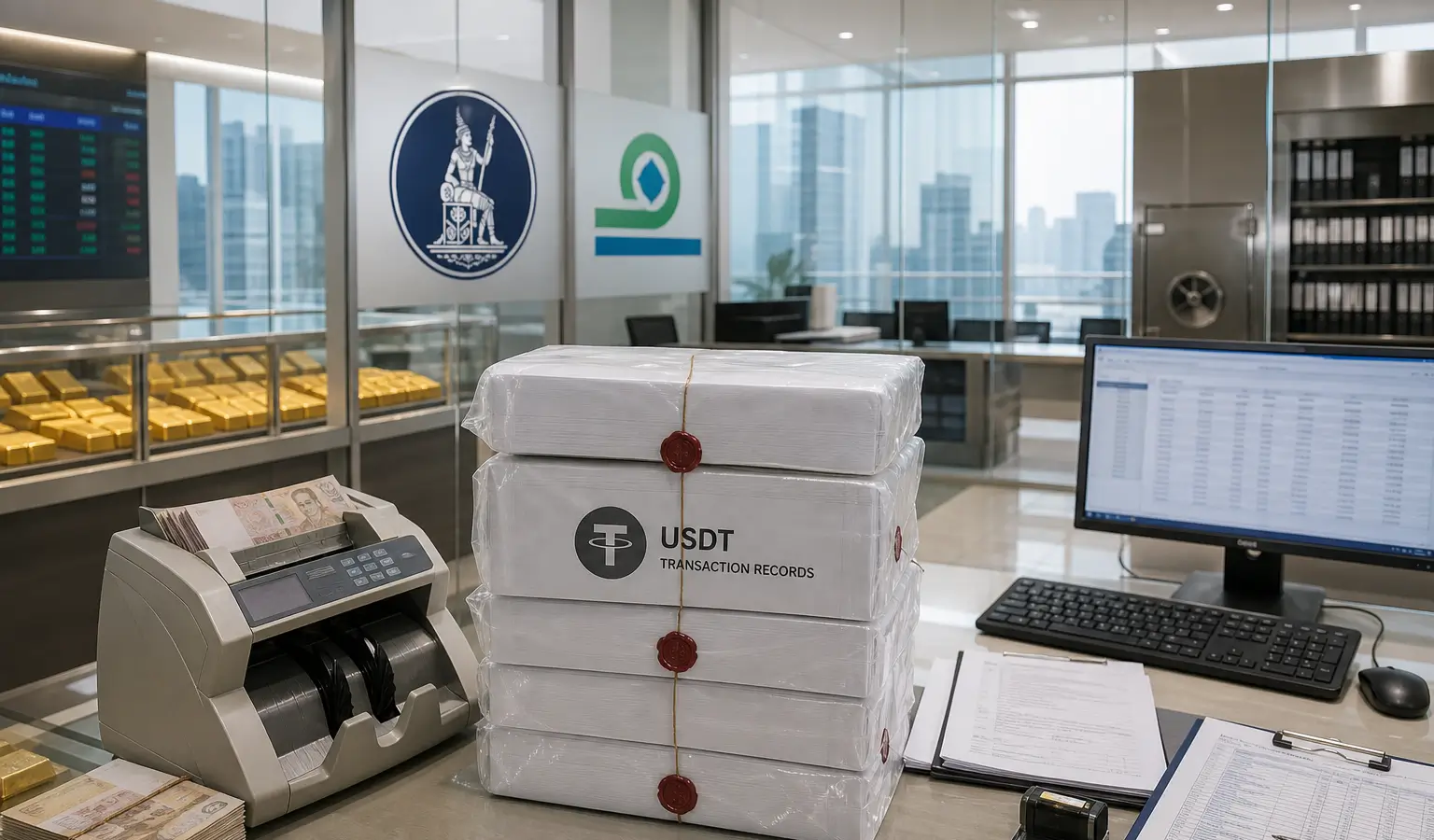
Thailand is ramping up oversight of USDT and large cash movements. The central bank is preparing new rules for deposits starting at 5 million baht, while Tether transactions will be folded into a joint audit with the securities regulator.
Tougher on Gray Money
Bank of Thailand Governor Vitai Ratanakorn says the measures are part of a wider crackdown on the gray economy. He argues that digital assets should be included as well, since authorities are seeing signs of transactions that may be designed to obscure information or move money outside normal financial channels.
The central bank is also looking beyond cash and focusing on the role of stablecoins on local platforms. In January, Vitai said around 40% of USDT sellers on local platforms were foreigners, and he said he did not believe they should be operating in Thailand. That also ties into the broader global debate over USDT's role in oversight and enforcement, as seen in the tougher approach around Tether's freezing of sanctioned wallets.
New Rules for Cash and Gold
The planned deposit rules build on tighter checks that have already been in place since April for large withdrawals. For cash withdrawals above 5 million baht, extra due diligence already applies, and the value of those withdrawals has since fallen by 35%.
The BOT is now reviewing the legal framework before it rolls out the new deposit rules. Large banknote exchanges, such as turning big stacks of 1,000-baht notes into 100- or 500-baht bills, may also soon require an explanation.
On top of that, the central bank has tightened oversight of gold trading to reduce pressure on the baht and make suspicious activity easier to detect. Taken together, cash, gold, and USDT show that Thailand is widening its anti-money laundering approach beyond crypto alone.
Why This Matters
For European crypto readers, the main point is that Thailand no longer treats stablecoins only as trading tools, but also as part of financial oversight. That fits a broader trend in which regulators are paying closer attention to where money flowing through crypto exchanges and local platforms is coming from. The Thai SEC's earlier approval of USDT in 2025 makes the current audit especially notable, because regulation and tighter oversight are now moving forward at the same time.