US Freezes $52 Million in Crypto Tied to Xinbi Scam
The move follows new US sanctions and mainly targets the use of USDT on TRON, while Xinbi shifted to USDD.
Key Takeaways
- US authorities froze about $52 million in scam-related crypto and took over Xinbi Guarantee's Telegram channels.
- Xinbi is said to have processed at least $24 billion since 2022 and mainly used Tether on the TRON blockchain for payments.
- After the freeze, Xinbi converted about $2.8 million into USDD, while the US also imposed sanctions on supporting parties.
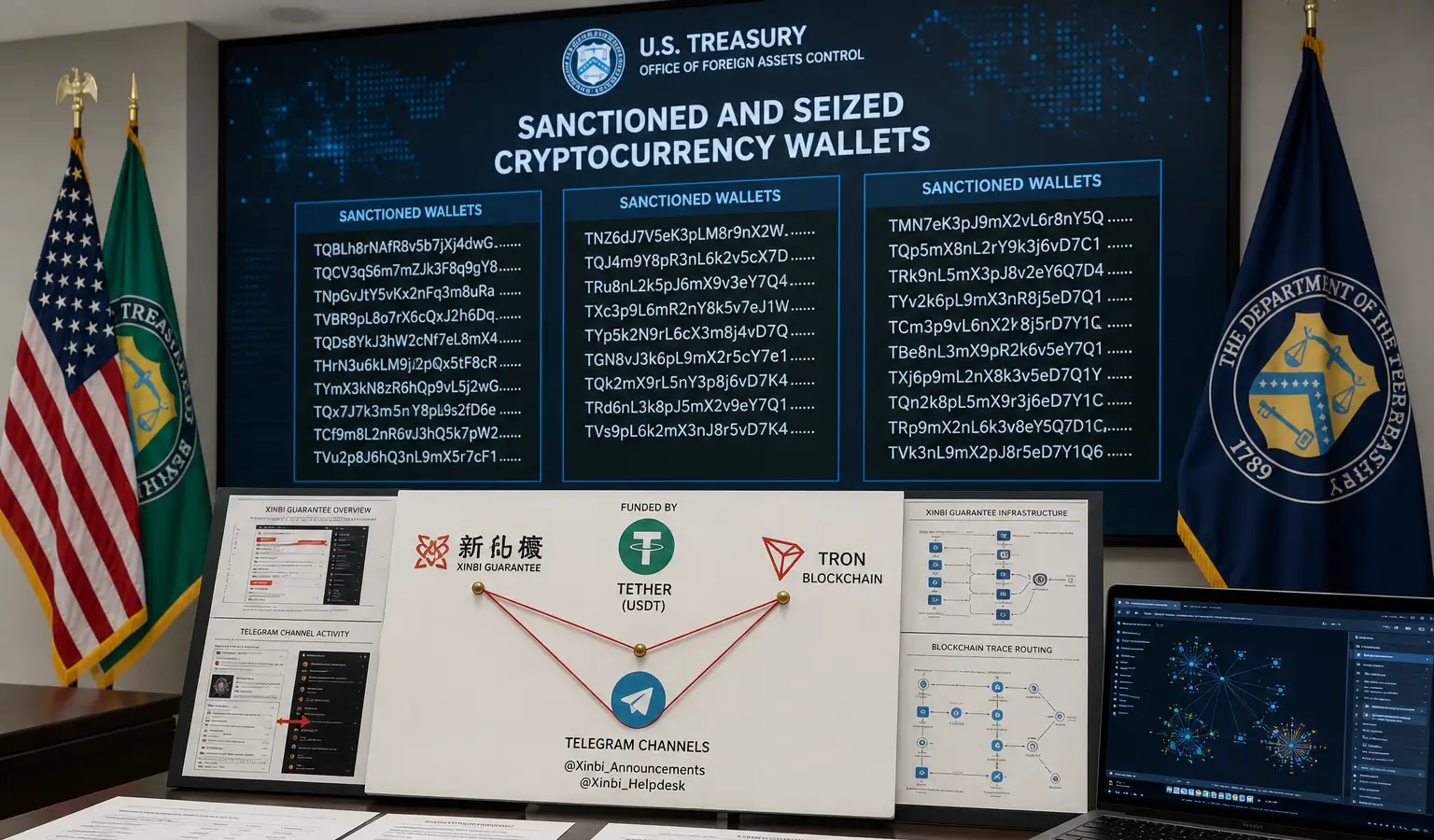
US authorities have frozen about $52 million (€44.6 million) in scam-related crypto and taken over Xinbi Guarantee's Telegram channels. According to the authorities, the Chinese-language marketplace was used by scam centers for fraud, money laundering, and recruiting for compounds in Southeast Asia. The move came alongside new sanctions from the US Treasury Department.
Xinbi Under Pressure
Elliptic says it had been tracking Xinbi's wallets for years and that analysis helped the Secret Service step in. According to the company, Xinbi has processed at least $24 billion (€20.6 billion) in transactions since 2022, making it one of the largest illegal online marketplaces uncovered so far, after Huione Guarantee. Huione processed $31 billion (€26.6 billion) before it was shut down in 2025.
US prosecutors seized two Xinbi payment wallets holding a combined total of about $12 million (€10.3 million) and went after another 47 wallets. The authorities also said Tether cooperated with the investigation. According to the description, Xinbi mainly used Tether (USDT) on the TRON blockchain for payments.
Shift to USDD
After the freeze, Xinbi said it considered the measures arbitrary and would compensate customers. It then converted about $2.8 million (€2.4 million) in remaining USDT into Decentralized USD (USDD), a stablecoin without a built-in freeze function. That shows how quickly these marketplaces try to move to other payment routes once part of their funds gets locked up.
That route is not unlimited. Elliptic points out that USDD is partly backed by USDT, and therefore still tied to a coin that can be frozen. For European crypto followers, the main takeaway is that cases like this show how big the role of stablecoins and Telegram still is in illegal crypto activity, and how quickly law enforcement, sanctions, and wallet tracking can follow each other there.
Broader US Offensive
The case fits into a broader US push against transnational criminal networks that enable digital fraud and money laundering. The Treasury Department not only put Xinbi on the sanctions list, but also two parties that allegedly supported the operation: SafeW Technology in Singapore and Anwen Technology in Cambodia. Around the same time, authorities also reported an operation in Madagascar, where Chinese-run compounds were dismantled and hundreds of people were arrested.