U.S. Inflation Cools, Bitcoin Stays Around $64,000
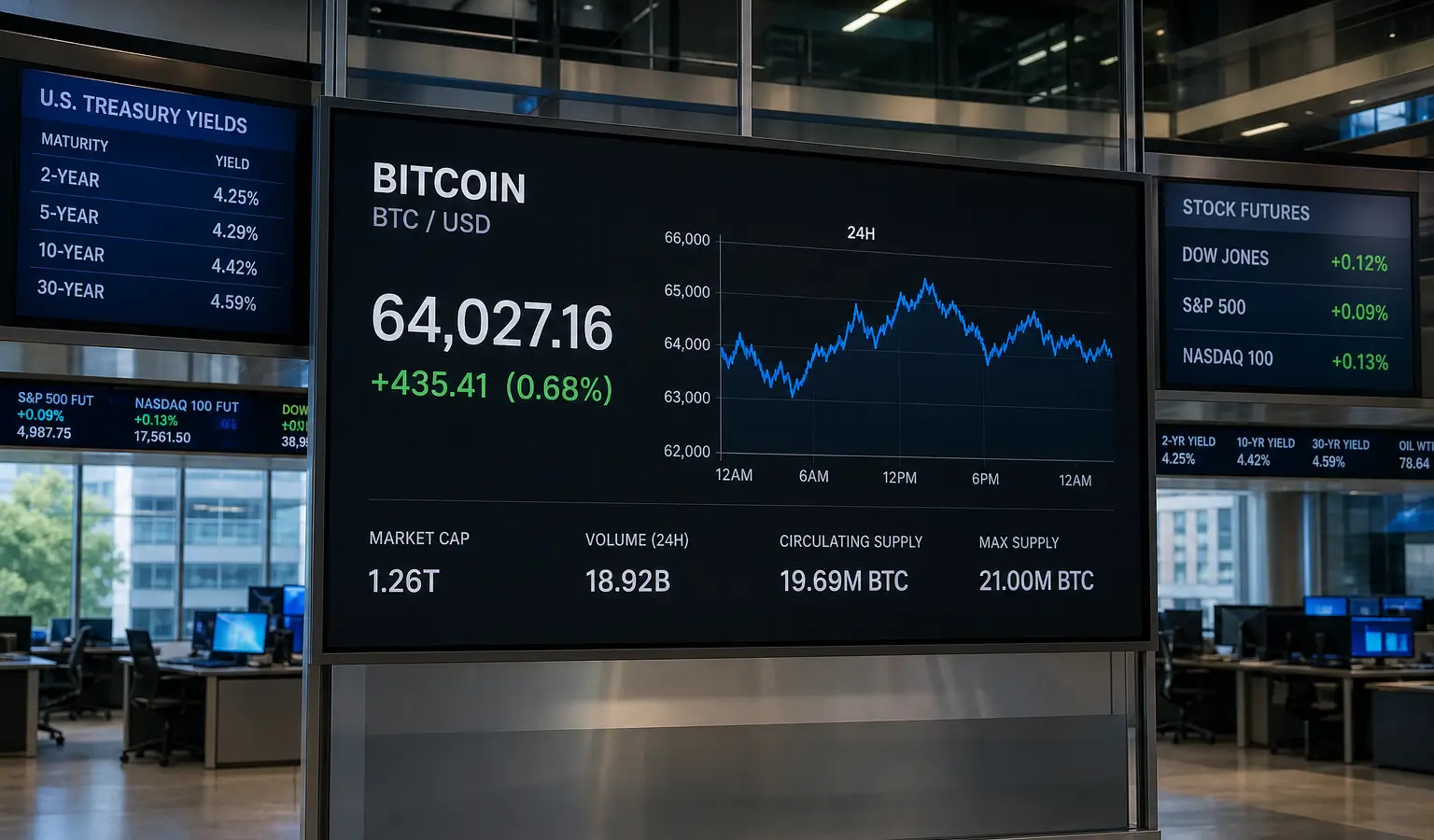
CPI came in exactly in line with expectations in July, so Fed expectations barely moved. Bitcoin then stayed close to $64,000, while Treasury yields edged lower.
Key Takeaways
- U.S. CPI rose 0.1% month over month and 3.4% year over year in July, exactly in line with expectations.
- Bitcoin briefly dropped from $64,400 to $64,080 after the release, but then stabilized around $64,000.
- U.S. Treasury yields edged lower, while market expectations for Federal Reserve policy barely changed.
U.S. inflation came in as expected in July, so market expectations for the Federal Reserve's interest rate policy barely shifted. The U.S. inflation came in as expected in July, so the market expectations for interest rate policy of the Federal Reserve barely shifted. Bitcoin reacted with a brief dip, but then stayed close to $64,000 (€55,400) while the bond market and stock futures also remained calm.
CPI In Line With Expectations
The Consumer Price Index rose 0.1% in July compared with June, exactly matching economists' forecasts. In June, it had fallen 0.4%. On an annual basis, CPI came in at 3.4%, also in line with expectations and slightly below June's 3.5%.
Core inflation, excluding food and energy, rose 0.2% month over month in July. That also matched estimates, after being unchanged in June. On a yearly basis, core CPI came in at 2.5%, as analysts expected and slightly below the 2.6% seen a month earlier.
Bitcoin And Yields React Only Slightly
Bitcoin briefly fell after the release from $64,400 (€55,800) to $64,080 (€55,500), but quickly stabilized and ended up basically flat over 24 hours. Nasdaq 100 futures were up 0.7% at the same time, pointing to a moderate risk appetite in the market.
Treasury yields also stayed under pressure. The two-year yield hovered around 4.19%, down 3.6 basis points on the day, while the 10-year yield came in at 4.66%, down three basis points. That fits the picture of investors continuing to watch the Fed mainly data by data for now, with price stability and the labor market as the main guideposts.
Why This Matters
For European crypto followers, this matters mainly because U.S. inflation data often feeds directly into the broader crypto market. Especially now that Bitcoin remains sensitive to macro data, rate expectations and moves in Treasury yields can set the tone for sentiment around BTC. The recent volatility shows that macroeconomic data is still an important factor alongside regulation and institutional demand.
The reaction fits into a broader phase where BTC keeps swinging around the $64,000 (€55,400)-$65,000 (€56,300) range while waiting for macro direction. Ahead of this CPI release, Bitcoin above $65,000 ahead of U.S. inflation was already trading close to that level.