

Vitalik Buterin Backs Quantum-Safe Path for Ethereum
EIP-8288 is meant to bundle quantum-safe checks so Ethereum loses less block space to larger signatures and privacy proofs. Meanwhile, the Ethereum Foundation is working on broader post-quantum protection aimed at 2029.
Key Takeaways
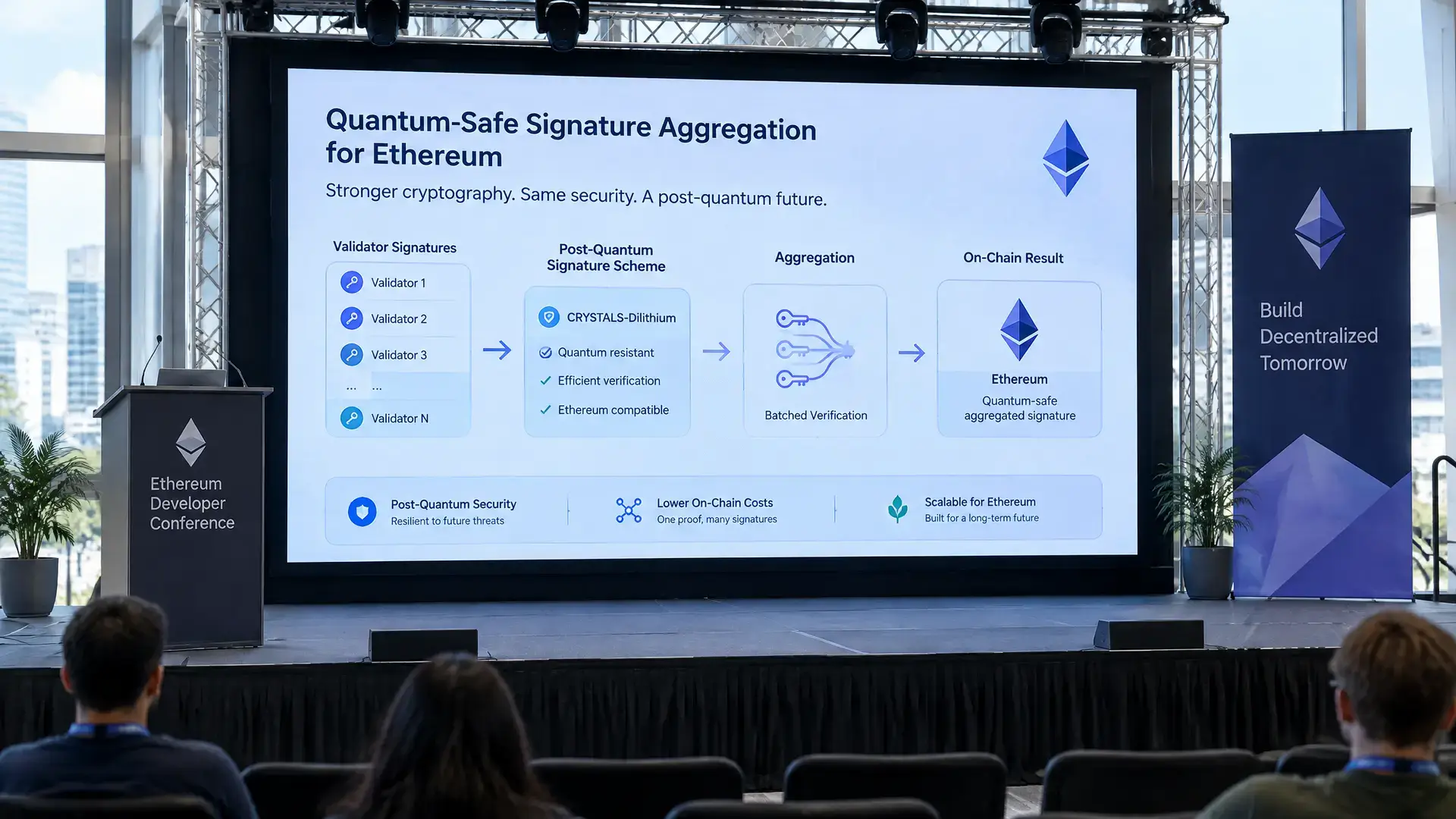
- Vitalik Buterin backs leanPCS as a way to bundle quantum-safe signatures and proofs before they are stored on Ethereum.
- Quantum-resistant alternatives can be much larger than a standard Ethereum signature, which creates more block space use and possibly higher costs.
- EIP-8288 is still a draft; at the same time, the Ethereum Foundation is working on a broader post-quantum path toward full protection by 2029.
Ethereum founder Vitalik Buterin supports a new approach to better protect the network against quantum computers without users immediately having to pay much more for larger digital signatures. According to Buterin, the proposed method, leanPCS, can help bundle the extra data from quantum-safe checks before it reaches the blockchain.
Why This Is Needed
Buterin wrote that over a few weeks he went from skeptical to enthusiastic about leanPCS. The reason is clear: a standard Ethereum signature is 65 bytes, while some quantum-resistant alternatives, according to him, need about 1,000 to 6,000 bytes. Cryptographic proofs used in privacy applications can also get much larger.
That extra data would take up more block space on Ethereum. That could raise costs for users who send tokens or interact with applications. In the broader crypto sector, attention to post-quantum cryptography has been growing for some time, because quantum computers could eventually weaken today's digital signatures. Researchers and policymakers, including the G7 Cybersecurity Working Group, have already called on organizations to set up migration plans for post-quantum security.
How leanPCS Works
The approach is described in EIP-8288. The idea is that computers first combine signatures and proofs before they reach the blockchain. A wallet still creates a signature showing that the owner approves a payment, but after that multiple checks are merged into one mathematical proof.
Ethereum then does not have to store every separate, large signature permanently. The network still keeps the payment instructions and enough information to verify that shared proof. Buterin says this could also be interesting for privacy applications, where proofs show that a transaction follows the rules without revealing all the details.
That sense of urgency has also been present in the developer community for some time: a proposal to speed up quantum security had already pushed for a faster move to post-quantum wallet security.
What This Means for Ethereum
Buterin sees leanPCS as a faster route than a broader alternative approach, which would require a new computing language for the programs that Ethereum checks. In his view, that is a big step, because it would be hard to roll back later. LeanPCS would offer a smaller standard for verification while giving developers more freedom in the rest of their design.
Meanwhile, the Ethereum Foundation is working on a broader Lean Ethereum path toward full post-quantum protection by 2029. EIP-8288 is still a draft and the reference implementation is not finished yet. So Buterin's support does not mean there is a launch date yet, but it does mean the debate over quantum safety on Ethereum is moving further into the spotlight.