Vitalik Buterin Builds AI Privacy Mode
Buterin is testing an experimental AI mode with Tor, sandboxing, and zkAPI on Ethereum mainnet. The setup is meant to better protect prompts, IP addresses, and payments.
Key Takeaways
- Vitalik Buterin has built an experimental AI mode that makes users, requests, and payments harder to trace.
- The mode uses Tor, fake requests, a local AI model, zkAPI proofs, and a software sandbox.
- Buterin says the system is already pretty usable, but it is still a test setup with privacy and timing risks.
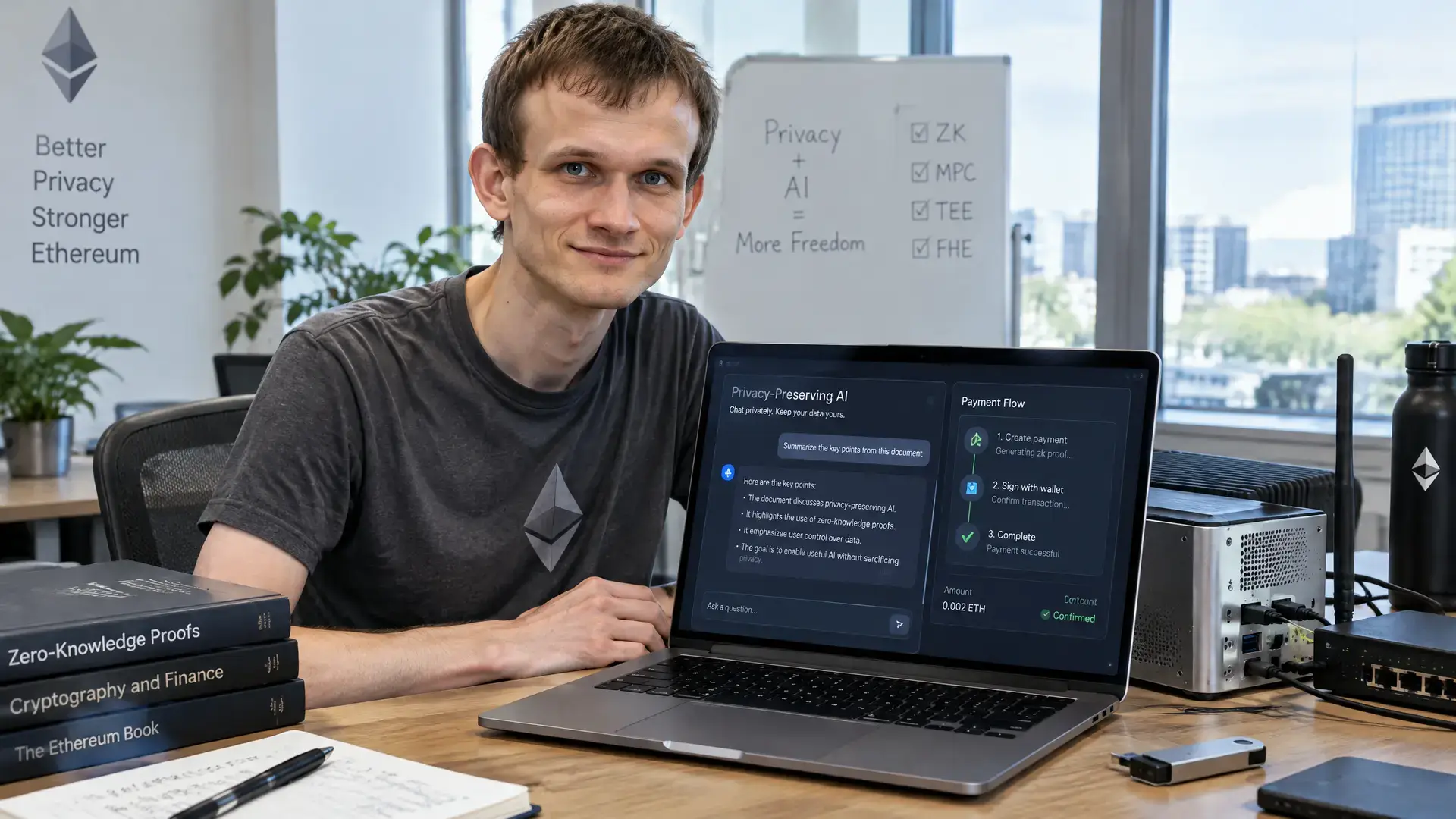
Ethereum founder Vitalik Buterin has built an experimental AI mode that is meant to make it harder to see who is using an AI agent, where requests come from, and how they are paid for. The code is public, but the setup is not finished yet and remains a test environment.
Why AI Privacy Matters
Buterin is tackling a problem that is becoming more relevant for crypto investors. An AI assistant that helps with investing can expose sensitive information, such as which tokens someone is watching, what questions are being asked about a portfolio, or what trading plans are being discussed. Even if a user never gives their name, payment data, IP addresses, or repeated details in prompts can still leave a trail.
How the Mode Works
The so-called paranoid mode tries to hide those traces in four steps. Tor gives each session its own route, making the IP address harder to link to the user. Fake requests are meant to mask real traffic. A small AI model on the user's computer rewrites prompts so fewer recognizable details remain.
After that, zkAPI uses cryptographic proofs to show that a request was paid for without revealing the payer. According to Buterin, the payment system is already running on Ethereum mainnet and accepts deposits in ETH and USDC, among others. He also runs his agent in a software sandbox so it has less access to his computer.
What This Says About Ethereum
The setup shows how privacy and payment infrastructure are coming together in AI applications. That matters for European crypto readers, because privacy technology for banks is also being used outside the traditional blockchain world, for example for paid API services. At the same time, the technology is still vulnerable: providers can still see rewritten prompts, and Buterin also points to timing risks if an AI provider works with the first Tor relay.
Buterin says the system is already “pretty usable,” even though each new chat still starts more slowly. He also expects zkAPI transaction costs to keep coming down, but there is still no proof that this is being used widely or that it says anything direct about ETH's price.