Who Really Owns Bitcoin? Wall Street vs. Retail Investors
Retail investors still hold most of the Bitcoin supply, while ETFs, companies, and governments are together increasing their grip on the scarce supply.
Key Takeaways
- Retail investors are estimated to own 13.9 million BTC, about 66% of Bitcoin's maximum supply.
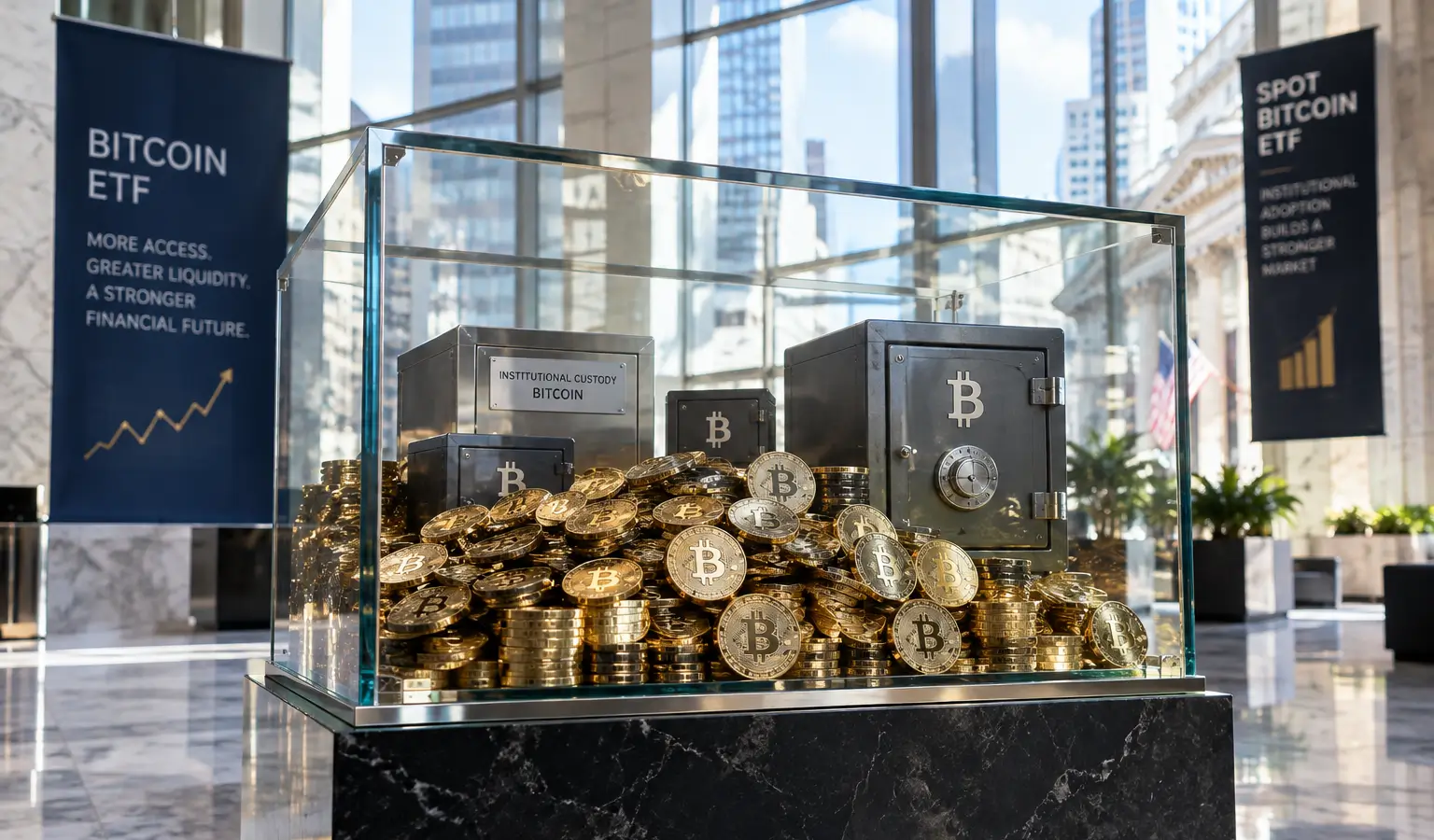
- Bitcoin ETFs, companies, and governments together hold about 17% of the maximum supply.
- Large companies now have to put up more and more cash just to keep their Bitcoin holdings steady.
Wall Street is pouring billions into Bitcoin, but retail investors still own the biggest share of the supply. At the same time, it is costing large companies more and more money just to keep their Bitcoin holdings steady.
Who Owns the Most Bitcoin
According to data from Bitbo and River, compiled by Motley Fool, retail investors own an estimated 13.9 million BTC. That is about 66% of the 21 million coins that will ever exist. That leaves only a limited amount of supply for institutional buyers to chase.
On October 9, Bitcoin ETFs together held 1.48 million BTC. Companies controlled another 1.66 million BTC, and governments about 518,500 BTC. Together, that comes to about 17% of the maximum supply.
On top of that, a large chunk of the supply is never actively traded again. About 1.6 million BTC are considered lost. Another 968,000 BTC sit in wallets linked to Satoshi Nakamoto.
Shift Toward Bigger Buyers
Bitcoin's ownership is slowly shifting, though. River data shows that retail investors sold a net 696,000 BTC in 2025, while companies, investment funds, and governments together bought nearly a million coins. That fits a market where big buyers increasingly have to compete to pry coins away from existing holders.
That trend is also visible among the biggest corporate buyers. Strategy, the former MicroStrategy, holds about 848,000 BTC. Still, in the week through October 4, the company pulled $142.5 million (€127 million) from its dollar reserve for dividends and interest, and spent another $73.7 million (€65.8 million) buying back preferred shares. For comparison, during the same period it bought just 334 BTC for $28.7 million (€25.6 million).
Why This Matters for Europe
For European crypto followers, this shows how increasingly important tradable Bitcoin has become. If a big part of the supply is locked up with long-term holders, ETFs, and companies, that can keep changing the market structure without any new coins being created right away. The U.S. Strategic Bitcoin Reserve, which according to the provided data holds about 328,372 BTC, also shows how strongly governments are now present in the Bitcoin market.
Meanwhile, Japan's Metaplanet chose a different approach. According to its October 5 filing, the company sold 10,000 BTC and bought back 11,000 in the third quarter to show liquidity. With about 44,000 BTC on its balance sheet, the company has kept its Bitcoin exposure at 85% to 90% of total assets. With Bitcoin around $83,000 (€74,100), institutional demand remains strong, but holding such a large treasury also requires more and more cash. That lines up with the broader debate over how treasury companies finance their Bitcoin purchases, as not just price but also capital structure is starting to matter more.