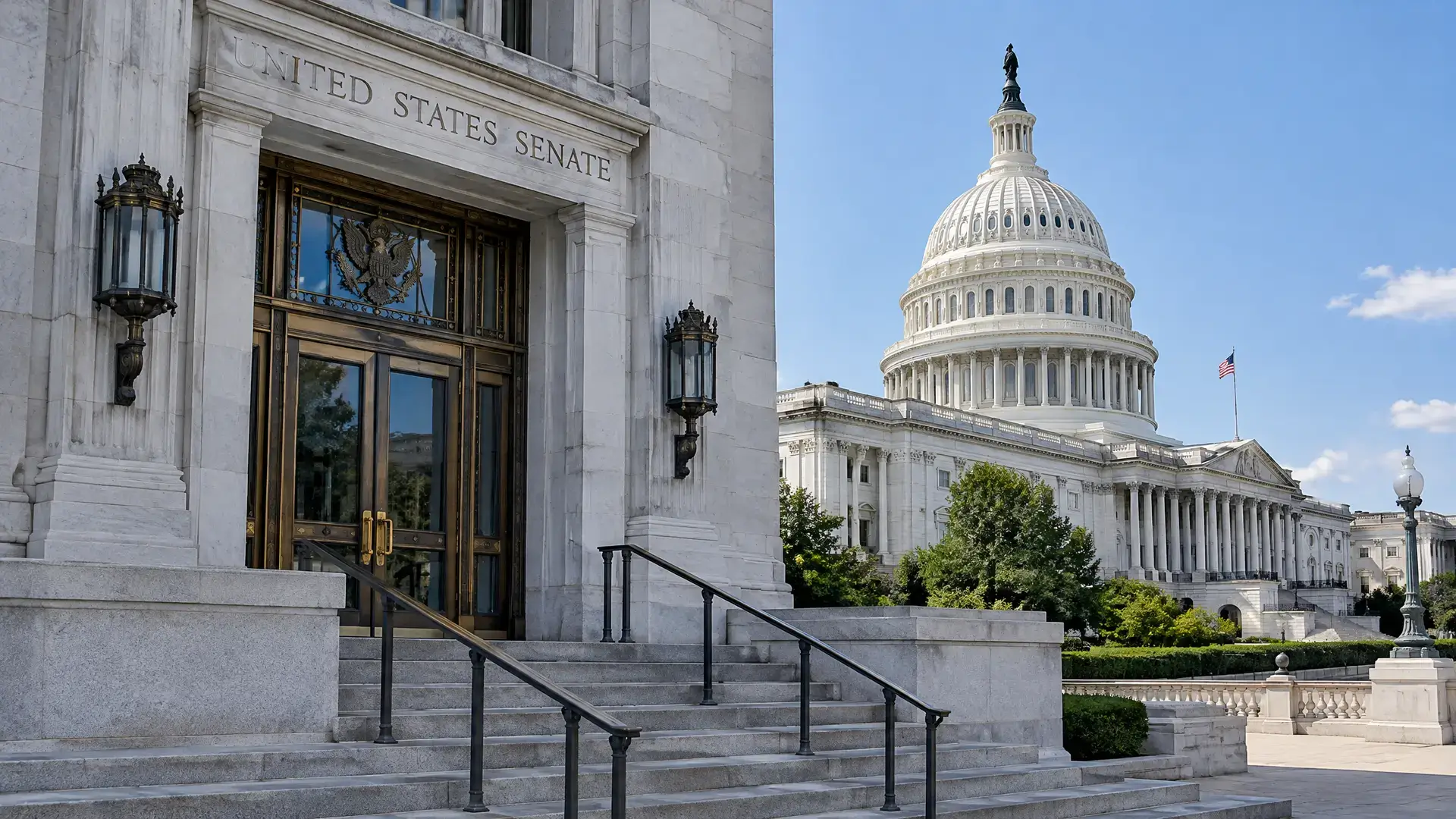
Wyden Wants BRCA Kept in Clarity Act Debate
Wyden wants non-custodial developers to stay outside money transmitter rules. The Section 604 debate is putting the U.S. Clarity Act and FinCEN policy under the spotlight.
Key Takeaways
- Senator Ron Wyden wants the BRCA kept in every version of the Digital Asset Market Clarity Act.
- Section 604 says non-custodial software developers are not automatically treated as money transmitters.
- The outcome is still unclear, since the bill needs more Democratic votes to clear the 60-vote threshold.
Senator Ron Wyden is urging Senate leaders John Thune and Chuck Schumer to keep the Blockchain Regulatory Certainty Act, or BRCA, in any version of the Digital Asset Market Clarity Act that comes before the Senate. In a recent letter, the Oregon Democrat put the fight over Section 604 back at the center of the debate.
What Section 604 Does
The BRCA appears in the Clarity Act as Section 604, after already clearing the Senate Banking Committee. The language says non-custodial software developers are not automatically money transmitters simply because they write or publish code. Wyden argues that this is a straightforward clarification, pointing to existing federal policy and saying the Bank Secrecy Act and criminal law should be interpreted together.
For the crypto industry, that distinction matters because the BRCA could help define the legal role of blockchain developers who never take control of user funds. The provision also tracks with FinCEN guidance from 2019, which said money transmitter rules mainly apply to parties that actually control assets.
Political and Legal Pressure
Wyden said the proposal would help align FinCEN and Department of Justice policy, making it easier for enforcement to target bad actors rather than neutral developers. He also wrote that any digital asset market structure bill needs strong AML/CFT safeguards to keep the system from being abused.
That has turned the BRCA into one of the main pressure points in the Clarity Act fight, alongside concerns about ethics rules and possible conflicts of interest. Support for the language has not vanished, but the final outcome is still uncertain as long as the bill needs additional Democratic votes to reach the 60-vote threshold.
Why This Matters for Europe
For European crypto readers, the debate is another sign of how the U.S. is still drawing a hard line between software development and financial services. That matters for blockchain companies with international teams, since U.S. rules can shape where developers build infrastructure. For firms working under MiCA, the split between custody and pure software development is also an important benchmark in the wider regulatory conversation.