

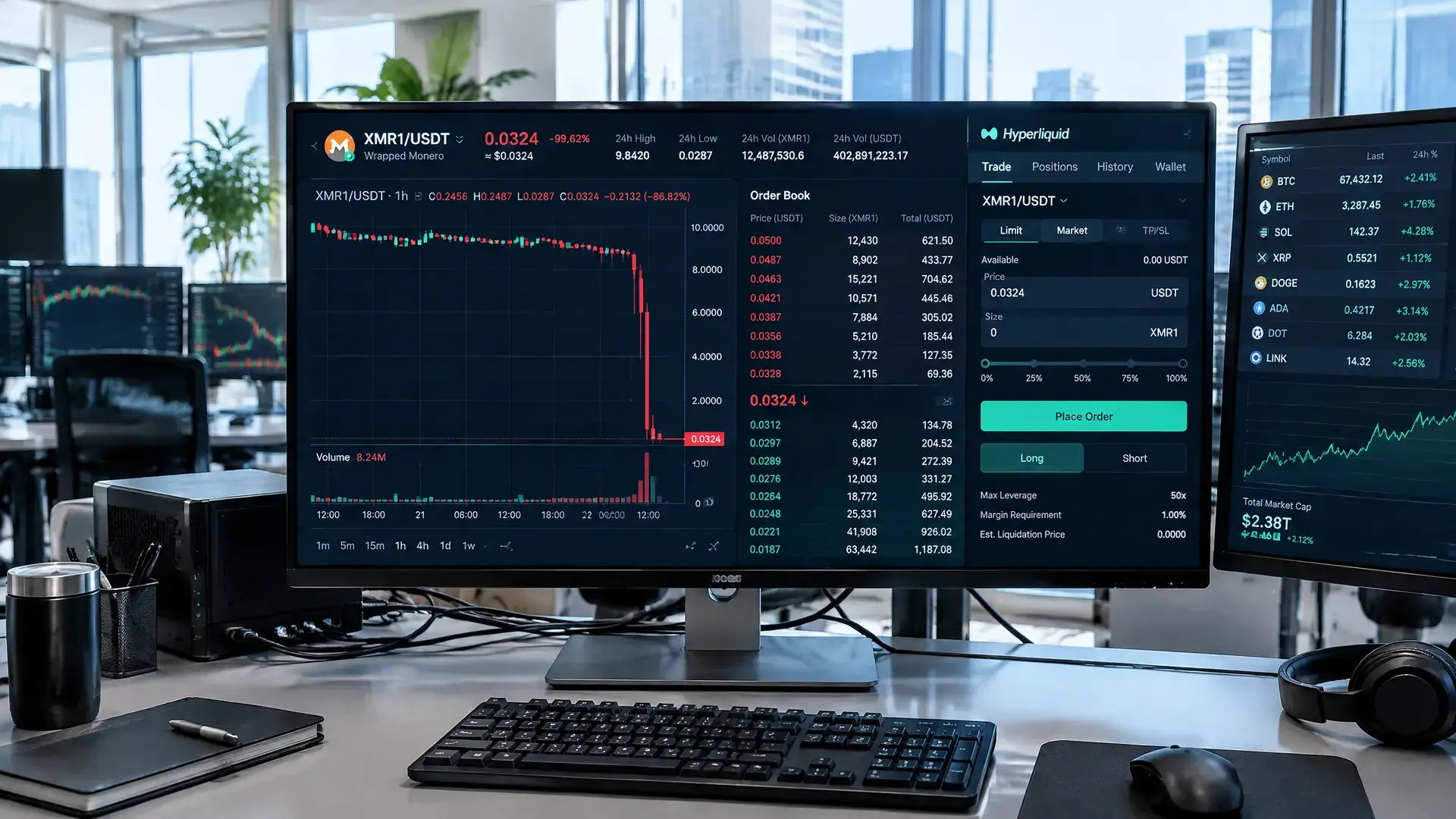
XMR1 Drops 99% After $13.5 Million Sale on Hyperliquid
The sale only hit XMR1 on Hyperliquid; Monero itself and the XMR futures stayed stable. The role of Wagyu and the bridge still leaves the cause of the crash unclear.
Key Takeaways
- A wallet sold about $13.5 million worth of XMR1, after which the wrapped Monero token on Hyperliquid dropped more than 99%.
- The sale hit XMR1 from Wagyu, not Monero itself or Hyperliquid's XMR futures, which kept trading around $482.
- It is unclear whether the transfers were authorized; the event highlights risks around wrapped tokens, bridges, and centralized settlement.
A wrapped Monero token fell more than 99% on Friday after a wallet funded by the issuer's address sold about $13.5 million (€12.3 million) worth of XMR1, according to trading data from Hyperliquid reviewed by CoinDesk. The sale hit XMR1, a token from Wagyu, and not Monero itself or Hyperliquid's XMR futures, which kept trading around $482 (€438).
What Happened to XMR1
XMR1 is issued by crypto swap service Wagyu and trades through that company’s interface on Hyperliquid’s underlying order book. The token is meant to be redeemed back into native Monero through the bridge. That means holders depend on that service to complete the conversion.
The wallet received 5.2 million XMR1 in three transfers from the address that created the token. According to the trading history, the wallet had sold about 364,000 tokens by 07:51 UTC on Friday and still held about 4.83 million. Earlier sales pushed the price from nearly $488 (€444) to $1 (€0.91) in about 30 minutes. When the price was checked later, XMR1 was trading around 91 cents.
Uncertainty Around the Sale
It is still unclear whether the transfers were authorized or whether compromised login credentials were involved. The sale proceeds also say nothing about the size of any customer losses. That makes the event especially relevant as an example of the risk that can come with wrapped tokens and with services where users depend on a central party for settlement.
Wagyu previously reported a separate data leak on October 28, which exposed three months of activity. Researchers said at the time that the leaked data could link public crypto deposits to Monero receiving addresses and customers' IP addresses. Wagyu said then that the funds remained untouched and that swaps continued.
Hyperliquid Is Under Extra Scrutiny
The XMR1 sale comes at a time when Hyperliquid itself is already under pressure from broader concerns around security and oversight. The Hong Kong Securities and Futures Commission placed the platform on its Alert List of suspicious virtual asset trading platforms on November 18, partly because it does not have a local license and may be targeting the public in Hong Kong, according to the regulator. A day earlier, Hyperliquid also reported a security incident in which an attacker drained money from user accounts through exposed trading keys.
For European crypto readers, this matters because it shows how quickly problems at a single wallet, bridge, or interface can spill over into trading around a token. Especially with wrapped assets, the difference between the underlying network, the derivative token, and the trading environment matters, because those parts do not always carry the same risk.