XRP Ledger v3.2.0 Gains Ground, But the Amendment Still Lags
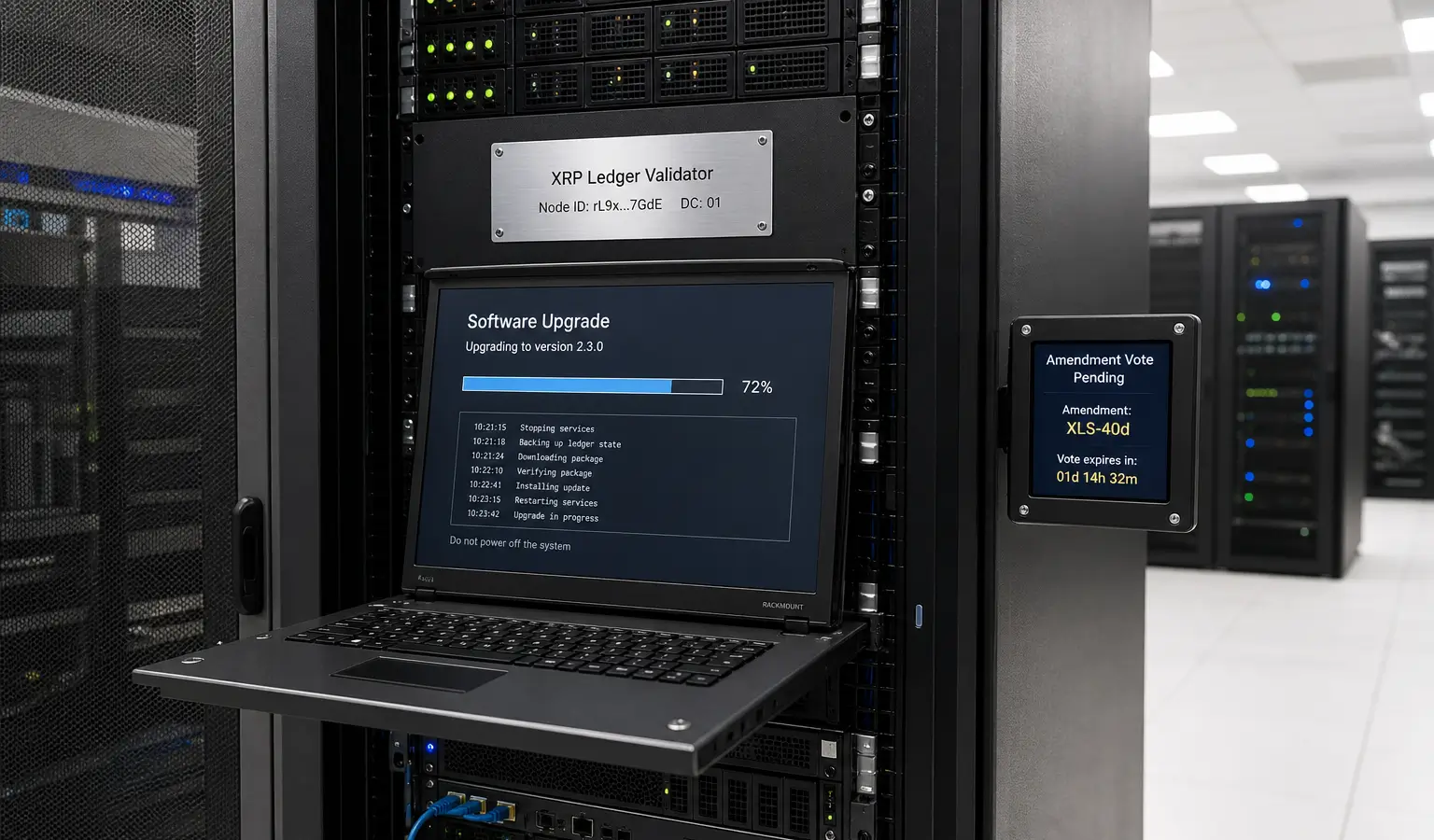
Validators on the XRP Ledger are moving to v3.2.0 quickly, but the fixCleanup3_2_0 security amendment still needs its own approval. Activation depends on broad support within the UNL.
Key Takeaways
- XRP Ledger v3.2.0 is being adopted quickly by validators, but 51% of the broader network is still running v3.1.3.
- On the standard UNL of 35 validators, 31 are running v3.2.0, which is about 89%.
- The security amendment fixCleanup3_2_0 is still up for a separate vote and will not activate at the same time as the software upgrade.
The newest server release for the XRP Ledger, v3.2.0, is spreading fast among validators, but the wider network is still slower to move off the version it replaces. Meanwhile, the related security amendment is still being voted on separately, which means the software upgrade and the amendment activation are not tied together.
Adoption Varies by Network Layer
According to XRPSCAN data, about 43% of the XRP Ledger’s roughly 833 active nodes are now running v3.2.0, while 51% are still on v3.1.3. So while the new release is clearly gaining traction, it has not yet replaced the older version across the network.
Validators tell a different story. Because the XRP Ledger relies on a fixed validator set on the Unique Node List, that group is the key one to watch. On the standard UNL of 35 validators, 31 are already running v3.2.0, or about 89%. To activate, the upgrade needs more than 80% support for two straight weeks, a rule designed to make sure consensus is broad and to reduce the risk of an accidental fork.
Security Amendment Is Behind
The software update is moving faster than the amendment. fixCleanup3_2_0 is still in the voting stage, and it combines several security fixes and upgrades for features including single-asset vaults, permissioned decentralized exchanges, multi-purpose tokens, and the lending protocol. It also adds internal safeguards so deleted accounts do not leave behind leftover data.
That vote is progressing much more slowly than the rollout of v3.2.0 itself. Ripple, the payments company tied to the XRP Ledger founders, has already voted in favor of the amendment. That is important for validators, since failing to upgrade on time could leave a node in an amendment-blocked state once the change goes live.
Why This Matters
For European crypto readers, this is a useful reminder that upgrades on a public blockchain do not happen all at once. There is the software version, the separate amendment vote, and the validator group that ultimately decides whether changes move forward. That makes the XRP Ledger a useful case study for anyone following network stability, governance, and how new features actually get rolled out. That governance also affects future upgrades: onchain lending on the XRP Ledger, for example, still has to clear validator approval before it can move ahead further.