Zcash Makes Private Transactions More Than 14 Times Faster
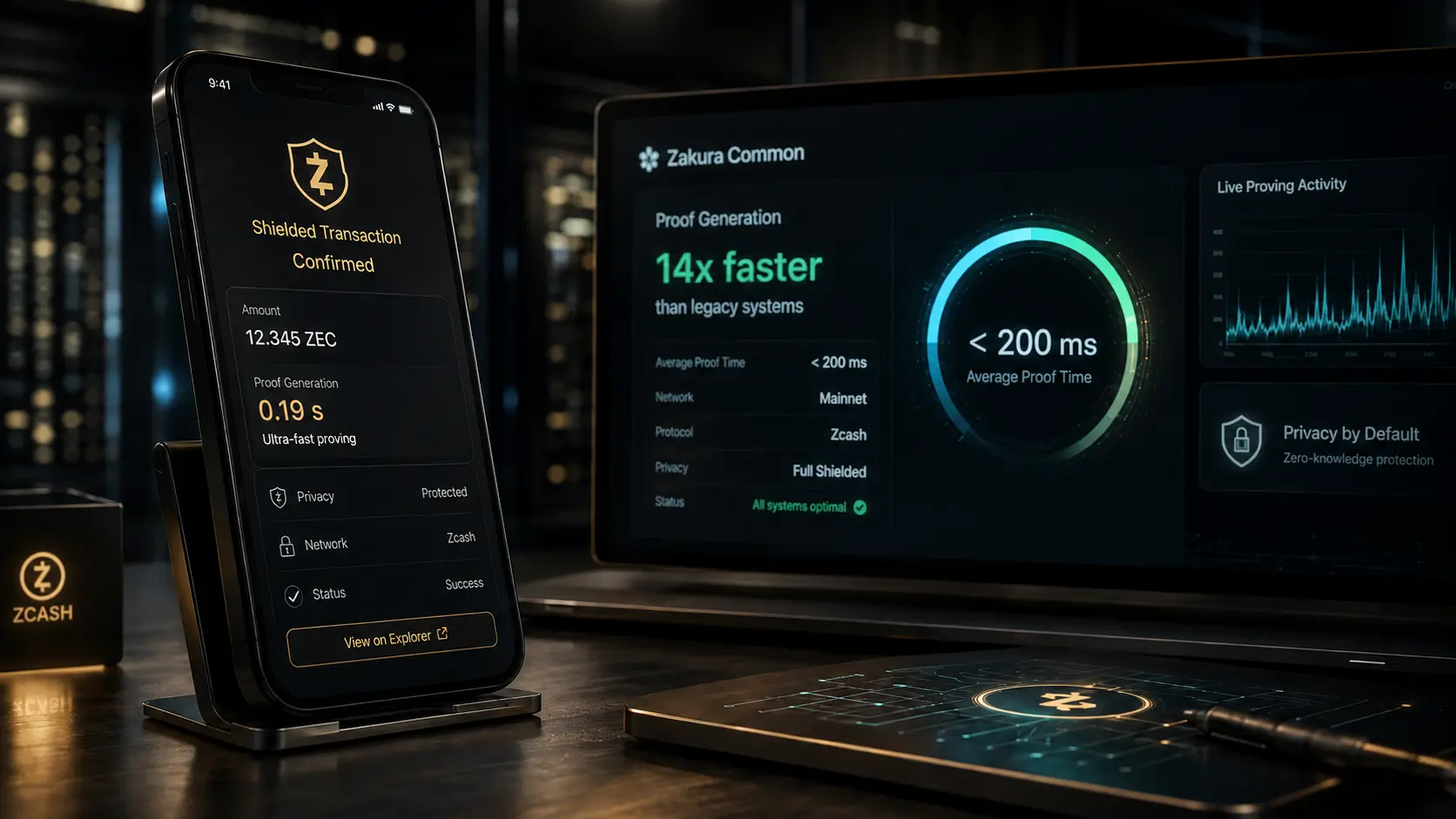
According to Zakura, new cryptographic software can reduce the time needed to prepare private Zcash transactions on mobile devices from more than three seconds to less than 200 milliseconds.
Key Takeaways
- Zakura Common can make generating cryptographic proofs for private Zcash transactions more than 14 times faster on mobile devices.
- As a result, preparing a private transaction can take less than 200 milliseconds in some cases, down from more than three seconds.
- The improvement does not require an upgrade to the Zcash blockchain and can be adopted by wallets and nodes on the existing network.
Developers in the Zcash ecosystem have released new cryptographic software designed to make private transactions significantly faster. According to Zakura, the time a wallet needs to prepare a private ZEC transaction can drop from more than three seconds to less than 200 milliseconds in some cases.
The software, Zakura Common, was developed to make several cryptographic computations within Zcash more efficient. Mobile wallet users in particular are expected to benefit.
Why Private Zcash Transactions Take Time
Zcash makes it possible to carry out private transactions in which information such as the sender, receiver, and amount transferred can be shielded. At the same time, the network still needs to verify that the transaction is valid.
To do this, the user's wallet has to generate a cryptographic proof before the transaction can be sent to the blockchain. This requires relatively substantial computing power and can leave users waiting several seconds before the transaction is even sent.
Zakura Common is specifically designed to speed up this step.
Proof Generation More Than 14 Times Faster on Mobile
According to Zakura, generating cryptographic proofs with the new software is more than 14 times faster on mobile devices. On desktop computers, the improvement is said to be more than fivefold.
Other cryptographic processes are also faster. The team says hashing is more than 21 times faster, while nodes can verify private transactions four to eight times faster.
Zcash co-founder Sean Bowe wrote on X that both shielded wallets using Zakura Common and full nodes such as Zakura benefit from the improvements.
No Zcash Upgrade Required
The speed improvements do not require any changes to the Zcash protocol itself. Wallet developers can use Zakura Common's open-source libraries on the network as it exists today.
Zakura has already integrated the new software stack into version 1.3.0 of its node software. According to Zakura, Vizor Wallet is also among the first wallets to adopt the technology.
This means users can prepare private transactions faster without having to wait for a major network upgrade first.
Wallets and Nodes Should Also Become Faster
The improvements are not limited to creating transactions. According to Zakura, wallets using the new libraries can also synchronize with the network faster.
Full nodes also benefit from faster verification of private transactions. This can make processing more efficient and reduce the number of orphaned blocks. These are blocks that are produced but ultimately do not become part of the final blockchain.
According to the team, the software can already handle 25-second block times being considered for NU7, Zcash's next major upgrade.
Project Tachyon, an initiative focused on further improving Zcash's scalability, is also using the new cryptographic stack.
ZEC rose about 5% to around $839 following the announcement, but later gave back some of those gains during a broader crypto market decline.