Zcash Sets January Target for Quantum-Safe Payments
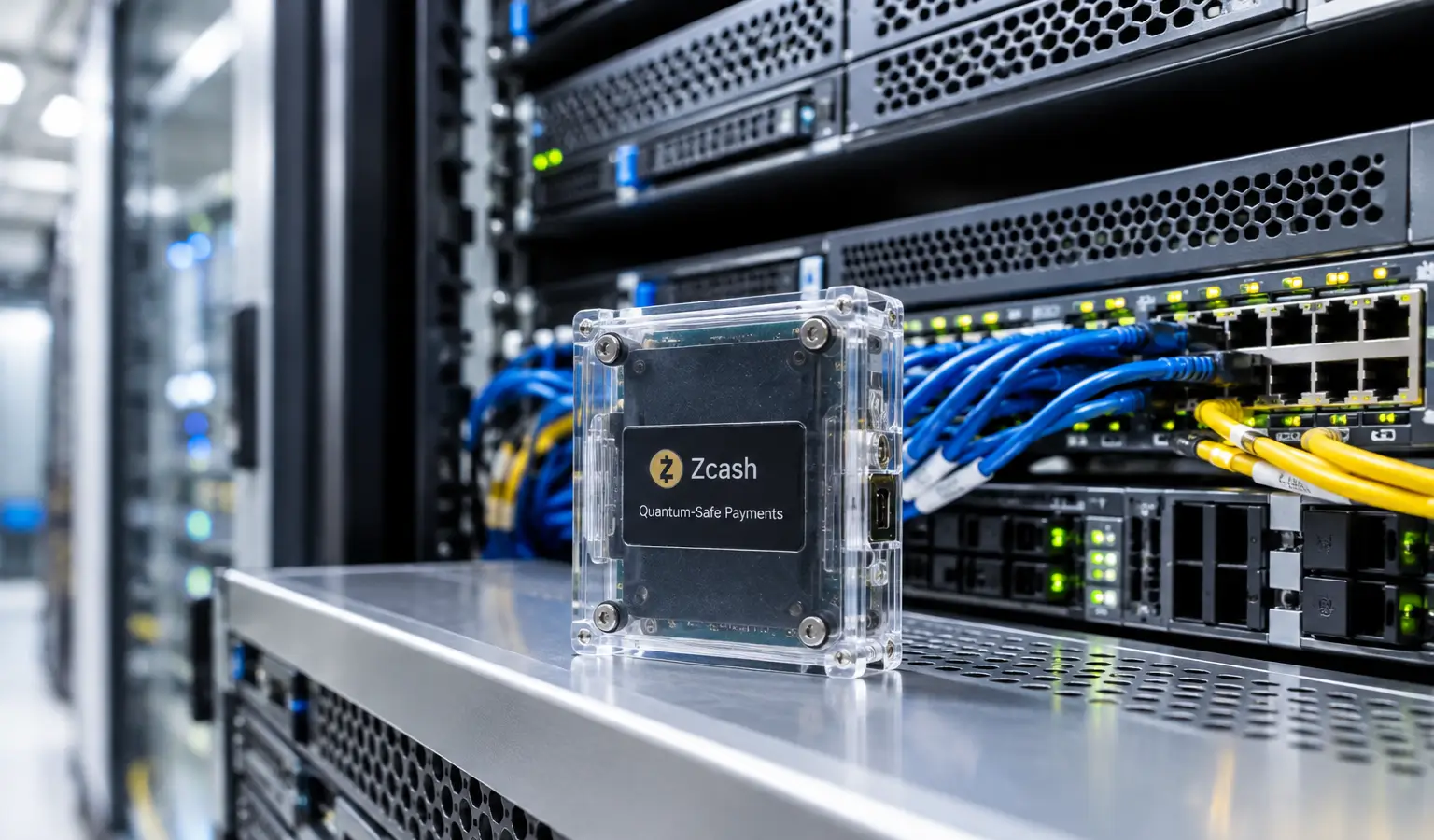
Zcash wants to roll out post-quantum signatures in January for transparent payments, where most of the ZEC sits, according to ZecStats. The move fits into a broader race to protect wallets and networks from quantum threats.
Key Takeaways
- Zcash wants to introduce post-quantum signature opcodes in January for quantum-safe payments on the network.
- The upgrade is aimed mainly at transparent payments, where about 11.96 million of the 16.98 million ZEC is held.
- The plans fit into a broader crypto race to better protect wallets and networks from future quantum threats.
Zcash wants to add protection in January that should hold up against quantum computers, while the broader debate over wallet security keeps heating up after warnings about AI-assisted attacks. The plans focus mainly on public payments within the network, where most of the ZEC sits.
January as the Target
Roman Akhtariev wrote in an engineering post for Zakura that the team plans to land post-quantum signature opcodes in Zcash in January. Zakura is one of the programs that run the Zcash network and validate transactions.
Those opcodes are instructions that let the network verify hash-based signatures. That is a way to approve payments that is specifically designed to better withstand quantum attacks. There is still no confirmed date for network activation.
The idea is that attackers should not be able to work backward from the current public keys to fake a wallet owner's approval and drain coins. The new setup uses hashes, digital fingerprints based on secret data, to prove that someone is allowed to spend.
Public Payments in Focus
Zcash has two types of payments. Shielded payments hide the sender, receiver, and amount. Transparent payments work more like Bitcoin, where addresses and amounts are visible on the blockchain.
Based on a calculation using ZecStats data, about 11.96 million of the 16.98 million ZEC issued was in the transparent pool on Thursday. That is roughly seven out of every ten coins. The January plan is aimed exactly at that public part.
The shielded side needs separate work. Zcash's quantum recovery setup warns that an attacker who knows a recipient's address could store encrypted payment data today and may later try to decrypt it if the math ever breaks further.
Why This Matters More Broadly
The timing lines up with a broader race in the crypto market to better defend wallets and networks against future quantum threats. Ethereum, for example, has set a target of December 2029 for quantum-resistant cryptography. That makes it clear this is not just a Zcash story, but part of a sector-wide security question.
Europol has also warned that wallets, rather than blockchains themselves, could be the target of quantum attacks. For European crypto readers, the key point is that upgrades like this show how quickly security is becoming a core topic alongside price and adoption. The debate is not just about new features, but also about which parts of a network are already the most vulnerable today.