$130 Million Stolen From Hardware Wallets, Bitcoin ETF in Focus
The Coldcard hack affects more than 5,200 addresses and puts the choice between self-custody and a spot Bitcoin ETF, like BlackRock’s IBIT, back in the spotlight.
Key Takeaways
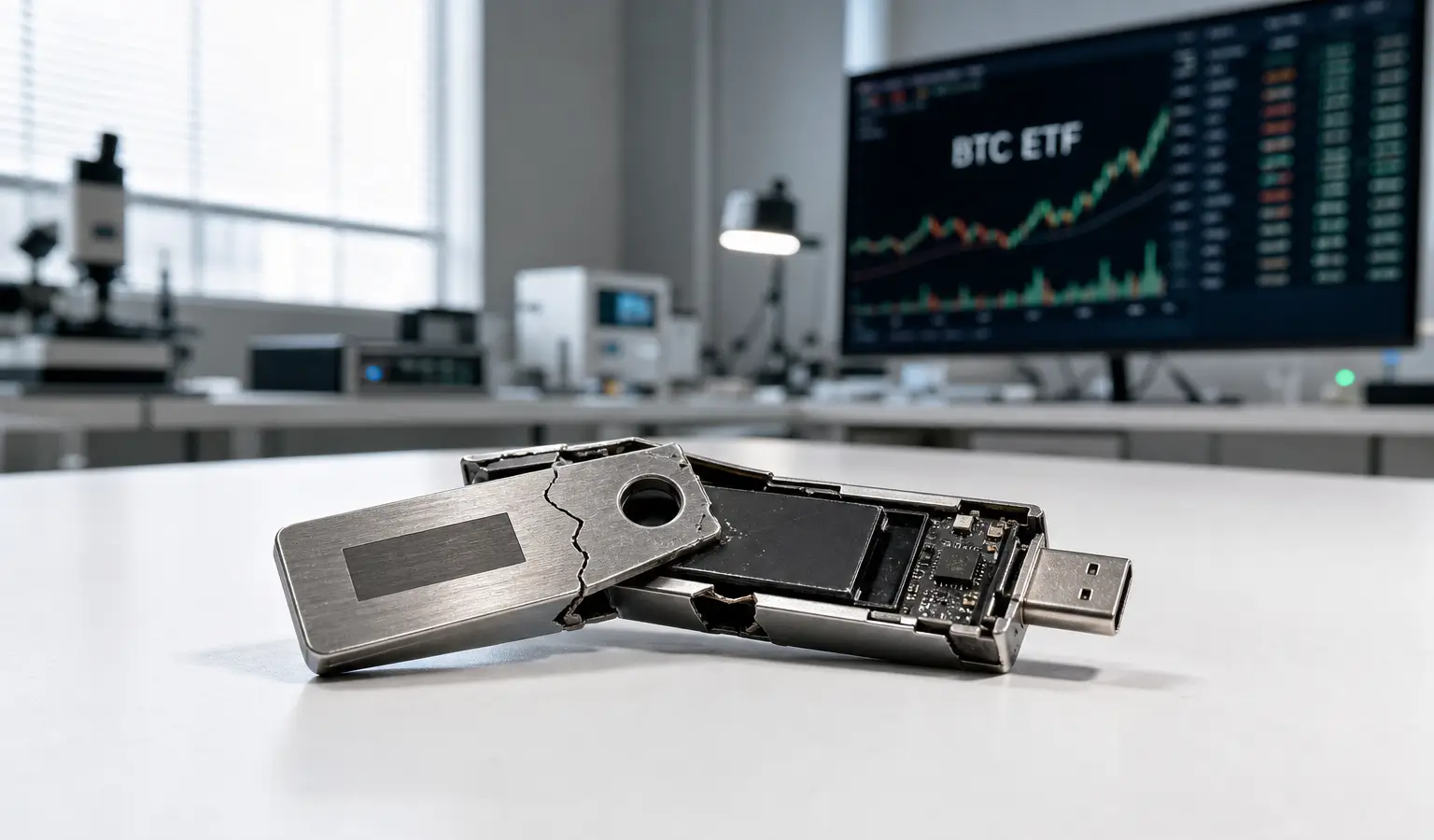
- Hackers stole more than $130 million through a flaw in old Coldcard firmware, which caused some hardware wallets to generate much weaker keys.
- The hack reopens the debate between holding Bitcoin yourself and investing through a Bitcoin ETF, with different risks and responsibilities.
- U.S. spot Bitcoin ETFs pulled in more than $853 million in the same week, of which BlackRock’s IBIT accounted for about $693 million.
Hackers stole more than $130 million (€112 million) from users of hardware wallets, and that is putting the old debate over self-custody versus a Bitcoin ETF back under pressure. While one group wants maximum control, the other prefers to hand that over to a player like BlackRock. The timing stands out: during the same period, hundreds of millions flowed into U.S. spot Bitcoin ETFs.
What Went Wrong
The hack affected more than 5,200 addresses. With older Coldcard wallet firmware, it turned out that some devices generated keys that were far too weak, because instead of the intended 128 bits of random data, sometimes only 40 bits were left. For users, a mistake like that is almost impossible to spot, precisely because the problem is buried deep in the firmware.
Manufacturer Coinkite confirmed the issue and quickly released new firmware, but for the people affected, that update came too late. That immediately shows why hardware wallets, despite being offline, are not automatically foolproof. Physical attacks and fake devices also remain a risk in this part of the market.
ETF or Your Own Wallet
Self-custody gives you full control. No one can freeze your coins or block a transfer, and for many Bitcoin holders that remains the strongest argument. On the flip side, you are also responsible for the tech, backups, access, and inheritance.
A Bitcoin ETF flips that model around. You buy exposure to Bitcoin’s price through a regular brokerage account, while custody sits with professional firms. In practice, that means less hassle with keys, but also no direct access to actual coins.
The risks are different. With self-custody, the issues are firmware, seed phrases, fire, or theft. With an ETF, the main concerns are counterparty risk, fixed trading hours, and fees. The biggest spot Bitcoin ETF, BlackRock’s IBIT, charges 0.25 percent per year.
Why This Matters
For European crypto investors, this debate matters because it shows how differently access to Bitcoin can be set up. A hardware wallet gives you maximum autonomy, but it also requires more discipline and technical care. An ETF is easier to use, but it shifts part of the risk to the custodian and the fund structure.
The inflow numbers underline that tension. In the week after the hack, U.S. spot Bitcoin ETFs brought in more than $853 million (€737 million), the strongest week since April. BlackRock accounted for about $693 million (€599 million) of that, or 81 percent. That shows that for many investors, safety, convenience, and trust matter at least as much as the idea of full self-determination.