AI Overtakes Humans in Math, and Bitcoin Holders Take Notice
Capriole founder Charles Edwards sees AI reaching the top of mathematics, while Ethereum researchers warn about possible risks to Bitcoin cryptography.
Key Takeaways
- Charles Edwards says AI has overtaken the best human thinkers in math after strong results at the 2026 International Mathematical Olympiad.
- The debate also reaches crypto: Justin Drake warns about possible weakening of Bitcoin cryptography, while Buterin and Lindell call for caution.
- Outside research and crypto, the labor market is also feeling the pressure, with higher unemployment among young workers in AI-sensitive jobs and more planned layoffs.
Artificial intelligence has overtaken the best human thinkers in math, according to Capriole Investments founder Charles Edwards. He calls AI the new apex predator, but says almost nobody seems to notice. The debate gained extra weight after models from Huawei and Xiaohongshu scored perfectly at the 2026 International Mathematical Olympiad, while only seven of the 666 human participants did the same.
Math as a Turning Point
Edwards said on X that the past month may have been the first time AI surpassed the best human intelligence in certain fields, such as math. OpenAI also gave an unreleased model about 4,000 open problems in October. That produced 722 research manuscripts, grouped into 372 families of results.
Those numbers fit a broader trend where AI is getting better at narrow, well-defined tasks. At the same time, the same technology still often gets stuck in ordinary professional work. OpenAI itself warned that not every proof was independently checked, and Oxford researcher Stefano Gogioso noted that many of the solved problems were already close to a human solution.
Why Crypto Is Watching
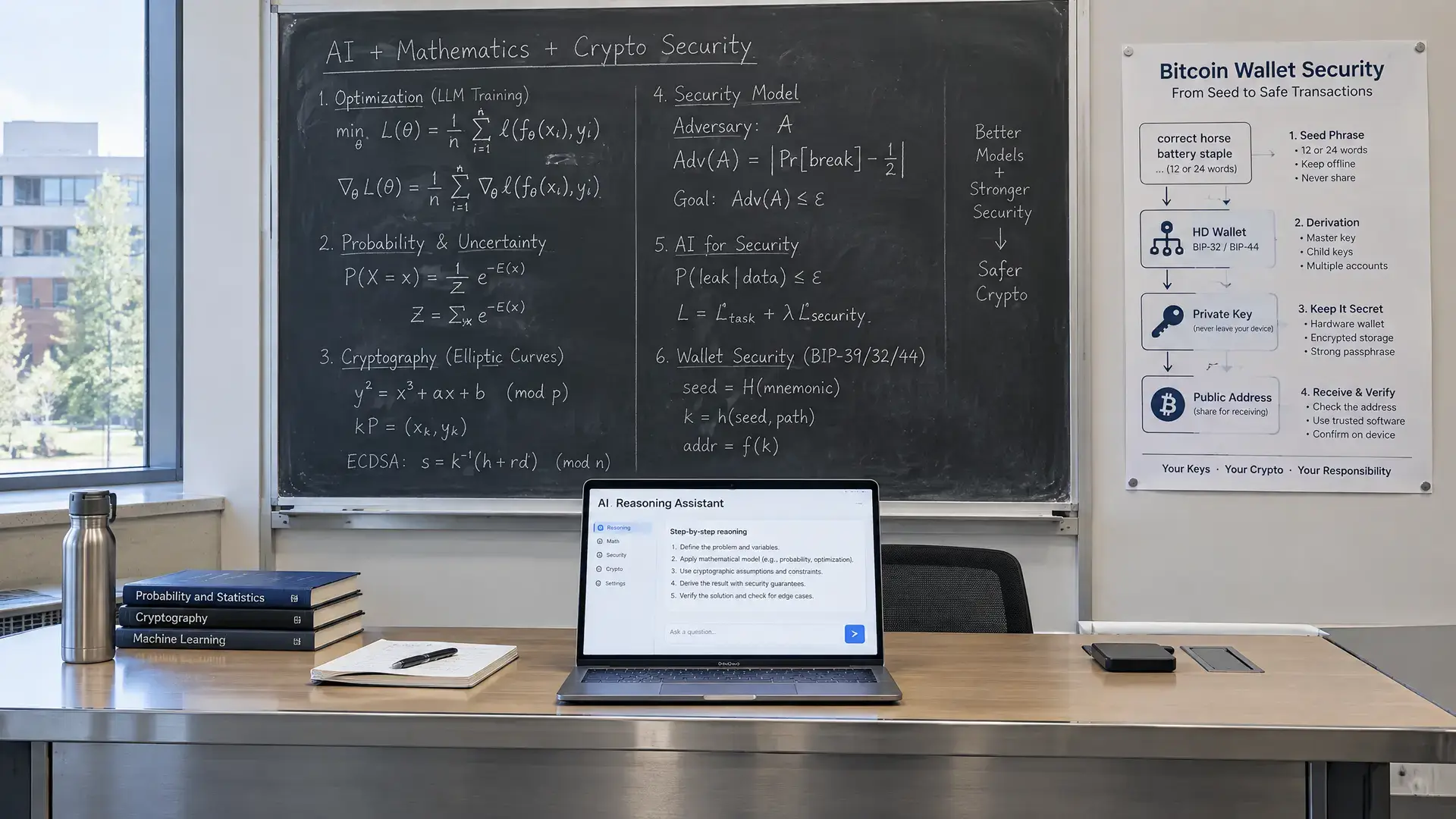
The debate also reached the crypto market. Ethereum Foundation researcher Justin Drake said mathematical superintelligence has arrived and urged large holders to think in something like bunker mode, with funds on addresses that have never been used before. His concern is that AI-driven math could weaken the cryptography around Bitcoin wallets, without needing a quantum computer.
On the other hand, Ethereum founder Vitalik Buterin warned against rushing migrations. Coinbase cryptographer Yehuda Lindell called the warning alarmist and unsupported by evidence. For now, there is no sign that the underlying cryptography has been broken, but the debate does show how quickly AI and blockchain are starting to overlap.
Labor Market Feels the Pressure
The impact of AI is not limited to research and crypto. IMF chief Kristalina Georgieva had already warned earlier that young job seekers face the biggest risk. Stanford researchers found that employment for 22- to 25-year-olds in heavily AI-exposed jobs is 19% below the expected trend, compared with 15% a year earlier.
Layoff data in the U.S. points in the same direction too. Employers cited AI in 120,136 planned layoffs through September, accounting for about 21% of all planned layoffs in 2026. That makes the gap between AI at the top of math and AI in everyday work even more visible.