

Arkansas Sues Kalshi Over Illegal Gambling Practices
Arkansas says Kalshi is offering sports and entertainment contracts as unregulated gambling. The case adds to the pressure on prediction markets, following earlier moves by Utah and other states.
Key Takeaways
- Arkansas has sued prediction market Kalshi over alleged illegal gambling practices.
- The attorney general says betting on sports outcomes through an unregulated platform falls under Arkansas gambling law.
- Other states, including Utah, Arizona, and Nevada, have also taken action against Kalshi, according to the available information.
Arkansas has sued prediction market Kalshi over alleged illegal gambling practices. That adds more pressure on the platform, as multiple states say Kalshi is getting around anti-gambling laws.
New Case in Arkansas
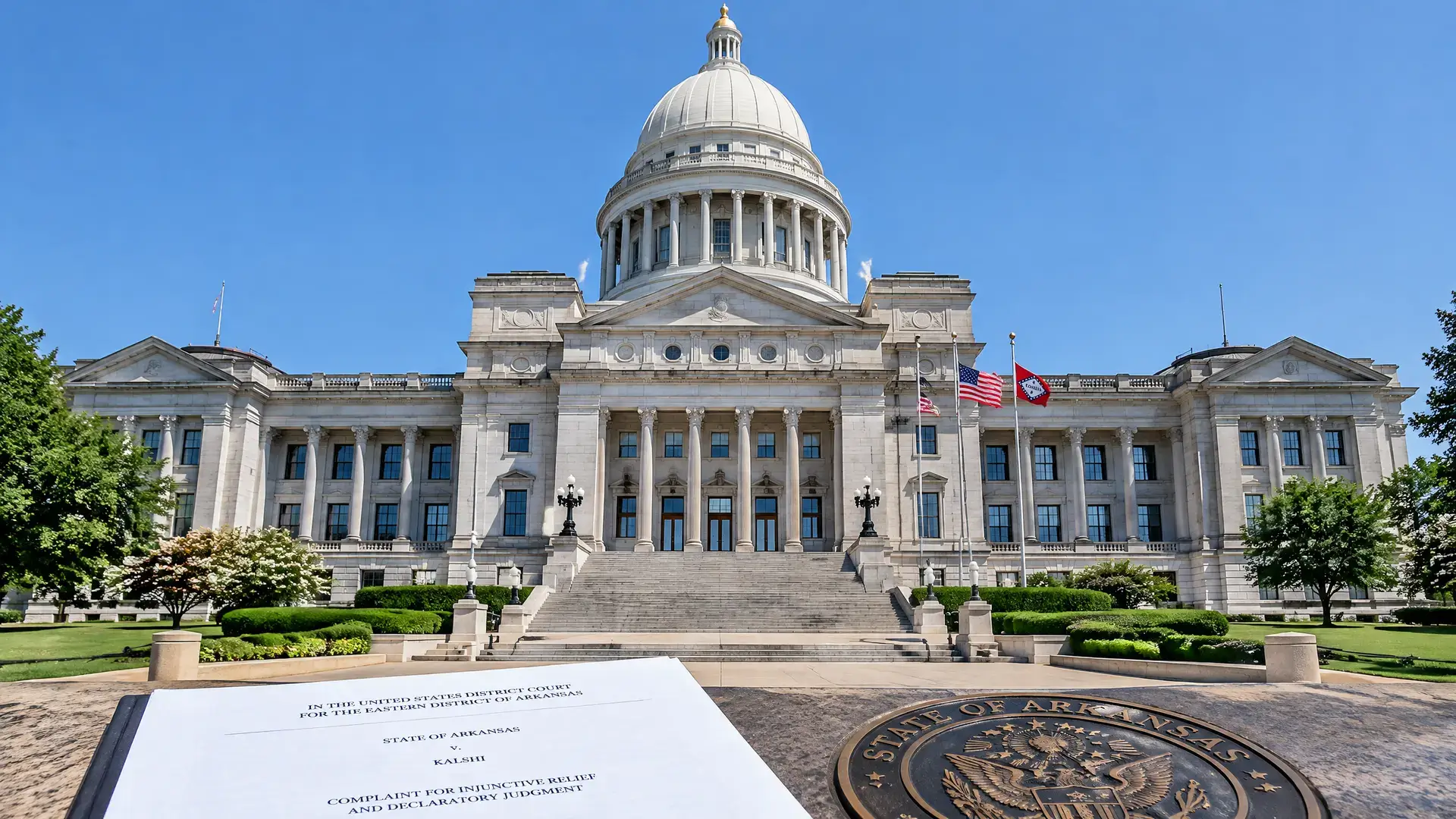
Attorney General Tim Griffin filed the lawsuit on Wednesday. According to him, it is simple: putting money on the outcome of games, like with the Razorbacks, counts as gambling and is illegal under Arkansas law when it happens through an unregulated platform.
The complaint calls Kalshi a “pocket-sized bookie.” Griffin also says the company is ignoring state rules around casinos and sports betting by letting users age 18 and older place real-money bets on sports and entertainment outcomes. He wants a judge to rule that Kalshi violated the deceptive trade practices law and that customers get their money back.
More States Step In
The Arkansas case is not happening in isolation. Utah filed 14 criminal charges against Kalshi and co-founders Tarek Mansour and Luana Lopes Lara last week, shortly after the state had already filed a civil case. Arizona, Connecticut, Massachusetts, Michigan, and Nevada have also taken steps, filed lawsuits, or restricted access, according to the available information.
Kalshi has long said its sports contracts are not gambling, but financial derivatives regulated by the CFTC. That tension between federal and state rules makes the legal situation around prediction markets complicated and varies by jurisdiction. In New Jersey, Kalshi previously got support from an appeals court, while a federal judge in New York in July 2026 gave the state room to enforce gambling laws against Kalshi's sports contracts.
The broader market for prediction contracts is also under pressure. An earlier loss in another sports contract case already showed that the legal line can vary a lot from state to state and court to court.
Why This Matters
For European crypto followers, this case matters because prediction markets often sit at the intersection of crypto, derivatives, and regulation. The outcome could show how far a platform with event contracts can go before states step in, while federal regulators are taking a different view. That makes Kalshi an important example of how quickly rules around new trading products can shift.