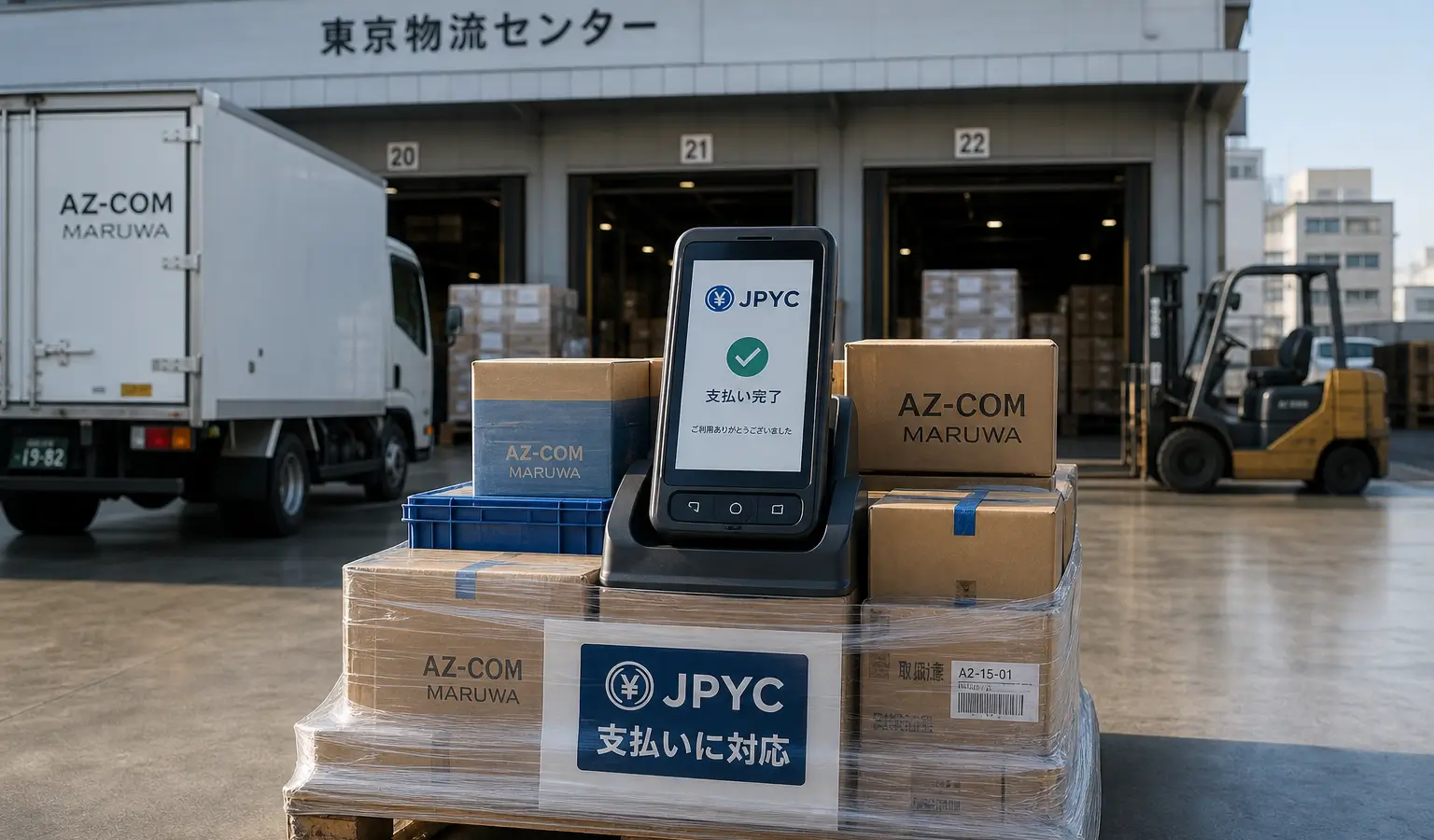
AZ-COM Maruwa to Use Japan's JPYC Stablecoin
The logistics group wants to handle payments to 2,300 partners through JPYC. The regulated yen stablecoin is meant to speed up payments in Japanese logistics.
Key Takeaways
- AZ-COM Maruwa wants to start handling payments to about 2,300 business partners in the regulated yen stablecoin JPYC.
- The company is using JPYC for payments across its logistics network so drivers and carriers can get paid faster.
- JPYC is Japan's first fully regulated yen stablecoin, and this move shows stablecoins are being used more often for business payments.
A Japanese logistics company that works with Amazon Japan is preparing to use the regulated yen stablecoin JPYC for payments. AZ-COM Maruwa Holdings plans to pay roughly 2,300 business partners, including subcontractors and independent truck drivers, with the token. The move would mark a meaningful step toward routine crypto use in Japanese business payments.
Business Payments in JPYC
According to Nikkei Asia, the payments cover fees and other transfers inside AZ-COM Maruwa's network. The Tokyo-listed company reported revenue of 230.5 billion yen for the fiscal year through March, or about $1.4 billion (€1.2 billion).
AZ-COM Maruwa has been working with Amazon Japan since 2017 on delivery services tied to the retailer's online business. By using JPYC, the company aims to move money to drivers and smaller carriers more quickly in an industry that is already dealing with labor shortages, an aging workforce, and stricter overtime limits in Japan.
Why JPYC Stands Out
JPYC is Japan's first fully regulated yen stablecoin. It launched in October last year under the Payment Services Act and is designed to stay pegged 1-to-1 with the yen. The token is backed by bank deposits and Japanese government bonds, and its onchain circulation topped 2 billion yen last week.
That combination of regulation and reserve backing makes JPYC attractive for companies that want quicker settlement without depending entirely on traditional banking systems. For European crypto readers, the main point is that Japan is no longer treating stablecoins as a niche experiment, but as part of normal payment flows. Lawson testing stablecoin payments in a Tokyo store also shows JPYC appearing more often in real-world payment trials.
More Than a Pilot
Nikkei also reported that AZ-COM Maruwa is weighing a formal business partnership with JPYC's issuer and could invest 1 billion yen in the token. If that happens, the plan would go beyond payments alone and point to a broader role for the stablecoin in the company's operations.
The announcement follows news that supermarket chain Lawson plans to test JPYC in a Tokyo store starting in early August. Taken together, the developments suggest regulated stablecoins in Japan are moving fast from small retail pilots to large-scale business-to-business payments.