Hamas Warns Donors About Binance in DOJ Documents
DOJ documents show how Hamas weighs crypto exchanges based on the risk of detection or blocking. Binance, OKX, and other platforms responded by pointing to their KYC and sanctions checks.
Key Takeaways
- According to DOJ documents, Hamas reportedly advised donors not to use Binance for money transfers.
- Instead, Bybit, OKX, Kast, and Redotpay were named as alternatives.
- The case highlights the importance of compliance and monitoring for crypto exchanges, including in Europe.
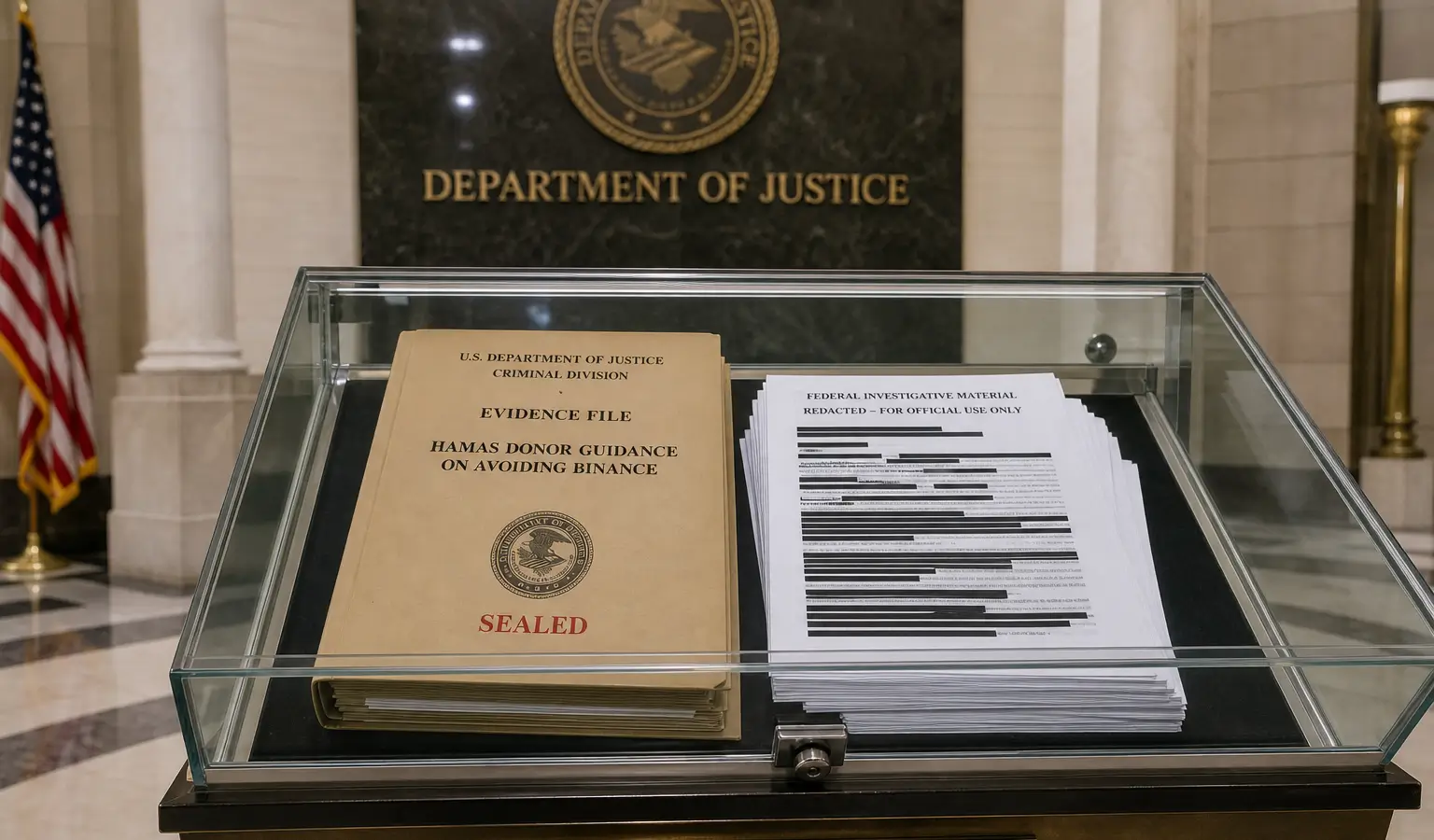
Hamas has advised donors, according to recent documents from the American Department of Justice, not to use Binance for money transfers and instead pointed to Bybit, OKX, Kast, and Redotpay. The instruction offers a rare look at how a sanctioned group evaluates crypto platforms based on the chance that transfers will be noticed or blocked.
What the Documents Show
The documents do not automatically suggest that the companies mentioned have weak KYC or AML controls. Large crypto exchanges and stablecoins are used for all kinds of purposes, including by legitimate users.
According to the U.S. government, crypto remains one of the channels sanctioned groups and other illegal actors use to move money across borders. Stablecoins and online wallets play a major role in that. The U.S. Treasury said in its 2026 risk assessment for terror financing that groups like Hamas and ISIS continue to use digital assets for donations and transfers, although traditional financial products remain their preferred method according to that same assessment.
The focus on Hamas and crypto is not new. The group started asking for crypto donations back in 2019 through the Al-Qassam Brigades and described them at the time as anonymous and hard to trace, including via Telegram. After the October 7, 2023 attacks, the U.S. focus on terror financing tied to Hamas shifted further, partly because of investigations into money flows that may have been linked to the group. An earlier crypto seizure in a Hamas case also shows that U.S. authorities have been trying to trace these money flows for some time.
Binance Under Compliance Pressure
Binance said the passage actually shows that its own controls are working. According to chief compliance officer Noah Perlman, Binance is not a safe place for illegal actors and the company invests heavily in sanctions screening, transaction monitoring, and investigations.
OKX said the wallet address in the February 10, 2025 communication had no connection to the company and had already been flagged by internal controls as linked to illegal activity. Attempts by customers to send money to that address were therefore flagged and blocked, according to the exchange.
Kast said it has a separate compliance function with more than 50 employees within the broader compliance organization. The company first identifies and screens customers and also uses outside parties for sanctions screening, customer due diligence, and transaction monitoring. Bybit declined to comment and Redotpay did not respond.
Why This Matters
For European crypto readers, this case shows how important compliance and monitoring have become for major crypto exchanges. The rollout of MiCA in the EU has tightened KYC requirements even further, with the goal of increasing transparency and making abuse harder. That makes documents like these relevant outside the U.S. too, for the broader crypto market.