Bank of Italy Says Stablecoins Aren't Always Cheaper for Remittances
The Bank of Italy says the biggest costs come from conversion and payout, not from the blockchain itself. That puts the promise of USDC and other stablecoins for remittances in a new light.
Key Takeaways
- The Bank of Italy says stablecoin transfers are not inherently cheaper than traditional remittances.
- In a study of 10 corridors, total costs ranged from about 0.3 percent to nearly 9 percent.
- The biggest expenses came from conversions, local-currency payouts, FX spreads, and fees outside the blockchain.
Stablecoins have long been promoted as a faster, cheaper way to move money across borders, but a new study from the Bank of Italy is putting that claim under pressure. The researchers found that transfers using stablecoins are not reliably cheaper than standard remittances once you account for the full process, from funding the transfer to converting it back into local currency.
Costs Sit Outside the Blockchain
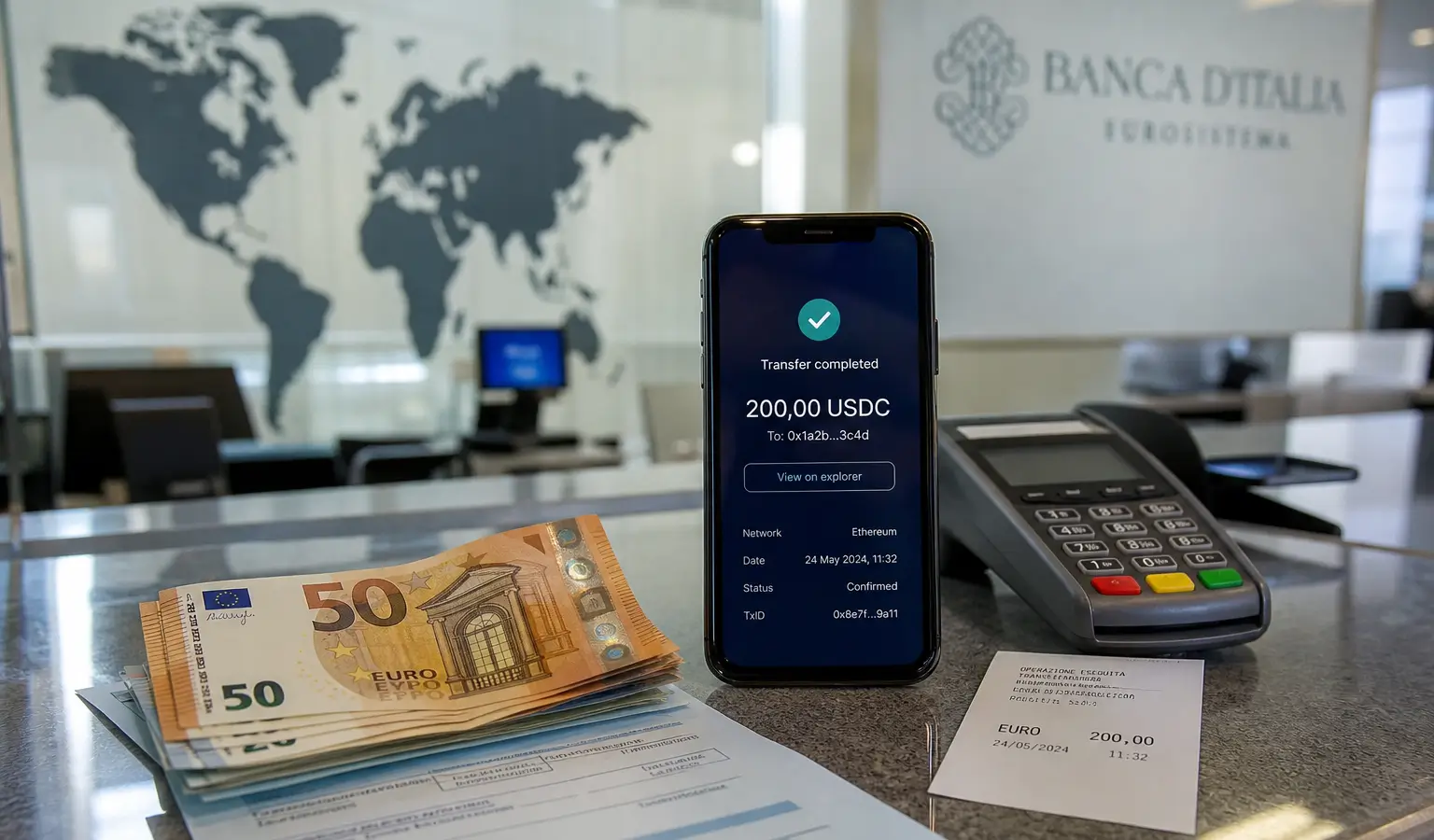
The mystery shopping study examined 10 international remittance corridors and tested transfers of 200 USDC from Italy to countries including Argentina, Brazil, South Africa, the United Arab Emirates, and Japan. Depending on the corridor and provider, total costs ranged from roughly 0.3 percent to almost 9 percent of the amount sent.
The researchers say the blockchain itself is usually not where the money goes. Network fees were small, while the main costs came from turning euros into USDC, cashing out into local currency, FX spreads, and charges from crypto exchanges and banking networks. In other words, the cheap part is the on-chain transfer. The expensive part is everything around it.
Why the Route Matters
The study also shows that stablecoins only appear inexpensive when both sides remain inside the crypto system. In the real world, though, recipients often need local currency for everyday expenses like rent, groceries, and bills, which means extra conversions and middlemen are hard to avoid.
That points to a broader issue for crypto payments: their efficiency depends heavily on the local payment setup. In countries with fast instant payment rails, such as Italy and Brazil, stablecoins can offer more of an advantage. In markets that still lean on traditional banking infrastructure, those savings can fade quickly. In Japan, that connection to existing payment rails is already being tested in practice, including with stablecoin payments in a Lawson store.
Relevant for European Crypto
For European crypto readers, the takeaway is simple: stablecoins are not automatically the cheapest option in the real world. The Bank of Italy says regulated off-ramp providers and tighter links to domestic payment systems could help lower costs, which is becoming more relevant under MiCA and the broader push to improve Europe’s market infrastructure. Even so, FX remains a built-in cost in cross-border payments, no matter how little the blockchain itself costs.