Bank of Korea Launches Live CBDC Test With Nine Banks
The pilot is moving into real transactions with deposit tokens, while South Korean banks are also working on won-backed stablecoin infrastructure.
Key Takeaways
- The Bank of Korea will launch a live CBDC test with nine banks and real transactions in September.
- The central bank wants this second phase to lay the groundwork for commercializing deposit tokens.
- South Korean banks are also working on stablecoin infrastructure as CBDC tests expand worldwide.
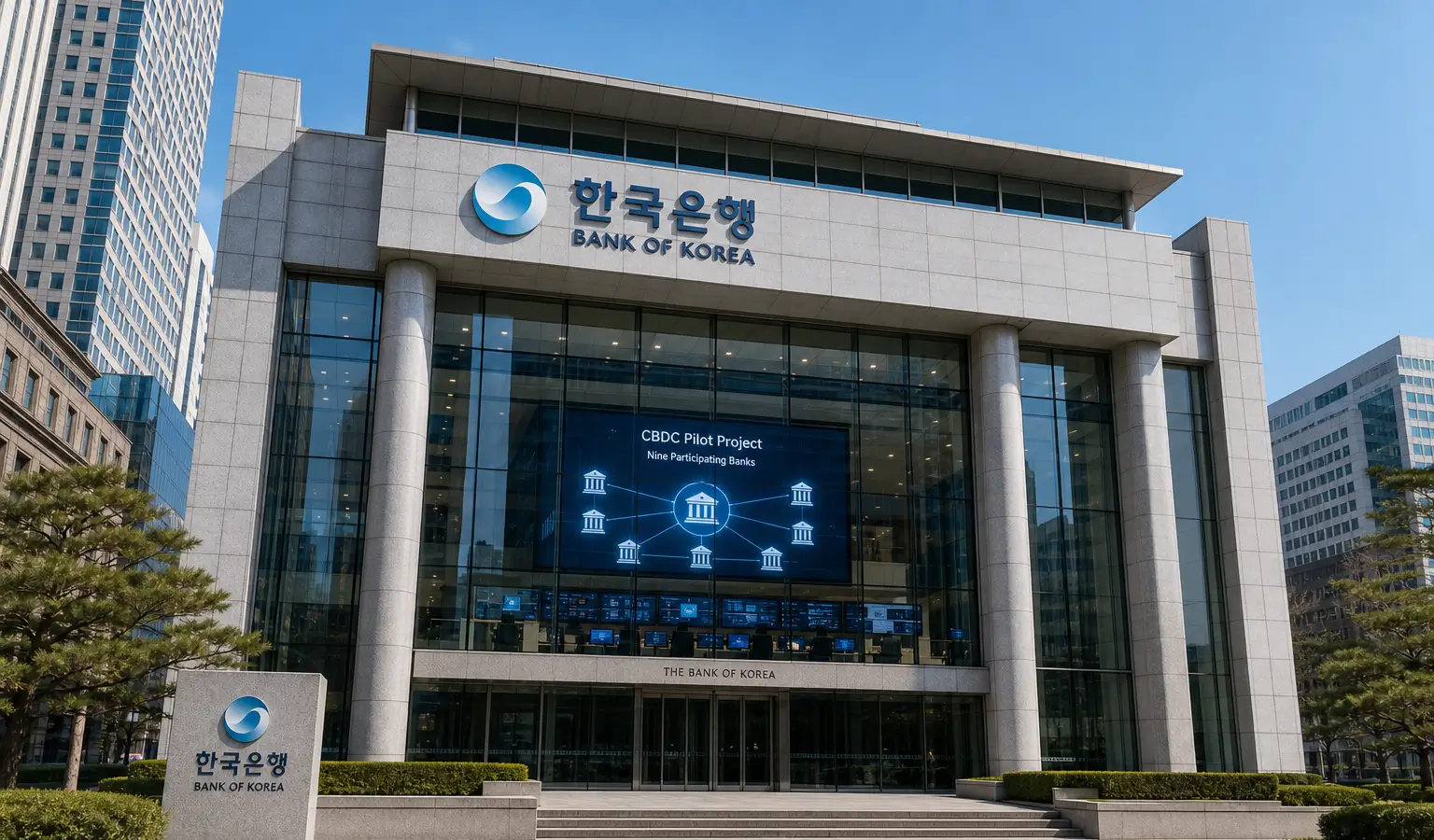
The Bank of Korea is set to move its CBDC program into a live testing phase in September, with nine banks participating. The shift takes the project beyond planning and into real transactions, which the central bank says should help advance the commercial use of deposit tokens.
Live Transactions in September
According to Yonhap News Agency, the second phase of the CBDC program begins in September. Unlike the earlier stage, this round will use real transactions, with the Bank of Korea supplying the infrastructure and the participating banks offering services built on deposit tokens.
A BOK official told YNA that the central bank wants this phase to help set the stage for commercialization. Yonhap also reported that the goal is to build an environment where the won can be used more freely, no matter the time or place.
Nine banks are involved in the pilot, including Gyeongnam Bank and iM Bank. South Korea’s three largest banking groups, KB Kookmin, Shinhan, Hana and Woori Financial Group, are also continuing to take part in the project.
Broader CBDC Framework
South Korea’s test is part of a wider global push. The Atlantic Council says 41 countries are currently testing a CBDC, while 33 more are developing one. So far, only a small group of countries has officially launched a CBDC, including the Bahamas, Nigeria, and Jamaica.
The Bank of Korea is also not the only player in the country working on digital money infrastructure. South Korean banks are building their own stablecoin infrastructure at the same time. Hana Bank, for instance, has begun mapping out systems for a possible won-backed stablecoin, covering issuance, redemption, settlement, digital wallets, and anti-money laundering checks.
Why This Matters
For European crypto readers, the bigger takeaway is that central banks and commercial banks are increasingly testing similar payment rails to private crypto firms, but inside a regulated system. New Governor Shin Hyun-son has also placed CBDC and central bank-issued deposit tokens near the top of his agenda, which suggests the issue has both political and institutional backing.
At the same time, South Korea is also looking to revise its national asset laws so crypto can be treated as a national holding. Combined with the CBDC pilot and the stablecoin plans, that shows how quickly blockchain and digital money are moving into the country’s public financial infrastructure. It also fits into the broader debate over how South Korea wants to build crypto into its legal and financial system, as seen in the proposal to include crypto in the national wealth law.