Base Shifts to a Trading-First Strategy Under Jesse Pollak
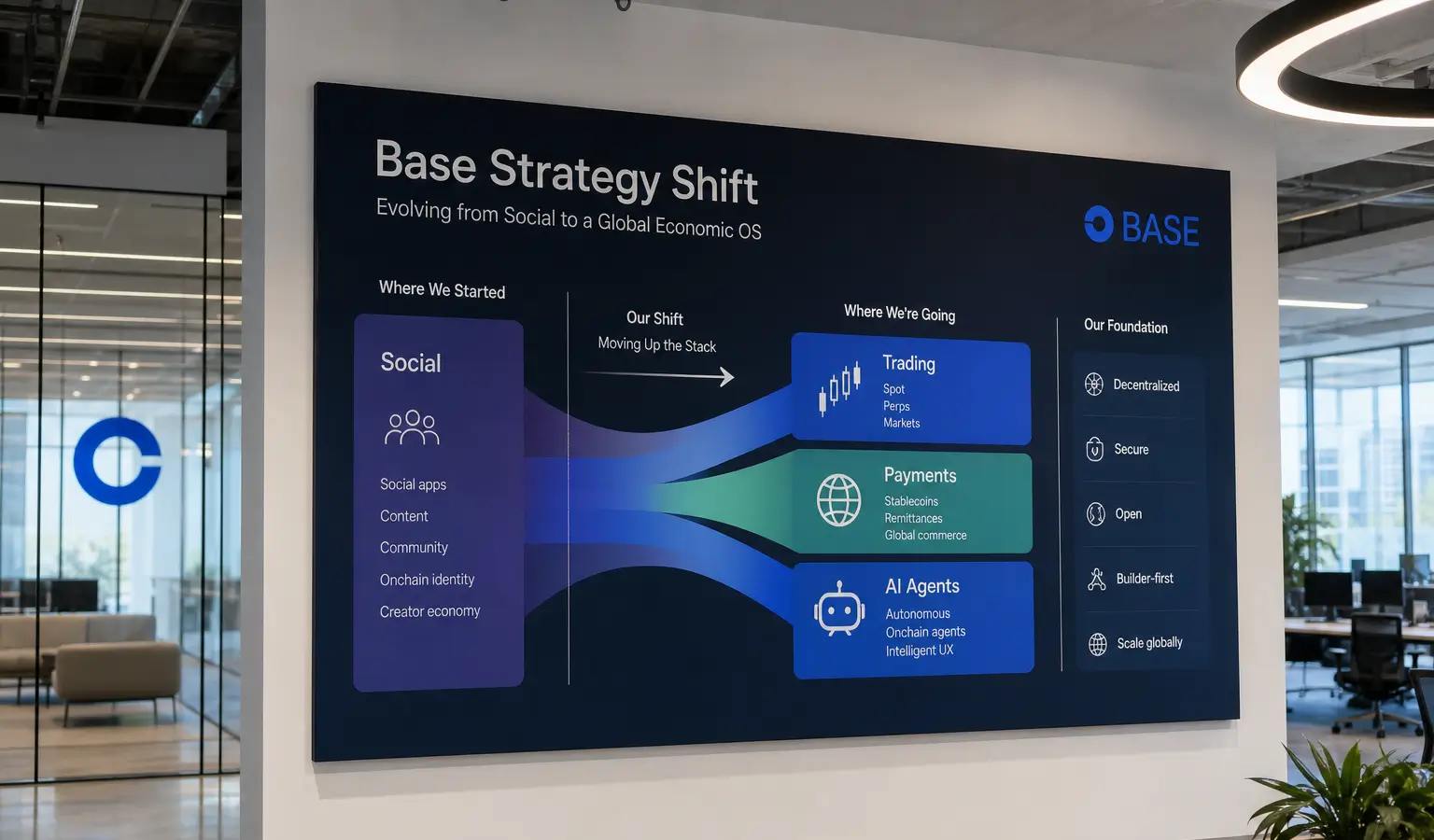
Pollak is handing app development back to Coinbase and steering Base toward trading, payments, and AI agents. Cobie, or Jordan Fish, is taking over after the failed social-first bet.
Key Takeaways
- Jesse Pollak is stepping back from leading the Base app after the push for an onchain social economy fell short.
- The focus is shifting to trading, payments, and AI agents, while app development moves back to Coinbase and Cobie takes the lead.
- Pollak admits social apps failed and that Base lagged behind competitors in trading, tokenization, and payments.
Coinbase executive Jesse Pollak is giving up day-to-day leadership of the Base app after saying his push for an onchain social economy did not land the way he hoped. Base is now moving toward trading, payments, and AI agents, while app development shifts back to Coinbase and Jordan Fish, better known as Cobie, steps in.
The Social Bet Fell Flat
Pollak said he spent the last two years backing builders and onchain-native social products such as Farcaster, Zora, mini apps, and creator coins as the next big growth engine for crypto. In a post on X, he wrote that developers did help drive adoption through products like stablecoins, prediction markets, and perpetual futures, but that social apps ultimately fell "completely" short.
He said he was "definitively wrong," and added that Base had fallen behind rivals in several important areas, especially trading, tokenization, and payments. For an industry that has spent years looking for a consumer use case beyond trading, that is a meaningful shift in tone.
Cobie Takes Over the App
Pollak said the Base app is moving back under Coinbase’s control, with Cobie set to lead its next stage of development. According to Pollak, Fish wants to build "the best damn app for onchain" and is thinking beyond the Base ecosystem itself.
The move also fits Coinbase’s wider push into onchain products. The crypto company bought Fish’s Echo platform last year for $375 million (€329 million), after Echo had already raised more than $200 million (€175 million) for over 300 projects. After the acquisition, Echo’s Sonar product was folded into Coinbase’s ecosystem as part of an effort to support direct token sales on the blockchain.
What This Says About Crypto
The change suggests crypto growth is relying less on social apps and more on products tied directly to trading and financial infrastructure. Stablecoins, tokenization, decentralized derivatives, and AI-powered applications are drawing far more attention from developers and investors than the social-first experiments Base had been betting on.
For European crypto readers, the main takeaway is that major players are now openly building around use cases that sit closer to payments and market activity. That could make the next wave of onchain adoption feel less like a social network and more like a set of tools that plug into existing crypto workflows. The broader tokenization trend is also getting more attention because of that, as seen in the shift toward stocks, credit, and stablecoins, where the market is increasingly focused on financial applications with direct practical value.