Tokenization Shifts Toward Stocks, Credit, and Stablecoins
RWA data shows growth shifting from tokenized Treasuries to stocks, private credit, and stablecoins, with Figure’s home-equity token as the largest asset.
Key Takeaways
- In 2026, tokenization growth is being led mostly by tokenized stocks, private credit, and stablecoins, while tokenized Treasuries have slowed to a crawl.
- The largest tokenized asset is a home-equity token from Figure Technologies, which was worth about $20.1 billion on July 7.
- Among stablecoins, regulated and fully backed tokens are gaining share, while Ethena’s USDe saw about $1.4 billion in redemptions.
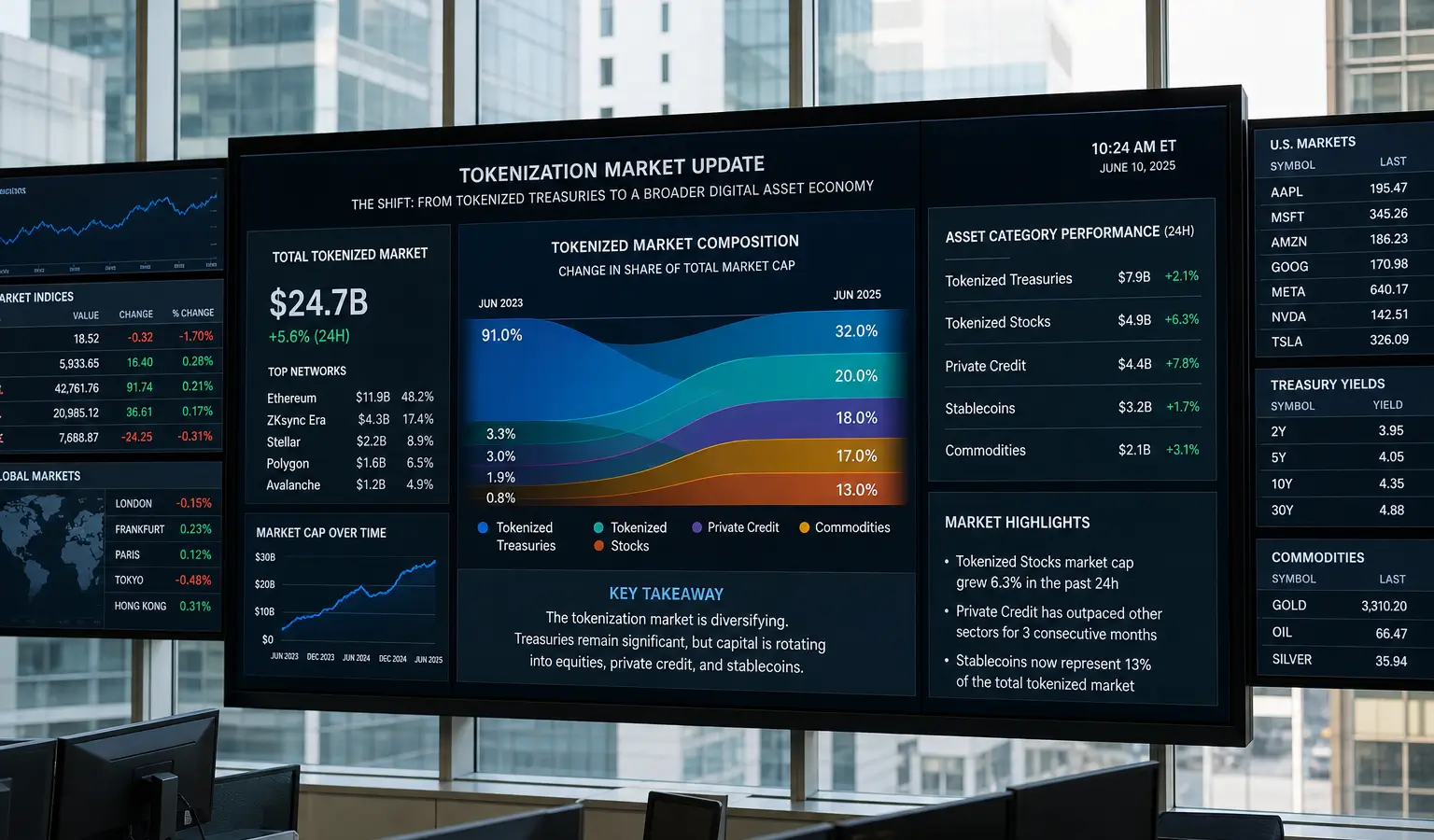
New RWA.xyz data points to a clear change in tokenization trends in 2026. Tokenized Treasuries used to define the sector, but now tokenized stocks, private credit, and a growing mix of stablecoins are drawing more of the momentum. Even so, a large share of value is still concentrated in a few major products, including a home-equity token from Figure Technologies.
Stocks Are Gaining Ground
The data from May 31 to July 9, 2026, makes the shift easy to see. Tokenized US Treasuries, including funds such as BUIDL and BENJI, total $15.16 billion (€13.3 billion) and increased just 0.74 percent over 30 days. Tokenized stocks are still much smaller at $1.85 billion (€1.6 billion), but they climbed 28.6 percent over the same period.
The usage data tells a similar story. Monthly transfer volume in stock tokens rose 87 percent to $8.76 billion (€7.7 billion), while the number of holders increased 24.5 percent to more than 443,000. That fits a broader pattern in which tokenization is no longer just about cash-like products. It is also moving into investment assets that can trade around the clock and allow fractional ownership. That trend is showing up in tokenized stocks, where firms like Dinari and tZERO are building infrastructure to make listed shares easier to access onchain.
The Biggest Token Is a Home Loan
The largest tokenized asset is not a BlackRock fund. It is a home-equity token from Figure Technologies. The token represents loans recorded on the Provenance blockchain and then financed and traded onchain. According to the data, it reached about $20.1 billion (€17.6 billion) on July 7, which is more than $730 million (€639 million) above its level three weeks earlier.
That puts it above all tokenized US Treasuries combined and more than ten times the size of the tokenized stock market. The scale shows that tokenization is not only about retail-friendly products. It is also being used for securitization and other financing structures that usually live in the capital markets. In that broader segment, special-purpose vehicles and securitizations are becoming more common because they can make underlying assets easier to trade without replacing traditional finance altogether.
Stablecoins Are Shifting Internally
The total value of stablecoins has barely moved, holding near $321 billion (€281 billion) since June 7. But the mix inside the category is changing quickly. USDGO, a regulated dollar from Anchorage Digital Bank, grew 54 percent in three weeks to $6.12 billion (€5.4 billion). Global Dollar (USDG) rose 16 percent, and Dai added 8 percent.
At the same time, Ethena’s USDe dropped 16 percent, equal to about $1.4 billion (€1.2 billion) in redemptions. That stands out because USDe is a synthetic dollar that generates yield through crypto trading positions rather than bank deposits. The move toward regulated, fully backed tokens suggests that market participants are increasingly favoring simpler and more transparent dollar structures right now.
Why This Matters
For European crypto readers, the bigger takeaway is that tokenization is becoming a more diverse story. The data shows growth coming not just from Treasuries, but also from stocks, credit, and stablecoins, with traditional financial structures playing a bigger role. That could matter for firms trying to understand how onchain markets connect with existing capital markets and settlement systems.