U.S. Banks Get Four-Year CBDC Ban Under Housing Law
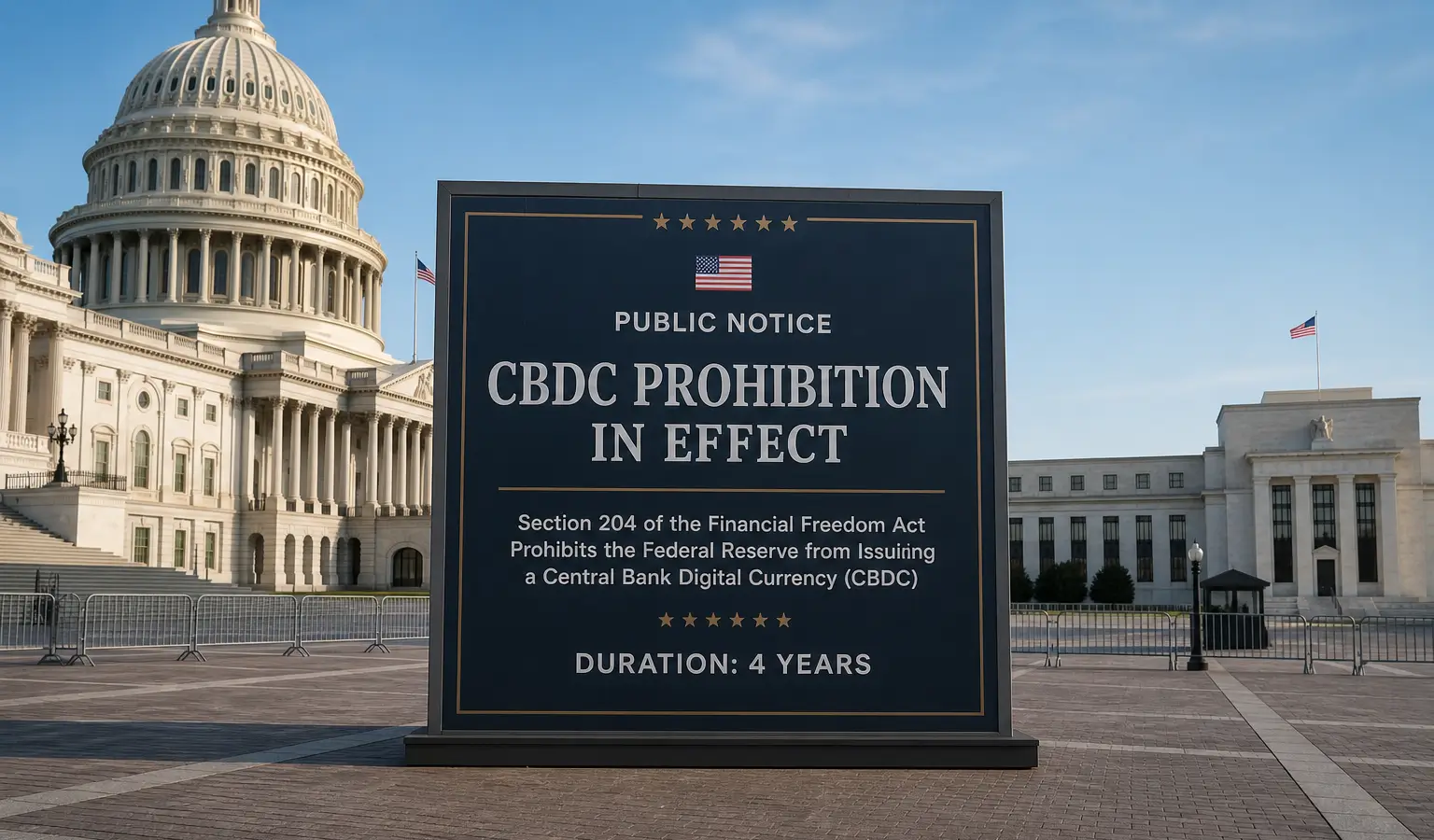
The Fed will be barred from launching a digital dollar for four years after a housing bill with a CBDC ban becomes law automatically, underscoring the political resistance to central bank digital currencies and broader crypto policy in the U.S.
Key Takeaways
- The Federal Reserve will be barred from issuing its own digital dollar for four years because of a CBDC ban in a housing bill.
- The law takes effect automatically because President Donald Trump did not sign the bill and also did not formally veto it.
- The ban is seen as a symbolic win for the crypto industry and temporarily puts the brakes on federal digital dollar plans.
The Federal Reserve will be blocked from launching its own digital dollar for the next four years after a housing bill with a CBDC ban becomes law at midnight. For crypto advocates, the move is mostly symbolic, especially since there was never a serious push in the U.S. to roll out a coin like that in the first place.
The Law Takes Effect Automatically
President Donald Trump declined to sign the bill, but he also stopped short of issuing a formal veto. Under the U.S. Constitution, legislation that clears Congress still becomes law after ten days. In this case, that means the measure will take effect at the first moment of Saturday.
Trump wrote on Truth Social on Friday that he would not sign the housing bill because the Senate failed to pass the SAVE AMERICA ACT. He added that the setback could hurt Republicans in the midterm elections.
Years of Debate Over a Digital Dollar
The Federal Reserve has spent years weighing the potential upsides and risks of a U.S. CBDC. In 2022, the central bank released a discussion paper on the digital shift in money and payments, but it did not commit to launching anything. Much of the debate has centered on privacy and financial stability, the same issues that have shaped CBDC discussions in other countries.
Looking abroad, some countries have already launched their own digital currencies, while many others are still only studying the idea. That makes the U.S. ban a notable signal: for now, Washington is putting a hard stop on federal digital dollar plans. At the same time, the broader fight over crypto legislation is still moving, and the Clarity Act could come up later this summer.
Impact on Broader Crypto Legislation
The timing also has implications for the wider U.S. crypto policy debate. Trump’s refusal to sign the housing bill has raised fresh questions about what could happen if a completed Digital Asset Market Clarity Act reaches his desk later this summer. For lawmakers, investors and policy watchers, the episode is another reminder that crypto legislation in the U.S. depends not only on Congress, but also on whether the White House is willing to finish the process.