BIS Tests Tokenized Payments With JPMorgan and Citi
The pilot processed real cross-border payments in six currencies using tokenized central bank reserves and bank deposits. That means the BIS and 28 banks, including JPMorgan and Citi, are testing a new settlement layer.
Key Takeaways
- The BIS tested real cross-border payments with tokenized money in Project Agorá together with 28 banks, including JPMorgan, Citi, and UBS.
- The pilot processed about $1 million in six currencies and settled payments in about 80 seconds on average.
- The test used tokenized central bank reserves and commercial bank deposits, showing that tokenization is being considered for core financial infrastructure.
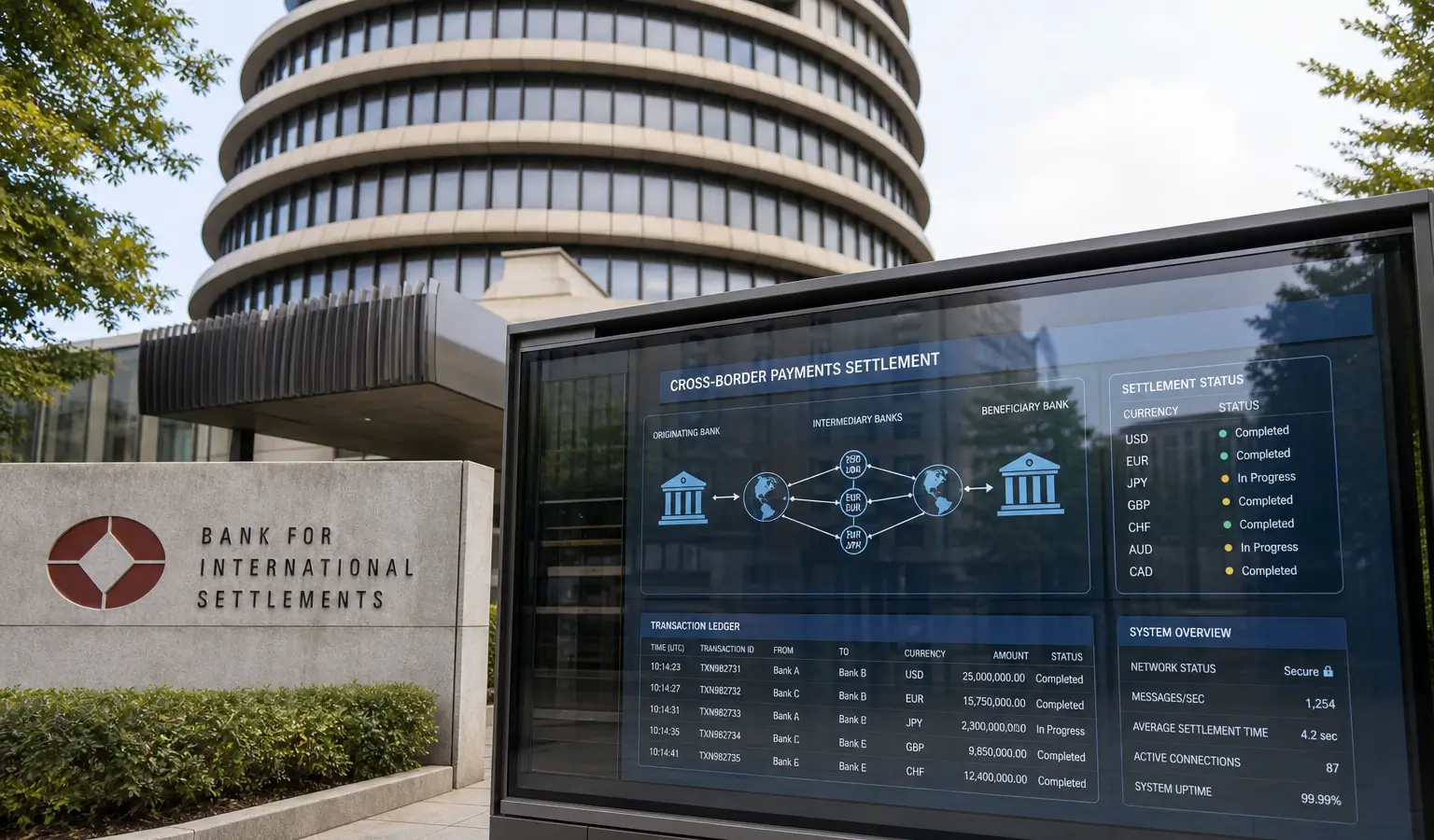
The Bank for International Settlements and a group of major global banks have tested real cross-border payments using tokenized money. In Project Agorá, 28 banks, including JPMorgan, Citi, and UBS, handled transactions in six currencies. The takeaway is that tokenization is no longer being treated only as a crypto-side experiment. It is now being explored as a possible part of the financial system’s core plumbing.
What Project Agorá Tested
According to the BIS, the pilot involved about $1 million (€0.9 million) in real-value transactions across the U.S. dollar, euro, British pound, Japanese yen, Swiss franc, and South Korean won. It used tokenized central bank reserves and commercial bank deposits to settle corporate payments, interbank transfers, and foreign exchange trades.
Payments settled in about 80 seconds on average. Another important detail is that the prototype was not directly plugged into the banks’ existing payment systems, although the BIS said it could still run alongside them. That makes the test especially relevant for institutions that want faster settlement without ripping out their current back-office setup.
Why This Matters for Banks
Project Agorá reflects a wider trend in which stablecoins and tokenized assets are gaining more traction in finance. Asset managers are already rolling out tokenized money market and private credit funds, while stablecoins are being used more often for cross-border payments and treasury management.
Large banks are also looking for ways to update that infrastructure. Swift Tests Blockchain Ledger With 17 Major Banks points to similar pilots focused on 24/7 cross-border payments using tokenized deposits.
The pilot also highlights how tokenized bank money differs from stablecoins issued by private companies such as Circle and Tether. Instead of a privately issued currency running on separate rails, this model uses tokenized central bank reserves and commercial bank deposits on a shared ledger designed to track ownership and payment status in one place.
Why This Matters for European Readers
For European crypto and financial market readers, the main point is that central banks and major commercial banks are now testing tokenization in something much closer to a live market setting. The focus is not speculation. It is settlement, transparency, and making old systems work with new digital rails.
The BIS says Project Agorá is one of several wholesale tokenization initiatives looking at how digital money could upgrade the infrastructure behind international markets. That makes the pilot worth watching for anyone following how blockchain technology is gradually moving from crypto-native use cases into regulated financial infrastructure.