Swift Tests Blockchain Ledger With 17 Major Banks
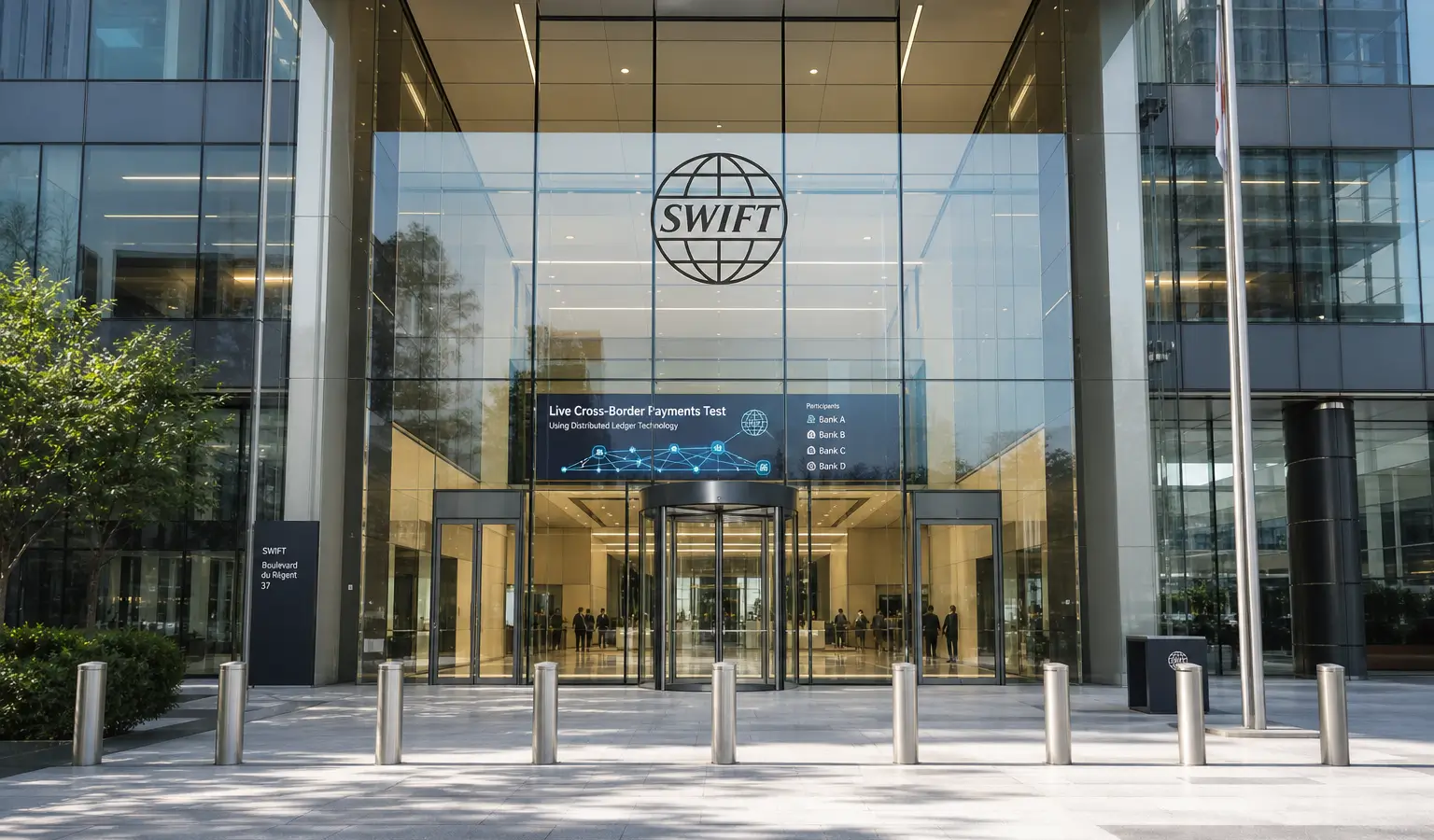
Swift is testing a blockchain ledger with 17 banks for tokenized deposits and cross-border payments outside banking hours. Final settlement will still run through existing payment systems.
Key Takeaways
- Swift is testing live transactions on a blockchain-based ledger with 17 major banks, including UBS, BNP Paribas, BNY, Citi, HSBC, and Wells Fargo.
- The ledger is designed to keep cross-border payments moving outside banking hours, while final settlement still happens through existing payment systems.
- Swift wants to create a shared layer for tokenized deposits and other digital assets without replacing today’s payment rails.
Swift is now running live transaction tests with 17 major banks on a blockchain-based ledger. The idea is to make cross-border payments possible even when banks are closed. In practice, that could let institutions move customer funds overnight and on weekends, while final settlement continues to flow through existing payment systems.
Banks Test Live Transactions
The banks involved include UBS, BNP Paribas, BNY, Citi, HSBC, and Wells Fargo. Swift said Thursday the ledger is ready for initial use by banks across six continents. The bank-owned messaging network, which connects more than 11,500 financial institutions, first unveiled the platform in October.
This is not a replacement for the current payments system. Swift is positioning the ledger as a shared layer for tokenized deposits that live on banks’ own ledgers. In simple terms, tokenized deposits are digital versions of commercial bank money, giving banks a way to move digital value without stepping outside the traditional banking framework.
Why This Matters
The test comes as banks, payment companies, and crypto firms all race to make cross-border transfers faster and available around the clock. Swift says the ledger is built to work alongside current payment systems and compliance processes, not around them. For European crypto readers, that’s important because traditional finance is increasingly trying to bring digital assets and tokenized money into the existing system instead of rebuilding it from scratch. Tokenized deposits at banks are heading in the same direction, with 24/7 settlement that keeps customers inside the traditional banking system.
From Stablecoins to Bank Money
Swift has already said the platform should be able to settle transactions involving stablecoins and tokenized assets across several blockchains. The network says 75 percent of payments on its system already reach the beneficiary bank within 10 minutes, and often in just seconds. The new ledger is meant to add an always-on layer for regulated digital money on top of that, while final settlement remains tied to existing systems.
Thierry Chilosi, chief business officer at Swift, said the company wants the new ledger capability to bring the reliability of traditional finance into digital money.