Bitcoin After 18 Years: From White Paper to Cultural Phenomenon
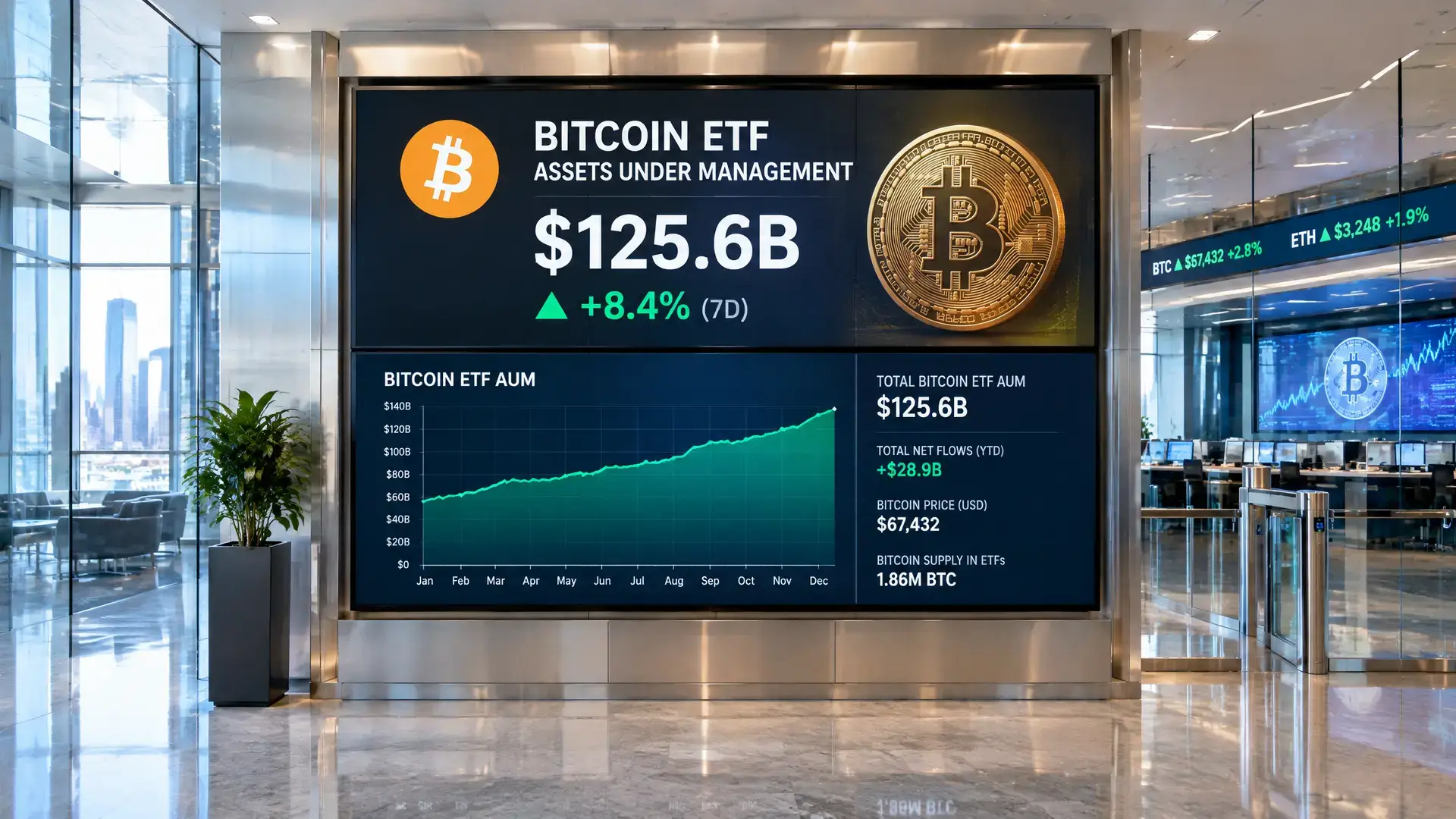
Spot Bitcoin ETFs now manage more than $120 billion, while banks and companies are increasingly building blockchain into regulated products. At the same time, security around custody and hacks remains a stubborn risk.
Key Takeaways
- Eighteen years after the white paper, Bitcoin has not become the everyday payment method it was meant to be, but it has become a cultural and financial phenomenon.
- Spot Bitcoin ETFs together manage more than $120 billion, pointing to strong institutional demand and broader adoption across the financial sector.
- The industry still faces security risks, such as the recent major hack at Binance, which highlights the importance of custody and fast coordination.
Eighteen years after the Bitcoin white paper, Bitcoin itself still is not the everyday payment method Satoshi Nakamoto had in mind. Even so, the project’s influence now reaches far beyond the coin itself. Bitcoin plays a role in financial products, corporate plans, popular culture, and even video games.
Bitcoin Is Embedded in the Financial Sector
Bitcoin has become firmly embedded in the financial world. Retail and institutional investors can now get exposure to the asset through spot Bitcoin ETFs, and companies are developing products that let you borrow against your Bitcoin. According to recent market data, spot Bitcoin ETFs now manage more than $120 billion (€107 billion) in assets, showing just how large institutional demand has become.
That growth fits a broader shift. Bitcoin’s volatility has eased over the long term, helped by more institutional adoption and the arrival of regulated products. That does not mean the coin has lost its sharp moves, but it does mean the market structure is different from crypto’s early years. The comparison with other major currencies and assets also shows that Bitcoin has become calmer, but it still remains clearly more volatile than traditional markets.
The Legacy of Blockchain
Bitcoin’s biggest legacy may be the technology behind it. Where people used to talk about blockchain as a separate idea, we now see major financial players increasingly trying to build that infrastructure into existing systems. The Bank for International Settlements stresses that digital innovations like tokenization need to be integrated into the existing financial system in order to preserve trust in money.
That lines up with current practice. More and more institutions are working with permissioned chains and other blockchain solutions for business use cases, while end users sometimes barely notice. The old split between crypto as money and blockchain as technology is therefore relevant again.
Why This Matters for Europe
For European crypto followers, this matters because the sector is less and less about standalone tokens and more about regulated products, infrastructure, and institutional access. That makes the Bitcoin debate broader than price moves alone. It is also about how crypto fits into the financial system without completely losing its original decentralized character.
At the same time, the piece shows that the industry still has a stubborn security problem. The recent major hack at Binance, in which more than $6 billion (€5.4 billion) in assets were reportedly lost, underscores how important custody, freezes, and fast coordination remain. It is exactly that tension between adoption and risk that still makes Bitcoin newsworthy after 18 years.