Bitcoin Tops $85,000 After Cooler U.S. Inflation
PCE inflation came in lower than expected, which affected Fed rate expectations and the price jumps in Bitcoin and gold.
Key Takeaways
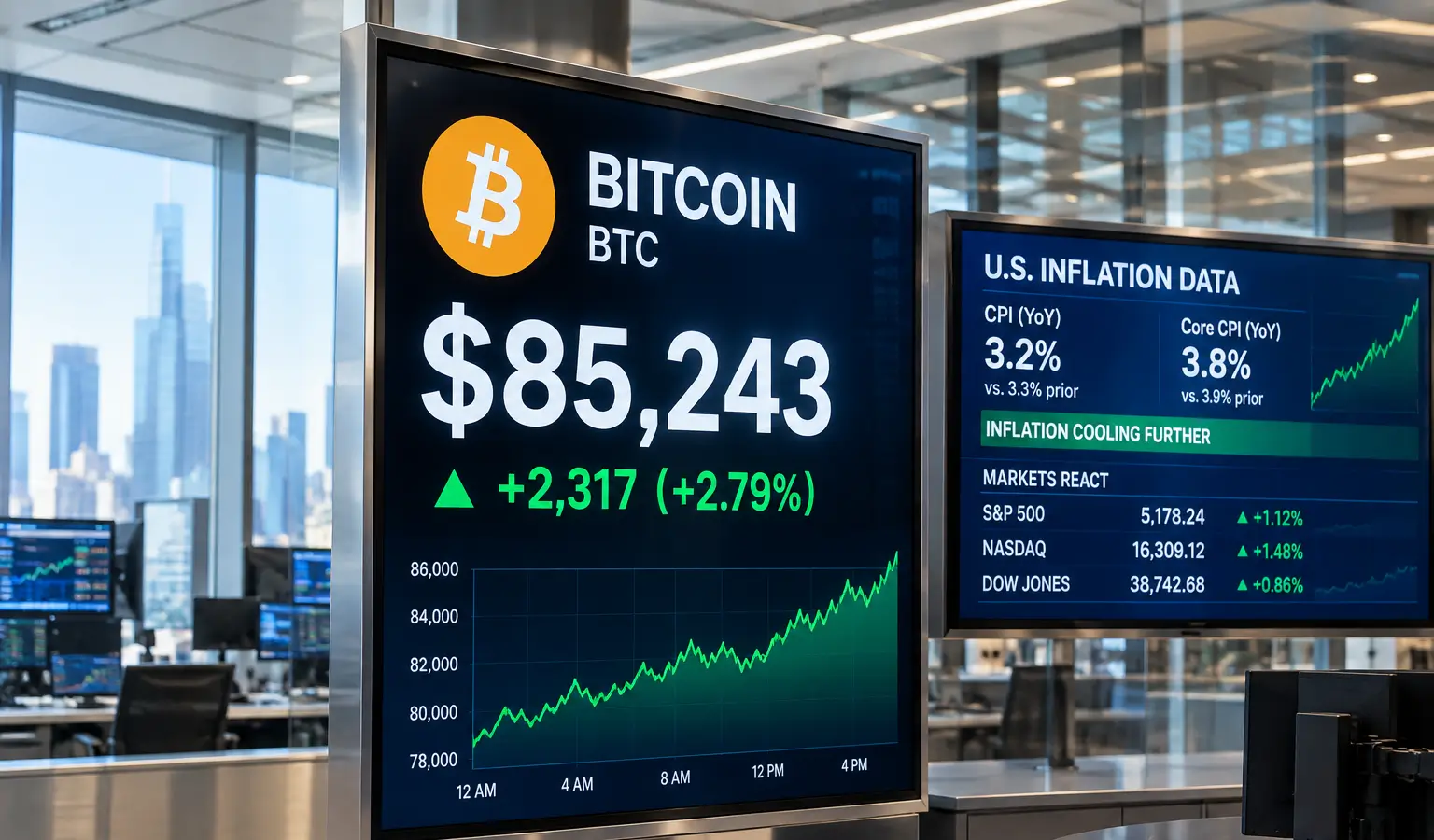
- Bitcoin rose above $85,000 on Wednesday after new U.S. inflation data showed price pressure cooled further in August.
- The PCE index came in at 3.4% year over year, while the core measure was 3.0%, both below expectations.
- The market is now watching the Fed's next move and Friday's jobs report, because these figures have a strong impact on the crypto market.
Bitcoin briefly topped $85,000 (€74,900) on Wednesday after new U.S. inflation data showed that price pressure cooled further in August. Gold also jumped sharply in a short period of time. The Fed is watching this data closely, because it factors into interest rate policy heading into the meeting later in October.
Inflation Cools Off
The Personal Consumption Expenditures index, better known as the PCE index, rose 3.4% year over year in August. That was clearly lower than the expected 3.7%. The core measure, excluding food and energy, came in at 3.0%, also below the 3.3% forecast.
On a monthly basis, core prices rose 0.2%, while economists had expected 0.3%. Overall PCE rose 0.3%, exactly in line with expectations. For the Fed, this is an important gauge, because the central bank gives this inflation measure more weight than other data.
Bitcoin and Gold React
The market had been expecting a hotter reading beforehand. That made the reaction extra sharp when it turned out inflation had cooled instead. The dollar was also already strong heading into the release, after a month in which the greenback benefited from tighter Fed signals.
Bitcoin and gold often move along with changes in interest rate expectations. Higher rates make non-yielding assets like gold less attractive, while Bitcoin also remains sensitive to shifts in Treasury yields and broader risk appetite. Earlier this month, the Fed raised rates by 0.25 percentage point to a range of 3.75% to 4.00%, the first hike since 2023.
What This Means for Crypto
For European crypto followers, the main takeaway is that U.S. macro data still moves Bitcoin quickly. The market is now watching the next Fed move and Friday's jobs report, which together with this inflation data could shape the picture for the rest of the month. That makes U.S. data directly important for the crypto market even outside the U.S.
The recent price jump above the production cost of Bitcoin miners also matters: if BTC stays above this level, it could further ease selling pressure from miners.