Bitcoin Cycle Cools $500,000 Predictions
The halving cycle and inflows through spot Bitcoin ETFs could fuel the next move, but the upside looks more muted than in earlier bull runs.
Key Takeaways
- Crypto analysts are already mapping out the next Bitcoin cycle, with some calling for prices between $300,000 and $500,000 later this year.
- Bitcoin has tended to follow a four-year rhythm tied to the halving, with past cycle tops often arriving 16 to 18 months after the event.
- The size of each rally has been shrinking as the market gets larger and more mature, helped by institutional products and lower volatility.
Crypto analysts are already looking toward the next Bitcoin cycle, which could begin later this year, and some are pointing to price targets between $300,000 and $500,000. Even so, one long-running market pattern suggests the next leg higher may not be as dramatic as the last few bull runs.
The Four-Year Cycle Still Leads the Way
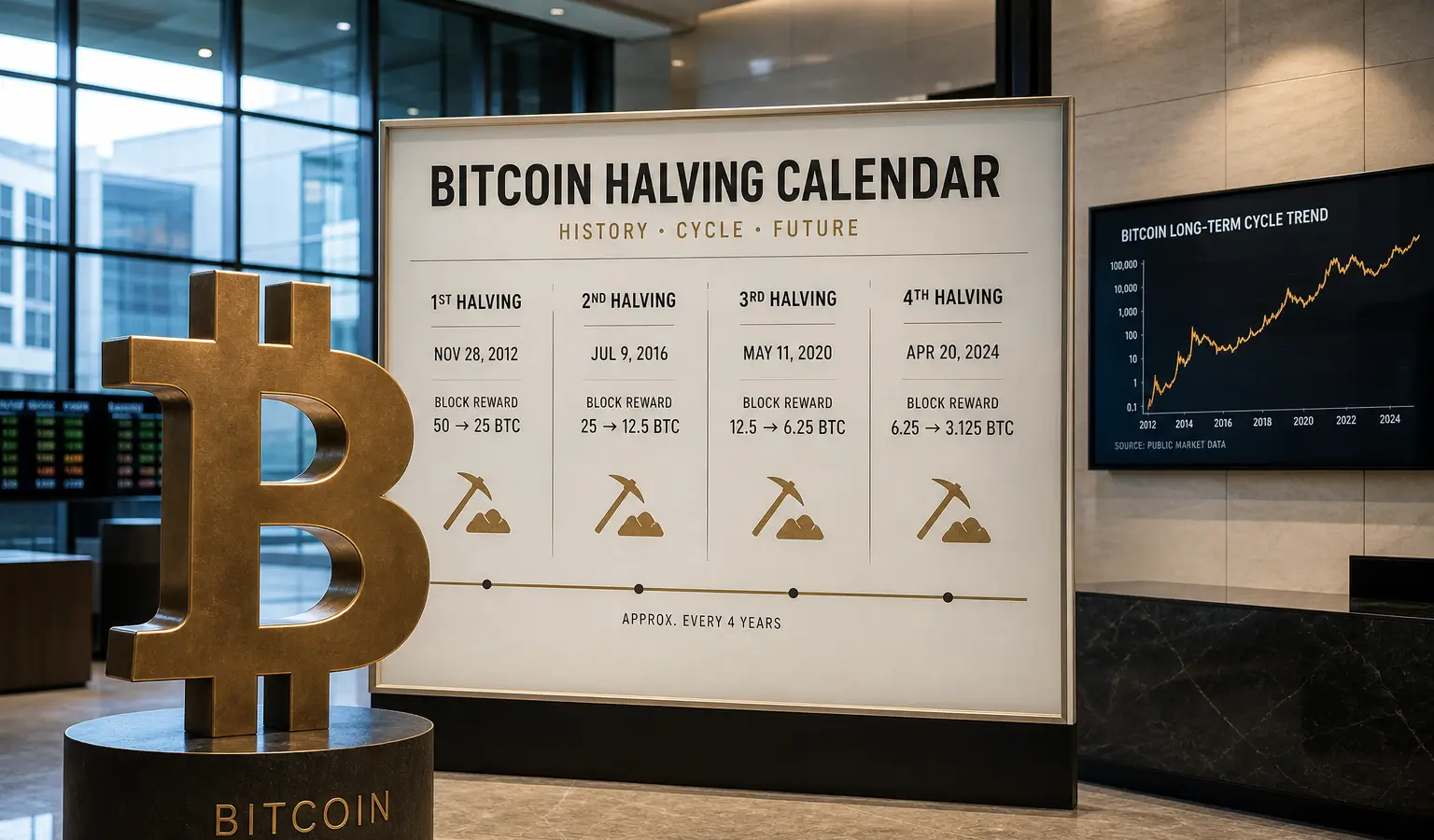
Bitcoin has historically followed a fairly consistent four-year pattern around the halving, when miner rewards are cut in half and the number of new coins added per block drops by 50 percent. The first halving happened in 2012, and the fifth is now scheduled for April 2028.
In past cycles, Bitcoin often found its bottom about 18 months before the halving. That was usually followed by a new bull market that peaked 16 to 18 months after the halving, before a bear market lasting roughly a year set in. If that same pattern holds, the next cycle top would arrive in 2029.
Why the Rally Could Be Smaller
The historical record still shows Bitcoin making fresh all-time highs, but the percentage gains have been getting smaller over time. Bitcoin rose from $266 (€233) in 2013 to nearly $20,000 (€17,500) in 2017, which was a huge multiple of the prior peak. It then climbed to about $69,000 (€60,400) in 2021 and reached $126,000 (€110,200) in 2025, a much more modest jump by comparison.
That lines up with a crypto market that is larger and more developed than it used to be. As market cap grows, it takes more capital to move the price meaningfully higher. The expansion of spot Bitcoin ETFs, along with futures, options, and other investment products, also points to a market that is becoming more institutional and less volatile. Bitcoin's average annual 90-day volatility has also declined over time, reinforcing that trend.
What This Means for Investors
For European crypto readers, the takeaway is that Bitcoin is starting to behave more like a mature macro asset than a purely speculative trade. That does not rule out large upside, but it does suggest the road to those levels may be less wild than it was in the early days of crypto.
At the same time, the 2024 halving shows the market still reacts strongly to new inflows. The launch of spot Bitcoin ETFs gave institutions regulated, custody-efficient access to BTC, widening participation even further. That makes the next cycle worth watching, especially as structural demand and falling volatility appear to be meeting in the same market at once.