Bitcoin Holders Face Replay Attack Risk in BIP-110 Fork
If the chain splits, signed transactions could be replayed on both chains, creating a risk of losing real BTC. Large holders, in particular, need to keep balances strictly separated.
Key Takeaways
- Bitcoin holders could face replay attack risk this weekend if a BIP-110 fork triggers a chain split.
- A signed transaction for fork coins could also be broadcast on Bitcoin, causing real BTC to move unintentionally.
- BIP-110 has little miner support, but nodes running the software could reject unmarked blocks starting at block 961.632.
Bitcoin holders could face an unexpected problem this weekend if the BIP-110 fork actually splits the chain. If someone tries to sell the new coins without fully separating the two balances, they could end up moving real BTC instead of the forked asset. For most holders, the safest move right now may be to do nothing.
Why Selling Could Be Risky
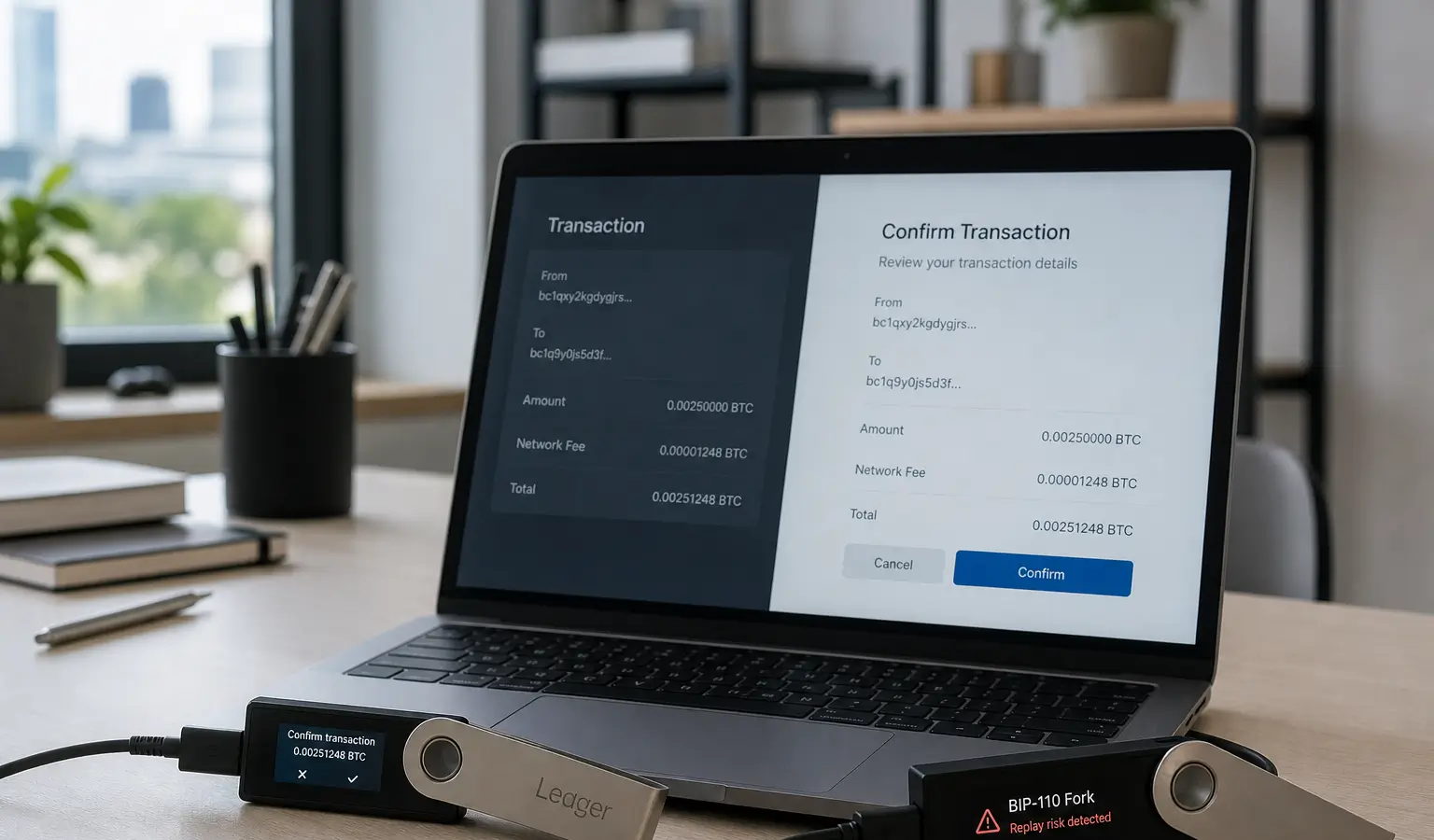
The danger comes from both chains recognizing the same transactions at the start. A signed transfer intended for the fork coins could also be valid on Bitcoin itself. If that happens, the buyer would receive the new coins and the same amount of real BTC at the same address. That is what’s known as a replay attack.
According to Bitcoin developer Kevin Loaec, who flagged the issue on X this week, large holders may be the most exposed. In that scenario, a wallet would not be emptied completely, but any coins that do move would leave the wallet as real Bitcoin. Transaction fees would also be paid on both chains.
What BIP-110 Changes
BIP-110 is a 2025 proposal designed to temporarily limit non-financial data in Bitcoin transactions so more block space is available for financial activity. Activation depends on miner signaling, but according to the latest status, support is still below 1 percent. That leaves room for confusion if the rules are enforced without broad agreement.
The proposal’s main threshold is steep: 1,109 marked blocks in a 2,016-block period, or 55 percent. That path appears out of reach for now, but the proposal also includes a fallback. Starting at block 961.632, expected this weekend, nodes running BIP-110 software would reject unmarked blocks even if miners have not signaled support.
Why This Matters for Holders
For European crypto readers, this is a reminder that even a technical Bitcoin change can affect custody and transaction safety in a very direct way. If a split happens, holders would initially see the same balance on both chains, while the second chain could end up being worth little or nothing. Only later, starting at block 965.664, would the actual BIP-110 rules for transaction data take effect, which could make it harder to separate the two balances safely for a period of time.
This kind of uncertainty is common around Bitcoin forks. Bitcoin's BIP-110 proposal already had very little support earlier, which only adds to the risk of confusion during rollout.
Timing also depends on how quickly blocks are mined, so the mandatory signaling window could begin a day earlier or later than expected. For now, that makes this more of a caution flag than a moment for rushed action.