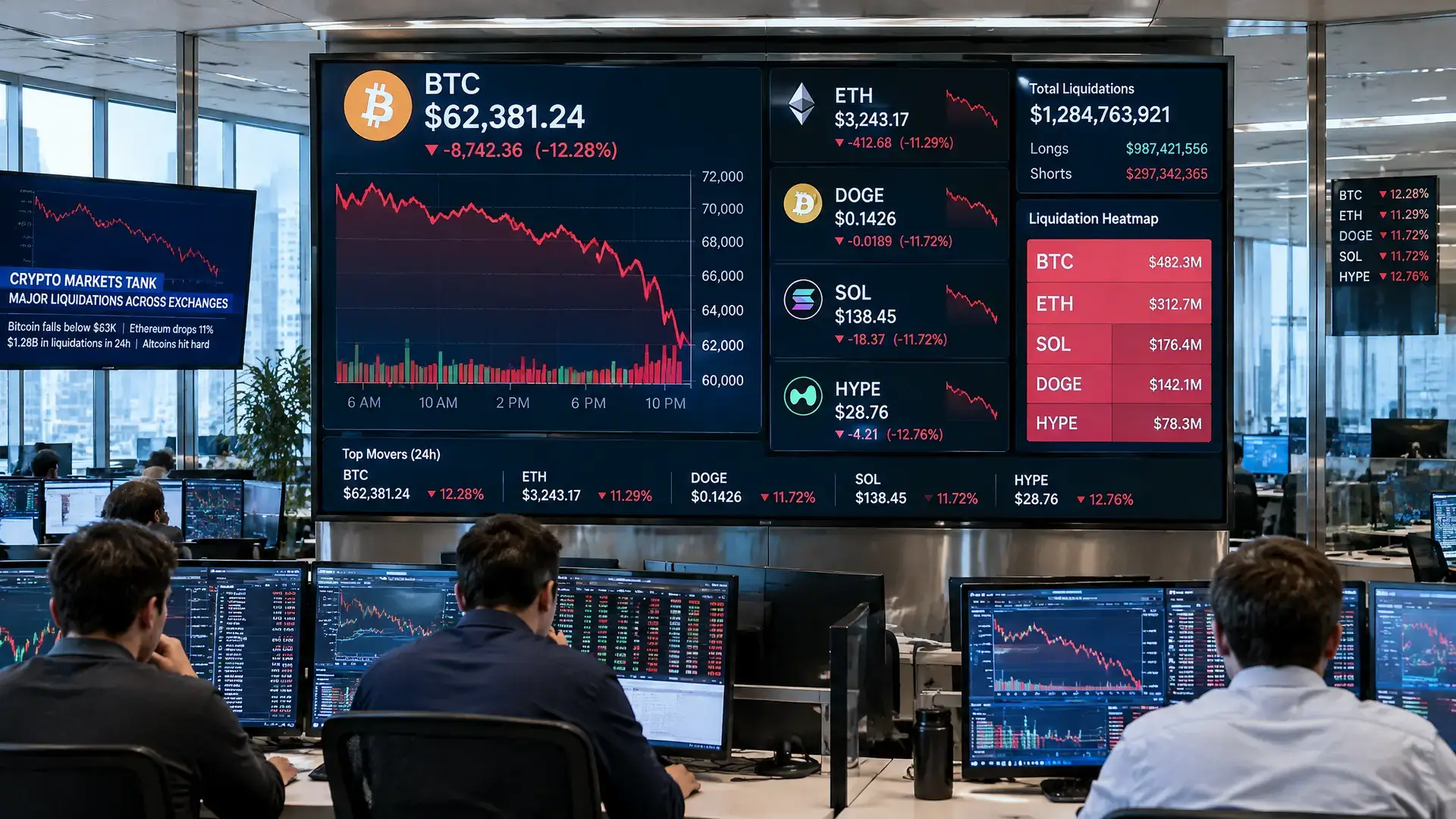
Bitcoin holds steady after U.S. attack on Iran
Oil prices and stocks react sharply to the escalation, while Bitcoin holds near $77,580 and ends August with a strong monthly gain.
Key takeaways
- Bitcoin held near $77,580 despite renewed tensions between the United States and Iran, while oil prices rose and stocks declined.
- BTC has gained around 23% in August, clearly outperforming gold and the Nasdaq over the same period.
- Alongside geopolitical tensions, Bitcoin ETF inflows and expectations around U.S. monetary policy remain key factors for the crypto market.
Bitcoin remained relatively stable on Monday morning despite renewed geopolitical tensions involving Iran and the Strait of Hormuz. While oil prices rose and equity markets came under pressure, Bitcoin traded near $77,580. For now, the largest cryptocurrency reacted less sharply to the escalation than several traditional financial markets.
Oil rises after attack on Iran
The United States and Iran exchanged attacks again after the U.S. carried out a strike on an Iranian island in the Strait of Hormuz. The renewed escalation followed more than a month without direct attacks between the two countries and quickly triggered moves across commodity and equity markets.
U.S. WTI crude rose almost 2% to $85.10 per barrel. Brent crude climbed around 1.9% to $92.39. At the same time, gold fell about 0.8% to $4,418 per ounce, while Nasdaq futures were down around 0.5%.
Bitcoin showed a calmer picture. BTC continued to trade near $77,580 and had barely moved since midnight UTC. Other major cryptocurrencies were slightly lower. XRP fell around 0.8%, while Solana declined roughly 0.6%.
Bitcoin posts strong August performance
The limited market reaction follows a strong month for Bitcoin. BTC has risen around 23% in August. By comparison, gold gained roughly 9% over the same period, while the Nasdaq rose around 4%.
Bitcoin's strong performance has coincided with inflows into U.S. spot Bitcoin ETFs and changing expectations around Federal Reserve policy. Alongside geopolitical developments, institutional capital flows and U.S. monetary policy therefore remain important factors for the crypto market.
The recent price action comes as Bitcoin once again moves toward $80,000. Earlier macroeconomic developments also pushed Bitcoin closer to that level.
Interest-rate expectations shifted again on Friday following comments from Fed Chair Kevin Warsh at the Jackson Hole Symposium. Warsh said inflation was still not sufficiently under control and argued that financial conditions were not restrictive.
Following his comments, the market-implied probability of a U.S. rate increase in September rose to around 58%. Markets are now also pricing in roughly one and a half rate hikes by the end of the year.
Macro conditions remain important for Bitcoin
The combination of geopolitical tensions, higher oil prices and changing rate expectations is creating a complex macroeconomic backdrop. For Bitcoin, the most notable point so far is that the price has barely reacted to the renewed escalation around Iran, while oil and equity markets have moved more clearly.
That does not mean Bitcoin is detached from traditional financial markets. New U.S. labor-market data due on September 4 could again influence expectations around Federal Reserve policy. Changes in those expectations could in turn remain relevant for higher-risk markets, including crypto.