Bitcoin Lags Behind $85,000 Despite Stronger Stock Market Link
Bitcoin is performing better than the S&P 500, but ETF inflows and selling pressure from long-term holders are keeping the price below $85,000.
Key Takeaways
- Bitcoin is doing better than the S&P 500 on more trading days, but the price still has not convincingly broken through $85,000.
- ETF inflows have cooled off, and long-term holders who bought between $85,000 and $118,000 are adding extra selling pressure in that zone.
- Important support sits around $78,000 to $79,000 and $77,900. The picture improves above $81,500 and $85,000.
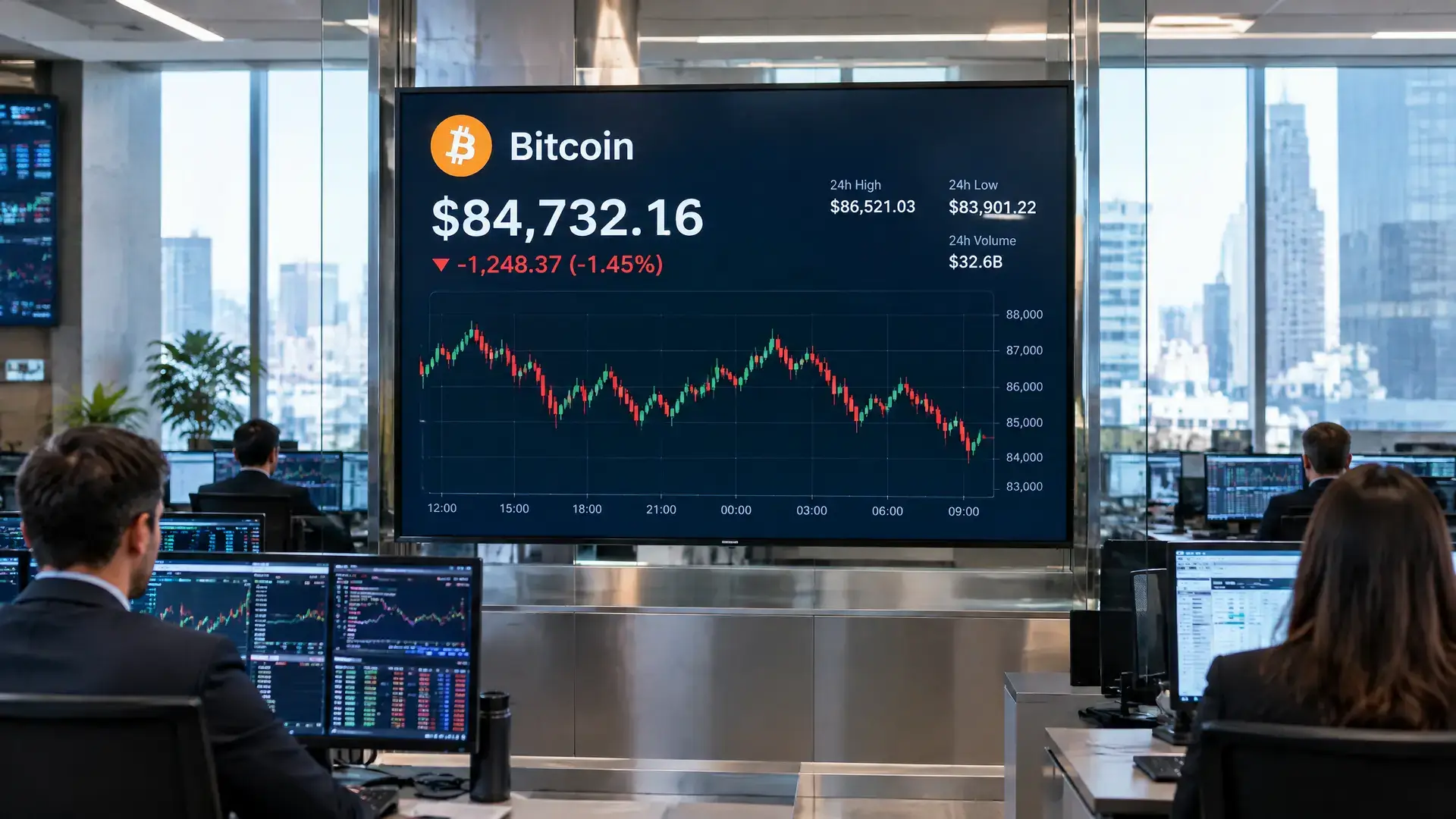
Bitcoin has outperformed the S&P 500 on more trading days over the past few weeks, but that has still not led to a breakout above $85,000 (€76,400). The price is still struggling there and recently even came back close to $80,000 (€71,900).
Stronger Than Stocks
Bitcoin's relative strength against stocks improved clearly in October. In June, Bitcoin outperformed the S&P 500 on just one out of every five days, the weakest stretch in more than five years. Now Bitcoin beats stocks more often than it loses to them, and that shows investors are once again seeing the coin as a stronger alternative in the market.
Still, the price itself remains behind. Bitcoin peaked at $87,100 (€78,300) on September 23, but since January it has closed above $85,000 (€76,400) on only five days. That makes it clear that the coin looks stronger against stocks, but has not yet made a convincing breakout.
Pressure From Supply and Demand
Glassnode points to twelve factors keeping Bitcoin below $85,000 (€76,400), split across demand, supply, and market sentiment. On the demand side, ETF inflows have cooled off. Of the $653 million (€587 million) that came in on October 19, most of it has already faded away. Buy orders on Binance have also moved lower, toward $78,000 (€70,100) to $79,000 (€71,000).
On the supply side, long-term holders own about 4 million BTC that were bought between $85,000 (€76,400) and $118,000 (€106,000). If that group wants to sell around break-even, it could keep weighing on the $84,000 (€75,500) to $85,000 (€76,400) zone. Bitcoin also slipped just below the average purchase price of ETF investors, around $81,500 (€73,200). That fits with the broader cooling in the derivatives market, where downside protection is clearly in demand as the price stays under pressure.
Levels to Watch
The broader market remains weak for now. Economic growth is stalling, consumer confidence is near its lowest levels since 2009, and Bitcoin is recovering less strongly than it did in 2023. At the same time, speculative traders are more often choosing stocks, while breadth among altcoins is shrinking.
For European crypto readers, the key point is that the market is now leaning heavily on ETF flows and the behavior of large holders. That makes the price extra sensitive to shifts in demand, especially now that volatility has eased and wallets with 100 to 1,000 BTC are still buying more. The Fed kept rates unchanged on October 28 after a hike in September, and some analysts saw that as a moment when the market could react more sharply. That sensitivity was also visible at Strategy, where the margin on the bitcoin stash shrank as BTC fell toward $80,000 (€71,900).
On the downside, $78,000 (€70,100) to $79,000 (€71,000) and the True Market Mean around $77,900 (€70,000) are important support. Below that, the cost basis for short-term holders sits around $75,800 (€68,100). On the upside, a daily close above $81,500 (€73,200) would put ETF investors back in profit, while a close above $85,000 (€76,400) would be the next step.