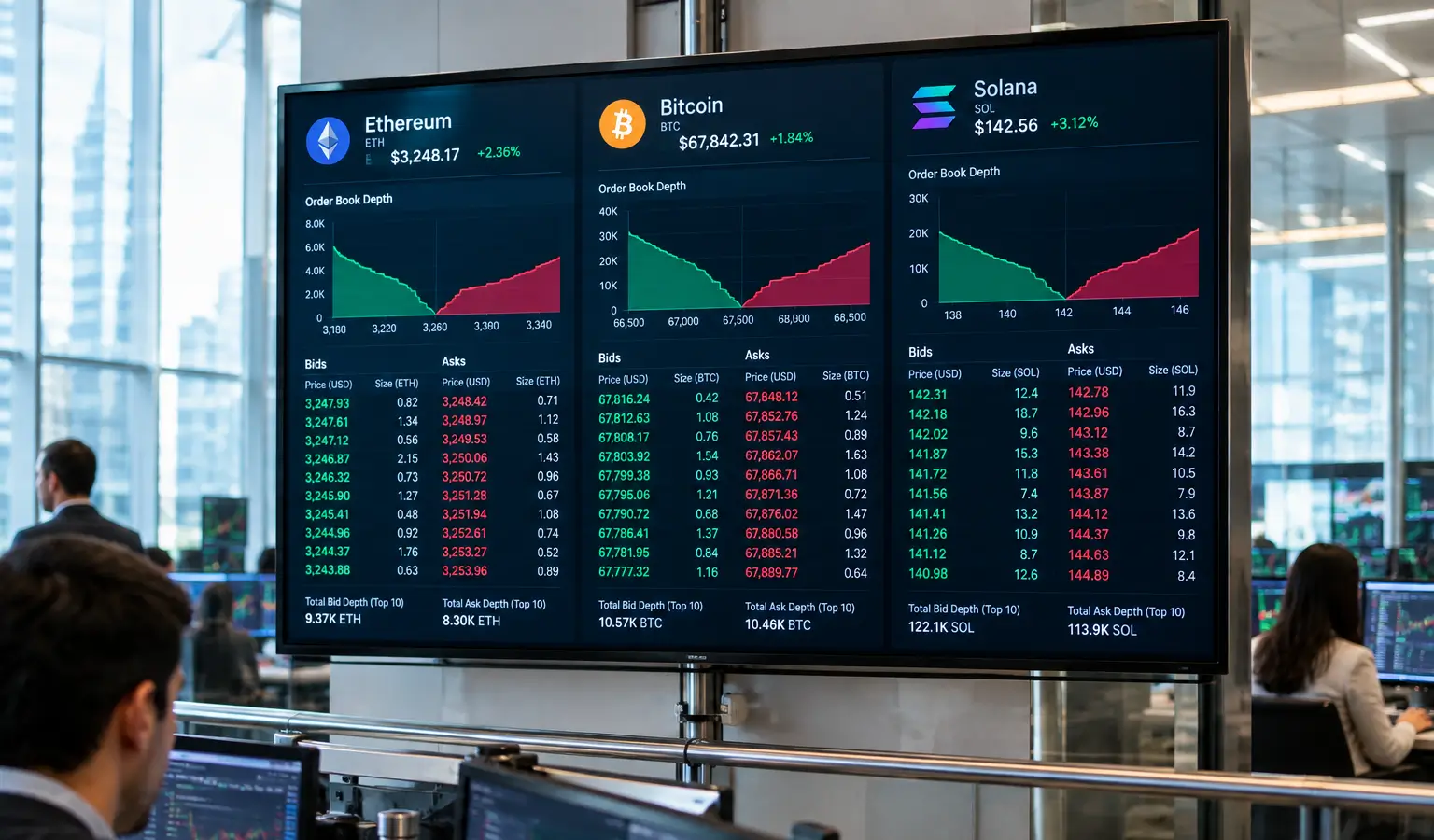
Bitcoin’s $1 Million Targets Run Into High Treasury Yields
Bitwise still sees BTC heading toward $1.3 million, but high 30-year Treasury yields make the comparison with bonds less favorable.
Key Takeaways
- Bitwise puts Bitcoin at $1.3 million within ten years, but high U.S. Treasury yields increase the opportunity cost.
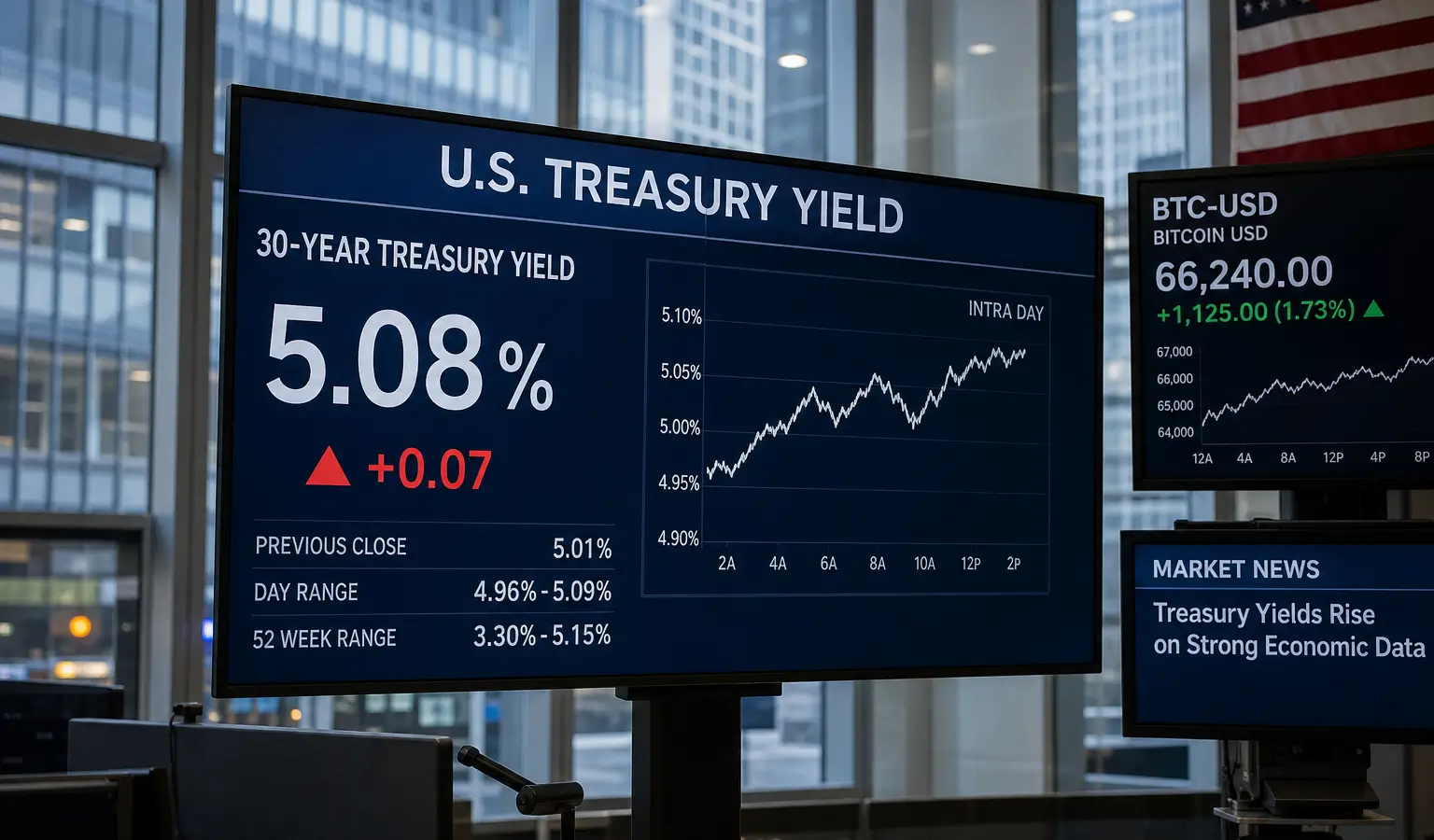
- The 30-year Treasury yield broke above 5% this year and is at its highest level since 2007.
- The BTC-to-30-year-yield ratio completed a head-and-shoulders breakdown and stayed below the 2021 peak in 2025.
Asset manager Bitwise is the latest firm to put Bitcoin at $1.3 million within ten years. This is not the first time a big name has laid out that kind of scenario, but the underlying math is now facing more headwinds from the yield on U.S. government bonds.
The core of the debate is opportunity cost. Every dollar in Bitcoin is a dollar not earning anything on U.S. Treasuries, and that risk-free return has become attractive again over the past few months. The 30-year Treasury yield broke above 5% this year and is at its highest level since 2007, which raises the bar for capital to move into a non-yielding asset like Bitcoin.
Why That Yield Matters
Most seven-figure Bitcoin forecasts rely on a familiar scenario: BTC takes a small share of the gold market, or pulls money from large pools like global pension funds. In theory, that can lead to a sharp price jump, but it says less about what investors give up if they do not choose bonds.
That tradeoff matters even more for institutional players. If long-term Treasury yields stay high, that could slow allocations to Bitcoin, precisely because BTC does not pay a coupon or interest. The often-heard 'digital gold' thesis gets less automatic support in that kind of environment.
Signal From the Ratio
According to the analysis of the BTC price versus the 30-year yield, Bitcoin did rise to $126,000 (€109,200) in 2025, but on that adjusted measure it stayed below the 2021 peak. That stands out, because in earlier cycles Bitcoin had set a new high each time the price was measured against the long-term yield.
On top of that, the ratio between BTC and the 30-year yield has now completed a head-and-shoulders breakdown, a classic bearish pattern in technical analysis. In traditional markets, such a breakdown is often seen as a sign that the ratio could weaken further, although that does not automatically say anything about Bitcoin's dollar price itself.
What This Means for Investors
For European crypto followers, the main takeaway is that Bitcoin is increasingly being viewed not just as a standalone risky asset, but also as part of the broader capital market. If rates stay high, that could make the comparison with bonds sharper and reduce the room for extremely bullish price targets. That makes the macro backdrop at least as important as the question of how much capital eventually flows into BTC.
Institutional demand remains an important counterforce, though. In a separate scenario, Bitwise is counting on a gradual allocation from advisors, family offices, pension funds, and sovereign wealth funds, as also laid out in this analysis of institutional inflows.