Bitcoin Hits Block 961,632, Heating Up the BIP-110 Debate
Miner support for BIP-110 is still low for now, while node operators want to enforce the new Bitcoin rule through a UASF.
Key Takeaways
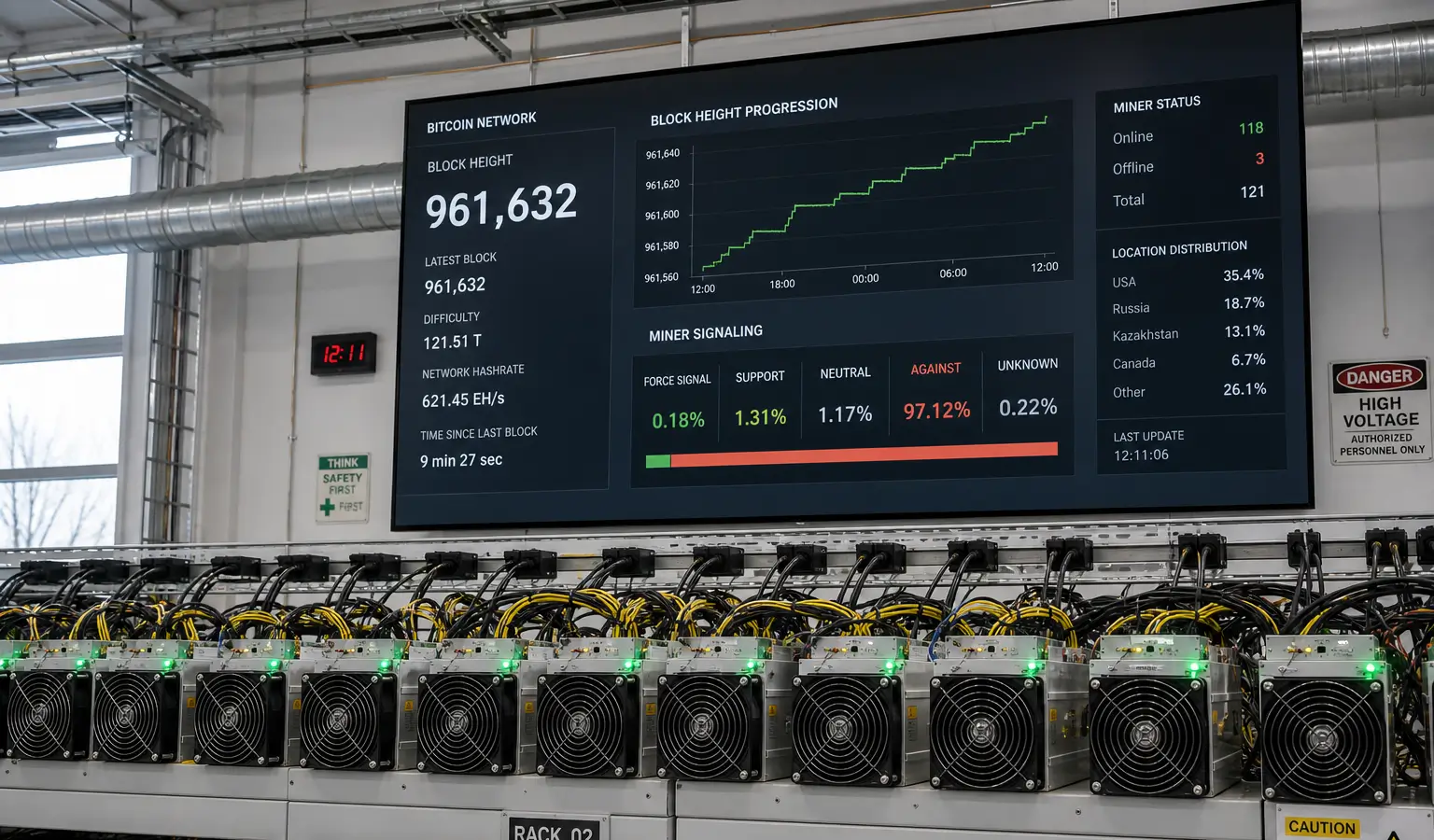
- Bitcoin reached block 961,632, starting the mandatory signaling period for BIP-110.
- Based on the available data, miner support has stayed below 2.5%, while 55% is needed to move forward.
- Critics say BIP-110 could trigger a chain split, and the signaling period runs until block 965,664.
Bitcoin has now reached block 961,632, officially opening the mandatory signaling window for BIP-110. The proposal is designed to temporarily restrict non-financial data on the network, but miner backing remains very weak, making a smooth rollout look unlikely for now.
Miner Support Is Still Far Behind
The signaling period began on Saturday at around 19:35 UTC. According to the available data, miner support has barely moved above 2.5%, while 55% is required to advance. That leaves a wide gap between the proposal’s supporters and the mining community.
Some of the most vocal critics come from the Bitcoin world itself, including Strategy chairman Michael Saylor and Blockstream CEO Adam Back. They argue the proposal could create a chain split or introduce other risks for the network.
UASF Puts Nodes at the Center
Supporters describe BIP-110 as a user-activated soft fork, or UASF. Under that model, node operators rather than miners would enforce the new rule by rejecting blocks that fail to signal support for BIP-110.
The setup echoes the 2017 SegWit activation through BIP-148, when users ultimately pushed through a protocol change without enough miner support. The key difference this time is the debate over how much space on Bitcoin should be available for non-financial data, and who should have the final word.
Why This Matters
For European crypto readers, the issue matters because it highlights how sensitive Bitcoin governance still is, even without a central leadership structure. If miners and node operators remain at odds, it could briefly create uncertainty over which chain is treated as the main Bitcoin chain. The signaling period runs until Bitcoin block 965,664, which is expected to arrive in about four weeks.
If the dispute escalates, holders also need to think about the practical risks. In the event of a split, replay attacks could make a transaction on one chain accidentally go through on the other chain as well.