Bitcoin Rises 22%, But Miners Lag Behind
Canaan was the only exception. At Core Scientific and TeraWulf, low hashprices and weak fee revenue put pressure on margins. That is why many miners are looking for extra revenue through AI and HPC.
Key Takeaways
- Bitcoin has risen about 22% since August 17, but publicly traded mining companies have barely benefited.
- Of eleven mining and mining-related companies, only Canaan outperformed Bitcoin; the other ten posted a median return of 1.8%.
- Miners' margins are under pressure from low hashprices, limited transaction fees, and a shift toward AI and HPC services.
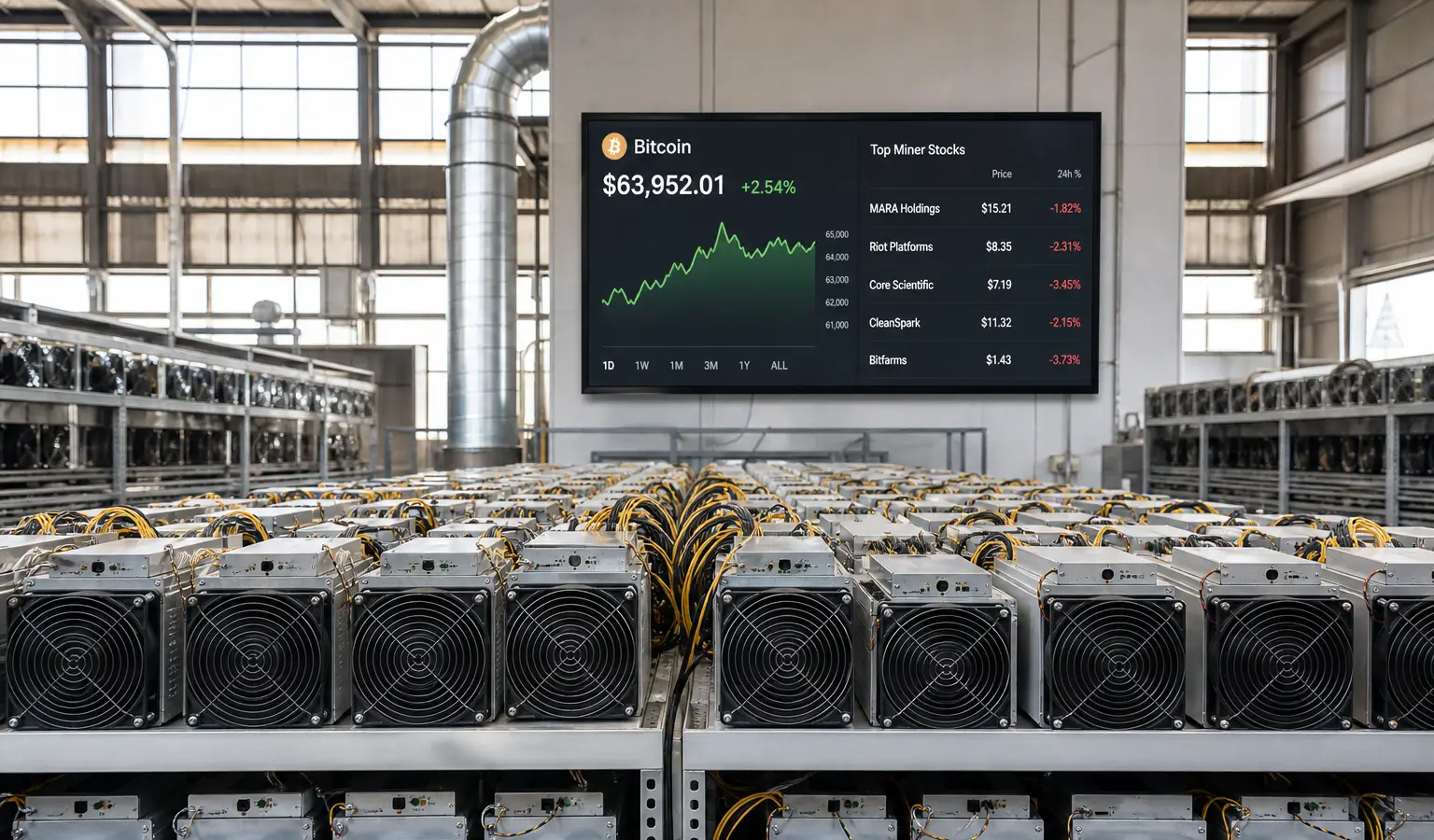
Bitcoin has risen about 22% since August 17, but publicly traded mining companies have barely benefited. An analysis by The Block shows that out of eleven mining and mining-related companies, only hardware maker Canaan outperformed Bitcoin. The other ten came in with a median return of just 1.8%, more than 20 percentage points behind BTC's price.
Only Canaan Took the Lead
The Block compared the price performance of eleven publicly traded mining and mining-related companies with Bitcoin since August 17. It found that Canaan was the only one able to beat Bitcoin's rise. Well-known names like Core Scientific and TeraWulf, on the other hand, clearly lagged behind.
According to Cryptopolitan's calculation based on those figures, the average miner captured only about 8.2% of Bitcoin's gains. Core Scientific and TeraWulf were the biggest laggards, trailing BTC by about 27 and 24 percentage points, respectively. That shows mining stocks do not automatically move with the coin they mine.
Margins Remain Under Pressure
The weak price performance comes alongside a tough economic backdrop for miners. The average hashprice, or revenue per unit of hash power, was $34.63 (€30) in August. That is still 32% below the 2025 monthly average of $50.68 (€43). Transaction fees made up just 0.70% of block rewards, marking the fourteenth straight month below 1%.
The outlook is not strong either. Luxor's futures contracts for September through February point to an average hashprice of $36.98 (€32), about 27% below the 2025 average. At the same time, many miners are shifting toward AI and high-performance computing, or HPC. That is one way to make broader use of existing infrastructure, but it also requires a lot of capital up front before it brings in extra revenue.
What This Says About Miners
For European crypto readers, this matters because it shows that getting Bitcoin exposure through stocks has a different profile than holding BTC directly. Miners are becoming less dependent on block rewards alone and are more often looking for extra income from AI and data center services. That can broaden their business model, but it also makes the link to Bitcoin's price less direct.
The Block says miners mainly need more fee revenue, a more favorable network difficulty, or lower power prices to improve their margins. Whether the AI and HPC strategy will eventually generate enough to offset that pressure remains uncertain for now. For the moment, the main takeaway is that mining stocks are no longer an automatic lever on the Bitcoin price. Earlier, the shift toward AI contracts already showed why investors value some miners differently from pure Bitcoin producers.