Bitcoin Rises to $65,000 After Reports of Iranian Nuclear Inspections as Oil Prices Fall
Bitcoin bounced after reports about Iranian nuclear inspections, while Tehran quickly pushed back on that reading. The uncertainty is keeping the market moving, along with the drop in oil prices.
Key Takeaways
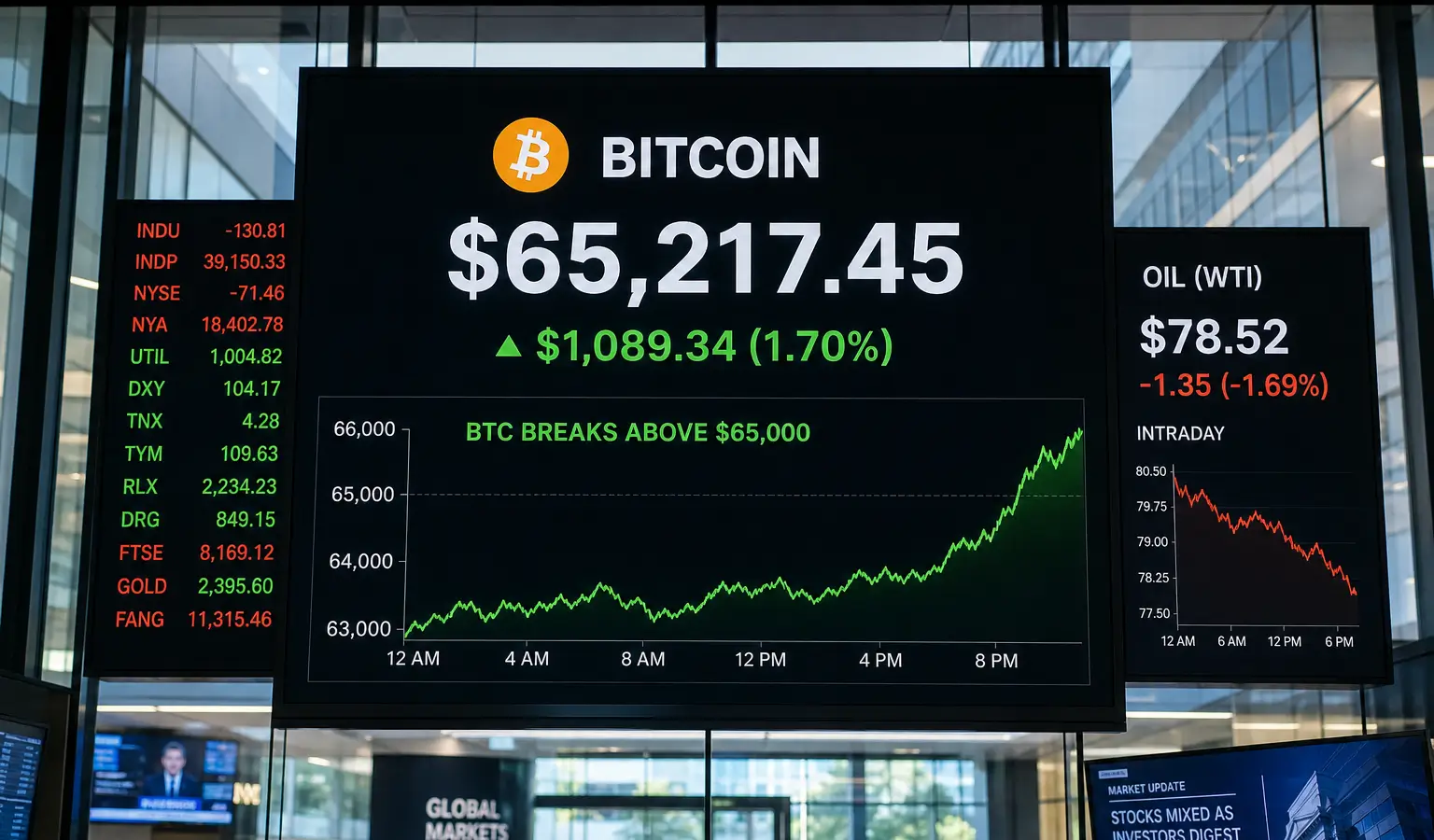
- Bitcoin rose above $65,000 on Monday after JD Vance said Iran would let UN nuclear inspectors back in.
- Iranian state media denied that statement, leaving the situation around the nuclear inspections unclear.
- Oil prices fell to around $75 per barrel, while Bitcoin gained more than 2% in 24 hours.
Bitcoin climbed back above $65,000 (€56,700) on Monday after U.S. Vice President JD Vance said that Iran had agreed to let United Nations nuclear inspectors back in. But Iranian state-backed media quickly pushed back on that claim, leaving the situation around the nuclear inspections uncertain.
Nuclear Inspection Deal, According to JD Vance
Vance spoke after about 18 hours of talks in Switzerland and said Iran had agreed to bring back inspectors from the International Atomic Energy Agency (IAEA). He called it an important step toward ending Iran's nuclear weapons program. The IAEA pulled its last inspectors out in June 2025 after U.S. and Israeli strikes targeted Iranian nuclear facilities. After that, Iran's parliament stopped cooperating, which left formal monitoring on hold for about a year.
The current round of talks builds on the peace deal between the U.S. and Iran that was signed in early June. That deal includes a 60-day roadmap, a high-level committee, and working groups focused on the nuclear issue, sanctions, and disputes. Vance stressed that the deal could also bring economic benefits, like using frozen Iranian funds to buy U.S. farm products, which he said is a classic trade deal.
Pushback From Iran and Market Impact
Within hours of Vance's statement, Iranian state media, including Fars News, which is linked to the Revolutionary Guard, denied that the nuclear issue was on the agenda. Iranian parliament speaker Mohammad Bagher Ghalibaf also warned Washington to be careful with its comments about the talks and stressed that Iran is ready to respond.
Even with the mixed signals, Bitcoin rose to around $65,500 (€57,200), up more than 2% in 24 hours, although it is still more than 48% below the October record of $126,080 (€110,100). At the same time, oil prices fell to around $75 (€65) per barrel, near their lowest level since March. That is partly due to hopes that the Strait of Hormuz could reopen, a key shipping route for nearly 20 million barrels of oil per day, with traffic down by almost 30% because of the conflict.
Why This Matters for European Crypto Investors
The developments around Iran and the nuclear inspections could affect global markets and, in turn, European crypto investors. Uncertainty around the deal and the geopolitical tensions remain a factor that could drive volatility in the crypto market. On top of that, a possible economic reopening of Iran and the release of funds could create new trade flows and investment opportunities that may also affect European investors.