New Hampshire Blocks $100 Million Bitcoin Bond
The bond was set to move through the Business Finance Authority and had already received a preliminary Moody’s rating. Its collapse shows how political and reputational risk still hangs over Bitcoin-backed financing.
Key Takeaways
- New Hampshire blocked a $100 million Bitcoin-backed bond at the last minute.
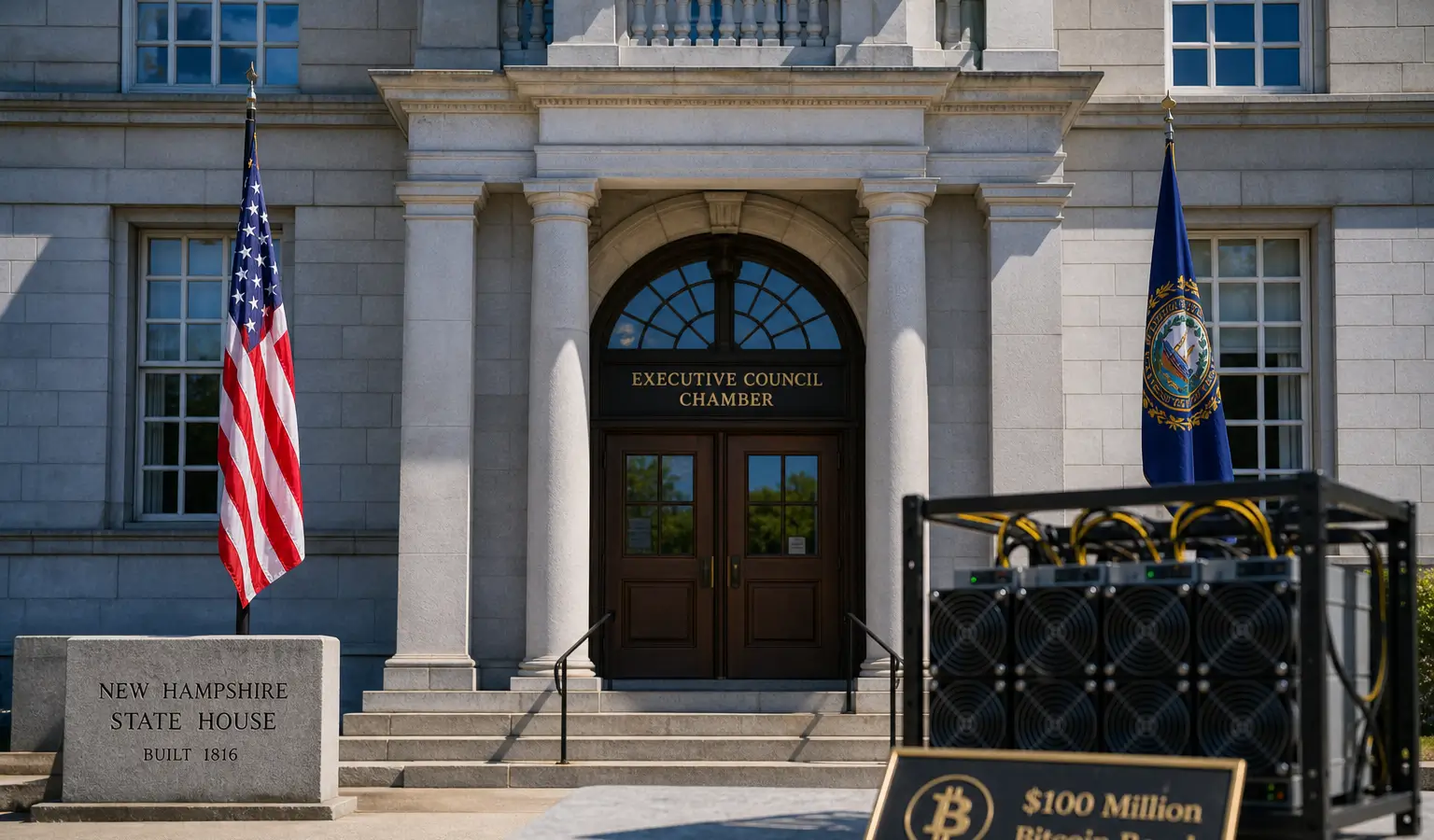
- The Executive Council voted 3 to 2 against the plan, which stopped the issuance through the Business Finance Authority.
- Moody's had already given it a preliminary Ba2 rating, but political and reputational risks still derailed the deal.
New Hampshire scrapped an ambitious Bitcoin-backed bond worth $100 million (€87.5 million) at the last minute. The move killed what would have been the first state-backed, rated Bitcoin bond just as it was nearing final approval.
Final Vote Blocks the Plan
The state’s Executive Council voted 3 to 2 against the proposal. Since the council oversees major financial decisions, that vote effectively shut down the issuance, which was set to run through New Hampshire’s Business Finance Authority.
The deal was structured as conduit financing for a private bond linked to CleanSpark, a company focused on Bitcoin mining and data centers. The idea was to raise money without exposing taxpayers or the state to direct guarantees, while a private custodian held Bitcoin as collateral.
Why This Plan Stood Out
The bond had already cleared a major hurdle in March 2026, when Moody’s Ratings assigned it a preliminary Ba2 rating. That still pointed to speculative credit risk, but it also signaled that the deal was being taken seriously by traditional capital markets.
The Business Finance Authority had approved the plan back in November 2025. At the time, it looked like another sign that New Hampshire was pushing forward on U.S. crypto policy, following earlier moves such as creating a crypto reserve last year.
A Signal for Public Financing
The rejection underscores how difficult it remains to fit volatile crypto assets, especially Bitcoin, into public financing structures. For European readers, the bigger takeaway is that these setups are increasingly blurring the line between conventional investment products and crypto-backed financing, but political and reputational risk can still bring the process to a halt.
Keith Ammon, a crypto supporter in New Hampshire’s legislature, called the decision short-sighted on X and told CoinDesk it is not over yet. He said it is an election year for council members, and that one vote can make all the difference.