Bitcoin Holds Steady Around $64,000 Amid U.S.-Iran Ceasefire Talks
Bitcoin is holding around $64,000 while the U.S. and Iran negotiate a ceasefire. Tensions around the Strait of Hormuz could keep moving the market.
Key Takeaways
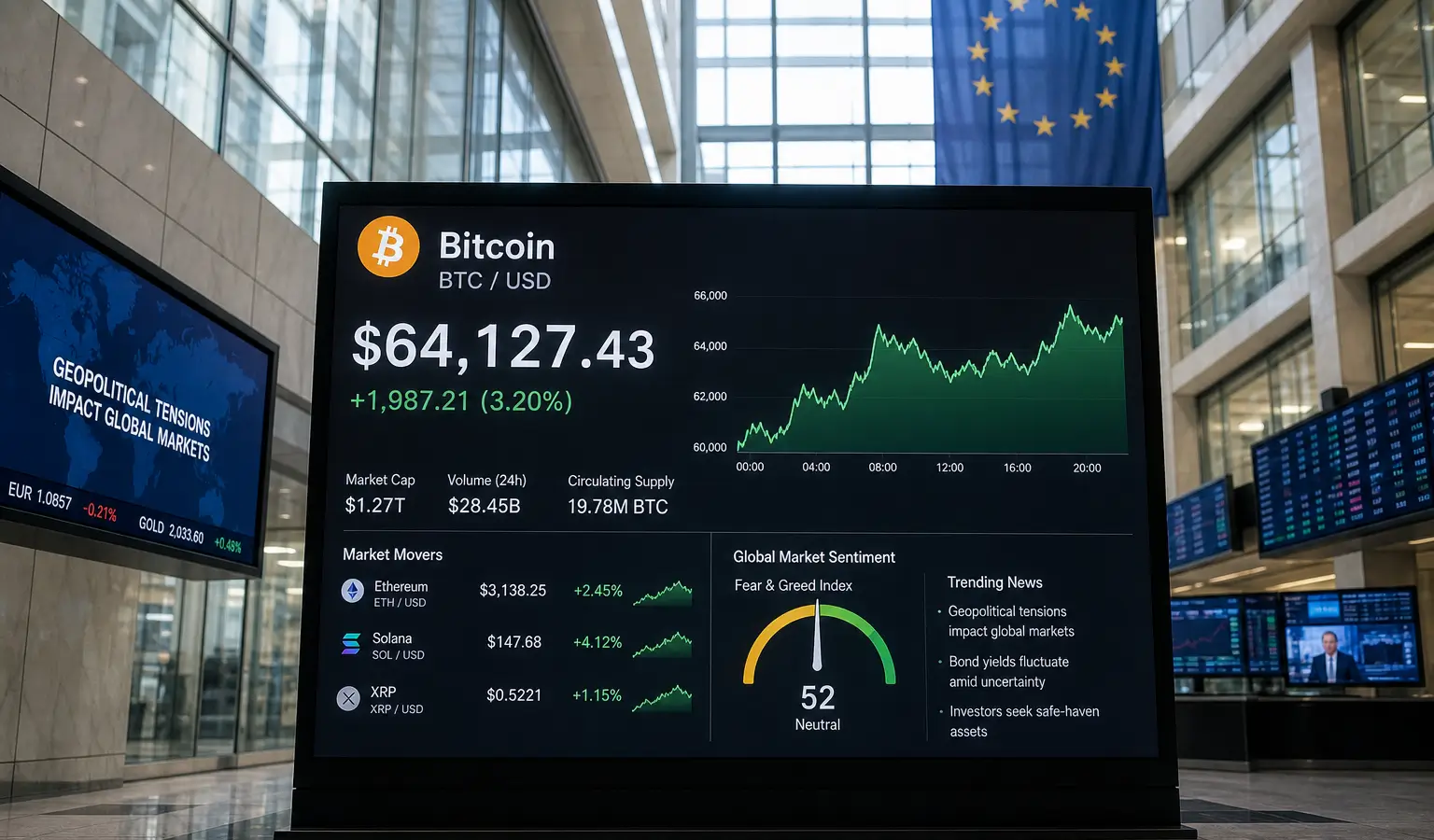
- Bitcoin recovered to around $64,200 this weekend, making up some of Friday's losses.
- Traders are watching permanent ceasefire talks between the U.S. and Iran, while Iran is again threatening to close the Strait of Hormuz.
- Other major cryptocurrencies edged higher, but geopolitical tensions are keeping the market uncertain and could increase volatility.
Bitcoin recovered this weekend to around $64,200 (€56,000), making up some of Friday's losses. That came as traders weighed the start of permanent ceasefire talks between the United States and Iran in Switzerland against Iran's renewed threat to close the strategically important Strait of Hormuz.
The Impact of Geopolitical Tensions on the Crypto Market
The price of Bitcoin stayed basically flat over the week, despite the volatility driven by geopolitical developments. Along with Bitcoin, other major cryptocurrencies like Ethereum, Solana, and Tron also posted small gains. Ethereum rose 0.5% on the day and 3.3% over the week to $1,734 (€1,510), Solana gained 1.5%, and Tron added 1.2%. Dogecoin was the weakest major coin, falling 4.9% over the past seven days.
The talks between the U.S. and Iran follow an earlier signed memorandum of understanding that sets a 60-day period during which the ceasefire can be extended. Even with these diplomatic steps, the situation remains tense because Iran has again threatened to close the Strait of Hormuz. This waterway is a critical route for about 20 million barrels of oil per day, which works out to roughly 20% of global petroleum consumption. A closure would seriously disrupt global oil supplies and, in turn, affect markets.
Possible Effects on Oil and Risk Assets
The reopening of the Strait of Hormuz last week helped push oil prices down by about 9%, which in turn gave a boost to riskier assets, including cryptocurrencies. But with the threat of another closure, the market is still dealing with uncertainty, which could increase volatility.
A real closure of the waterway would likely send oil prices higher, which usually can put upward pressure on risk assets like Bitcoin. On the other hand, a lasting ceasefire could help stabilize markets and reduce risk.
Why This Matters for European Crypto Investors
For European crypto investors, it's important to keep a close eye on the geopolitical developments around the Strait of Hormuz and the U.S.-Iran talks. The outcome of these discussions could affect global energy prices and, indirectly, volatility and sentiment in the crypto market. This situation shows how outside macro factors can play a role in pricing cryptocurrencies, even beyond the market's direct day-to-day moves.
Bitcoin earlier this week fell under pressure from the broader risk-off move; that move showed how quickly geopolitical uncertainty can spill into the crypto market.