Bitcoin Tests $69,000 as ETF Inflows and Doubt Collide
Spot Bitcoin ETFs are pulling in capital again, but professional traders remain hesitant. As long as BTC stays below around $69,000, the recovery remains uncertain.
Key Takeaways
- Bitcoin briefly climbed above $66,800, its highest level in more than a month, but then gave back some of those gains.
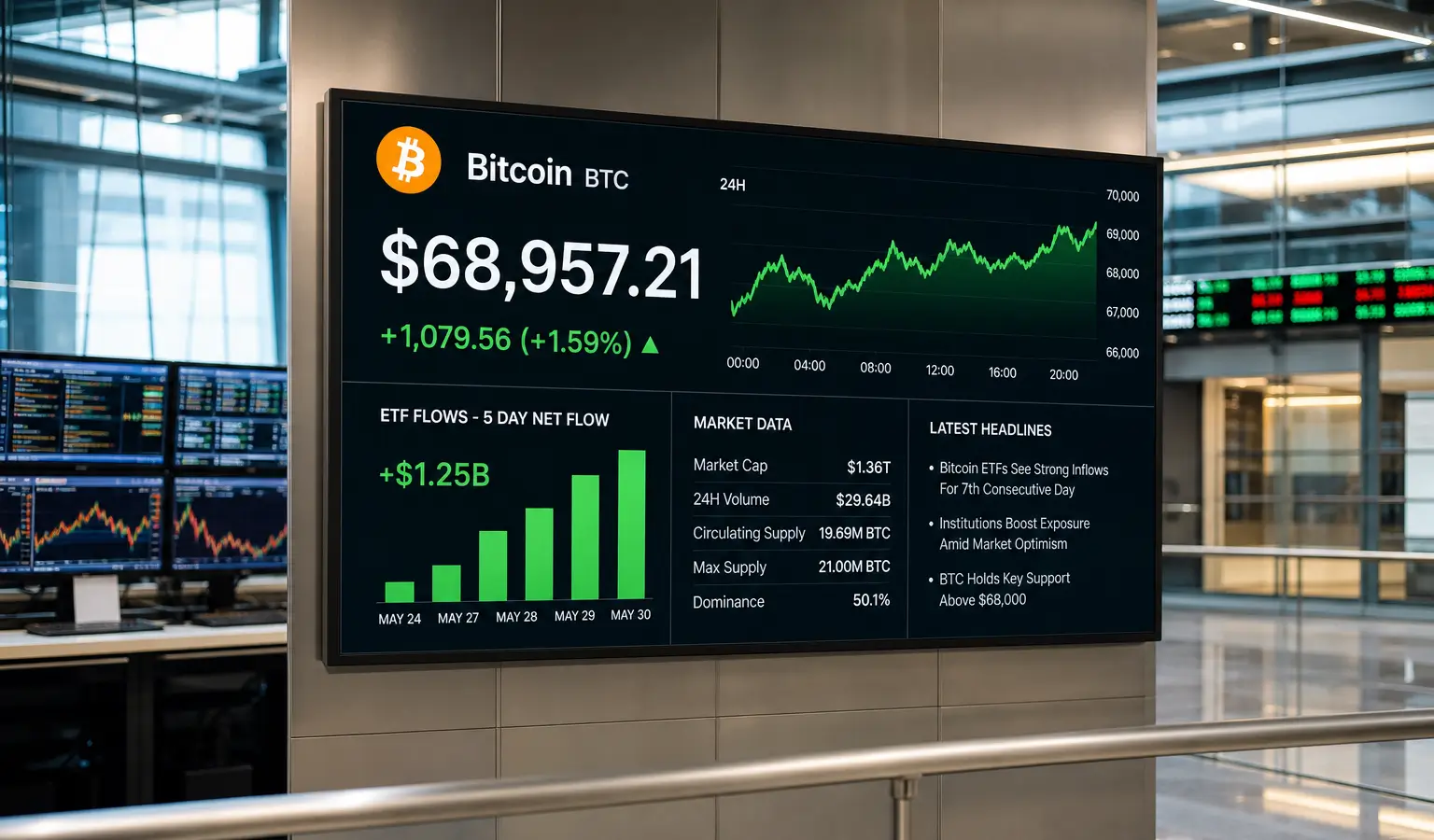
- Spot Bitcoin ETFs saw about $981.2 million in net inflows starting on July 14, after weak months in May and June.
- Professional traders are still cautious; as long as Bitcoin trades below $69,000, doubts about the recovery remain.
Bitcoin briefly pushed above $66,800 (€58,600) this week, reaching its highest point in more than a month before slipping back and giving up part of the move. At the same time, spot Bitcoin ETFs are seeing fresh inflows again, while professional traders remain hesitant. That leaves the market facing the same basic question: is this the start of a real bottom, or just a bear-market bounce that could lose steam later?
ETF Inflows Are Coming Back
After a soft stretch in May and June, ETF flows have started to turn positive again. According to Santiment, the market saw about $981.2 million (€861 million) in net inflows over seven trading days beginning July 14. That marks a noticeable shift from the earlier outflows, even though a short run like this does not guarantee the trend will continue.
The last time inflows built like this was before Bitcoin's rally in October 2025. That makes the current rebound worth watching, but not something to treat as confirmed yet. History has shown that ETF demand on its own is not always enough to prove a broader trend reversal.
Professional Desks Are Still Waiting
The underlying picture is still uneven. Although ETF inflows are returning, demand from larger market participants remains cautious. This suggests investors are still waiting for more confirmation before taking larger positions again.
Analyst Darkfost tied that caution to sticky inflation, higher oil prices, and a less transparent Fed under the new chair. In his view, that combination is keeping institutional selling pressure alive. The result is a clear split: ETF buyers are returning, but broader spot demand from professional traders has not yet backed up the move.
Why This Matters for Europe
For European crypto readers, the bigger point is that Bitcoin is increasingly being treated like a macro asset, not just a standalone crypto trade. That also makes its ties to traditional markets more important. After spot ETFs were approved in January 2024, institutional participation increased and Bitcoin's correlation with the S&P 500 strengthened. So this move is not only a crypto story, but also a read on risk appetite across markets.
Grayscale outlined two ways to view the current phase this week: either through the four-year cycle tied to the halving, or through macro forces such as Fed policy and real rates. Glassnode took the more cautious view, calling the rebound a bear-market rally until the market proves otherwise. As long as Bitcoin stays below the Short-Term Holder Cost Basis near $69,000 (€60,600), that skepticism remains in place; a convincing break back above that level could open the way toward $84,000 (€73,700), while rejection could send the price back toward the $63,000 (€55,300) area.
The recent bounce also lines up with the setup in Bitcoin Stays Stuck Near $65,000 as AI Keeps Inflation High, where higher rates and sticky inflation were already capping upside. That makes the return of ETF demand notable, but still not enough to settle the debate.