Bitcoin Volatility Falls to 2026 Low
The BVIV is falling to around 36%, while the VIX and MOVE are also cooling off. That points to unusually calm Bitcoin and derivatives markets, despite geopolitical and regulatory risks.
Key Takeaways
- Bitcoin’s 30-day implied volatility index fell to about 36%, the lowest level of 2026.
- Ether volatility, along with stocks, bonds, gold, and oil, is also sitting at low levels right now.
- Low volatility points to more mature crypto markets, but investors are still watching for a sudden shock.
The crypto market and broader financial markets are showing surprisingly little nervousness on Friday, despite ongoing risks around the US and Iran, rising government debt and higher interest rates. Crypto also has plenty of uncertainty, from disappointing regulation to weak demand and hack risks, but volatility keeps falling.
Calm Across Multiple Markets
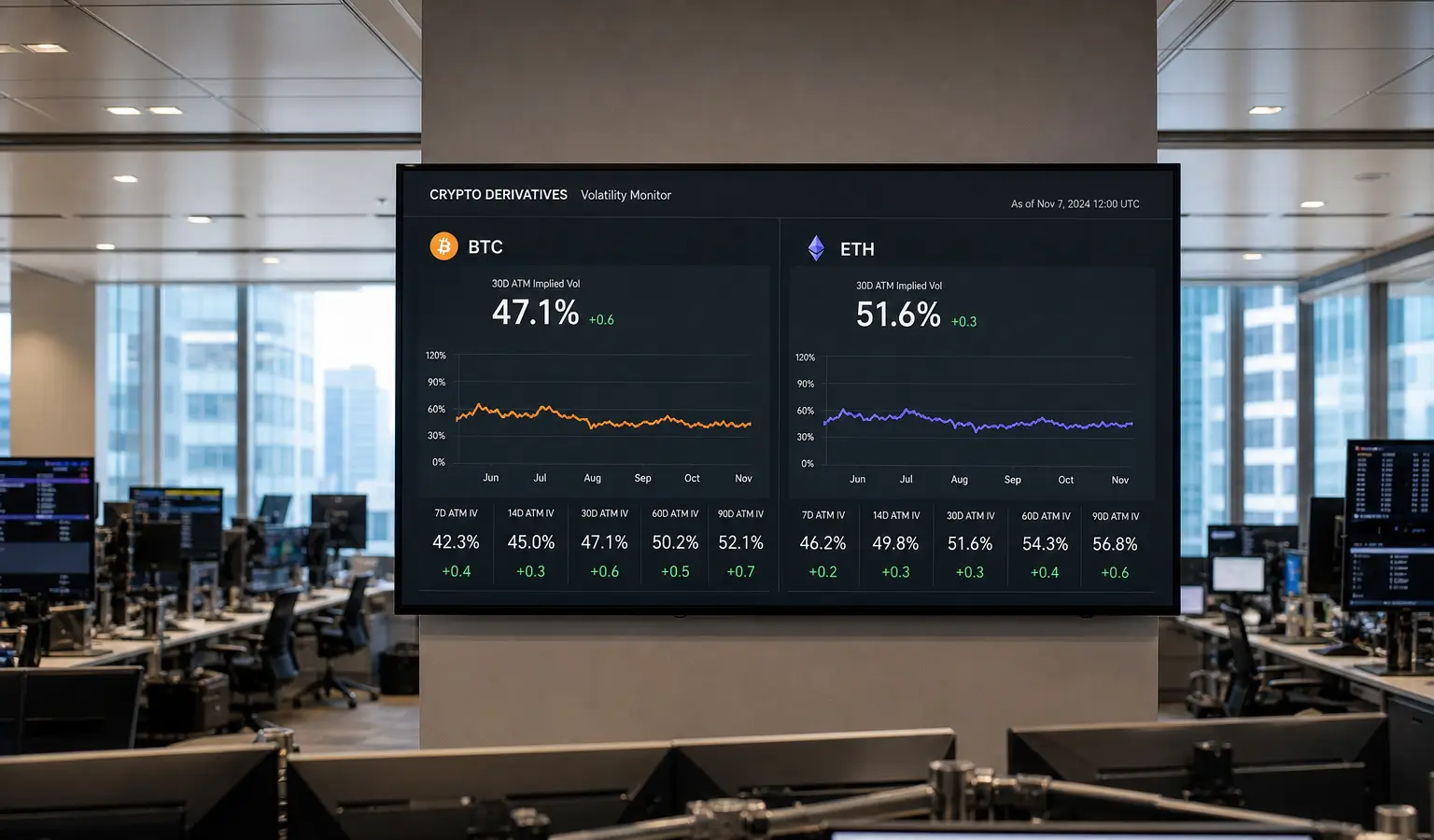
Bitcoin’s 30-day implied volatility index, BVIV, has dropped back to a 2026 low around 36%, after briefly touching nearly 38% earlier this week, according to TradingView data. Ether shows the same picture. Implied volatility measures how much price movement the market expects and is derived from demand for options and other derivatives that investors use to hedge against sudden moves.
That calm is not limited to crypto. The VIX, often seen as the fear gauge for the S&P 500, is at its lowest level since January. The MOVE index, the bond-market version for US Treasuries, is also sitting near the bottom of its range over the past few months. Volatility indexes for gold and oil are also easing.
What This Signal Means
For Bitcoin, the current level is especially notable. Historically, 30-day volatility often sat between 60% and 80%, which makes today’s reading clearly low. That suggests the crypto derivatives market has become more mature, with more institutional participation and a broader spread of risk.
At the same time, recent history shows how quickly that picture can change. In February 2026, volatility shot above 100% after geopolitical tensions, a sharp contrast with today’s calm. For European crypto followers, that matters because such a broad drop in volatility often shows how closely crypto is now tied to stocks, bonds, and commodities. That also fits with the pressure higher interest rates can put on bitcoin, as explained in a recent analysis of Treasury yields.
Investors Stay Alert
Low volatility does not mean the risks are gone. Right now, the market is mostly acting like the available information is already priced in, but a contrarian trader would say this is exactly the time to stay extra alert for a sudden shock. For now, though, calm is in charge, in crypto and beyond.