
Bots Are Changing the Kimchi Premium Around Bitcoin
Research on Binance and Bithumb shows that automated arbitrage makes the price gap less predictable, while South Korean capital restrictions keep the premium alive.
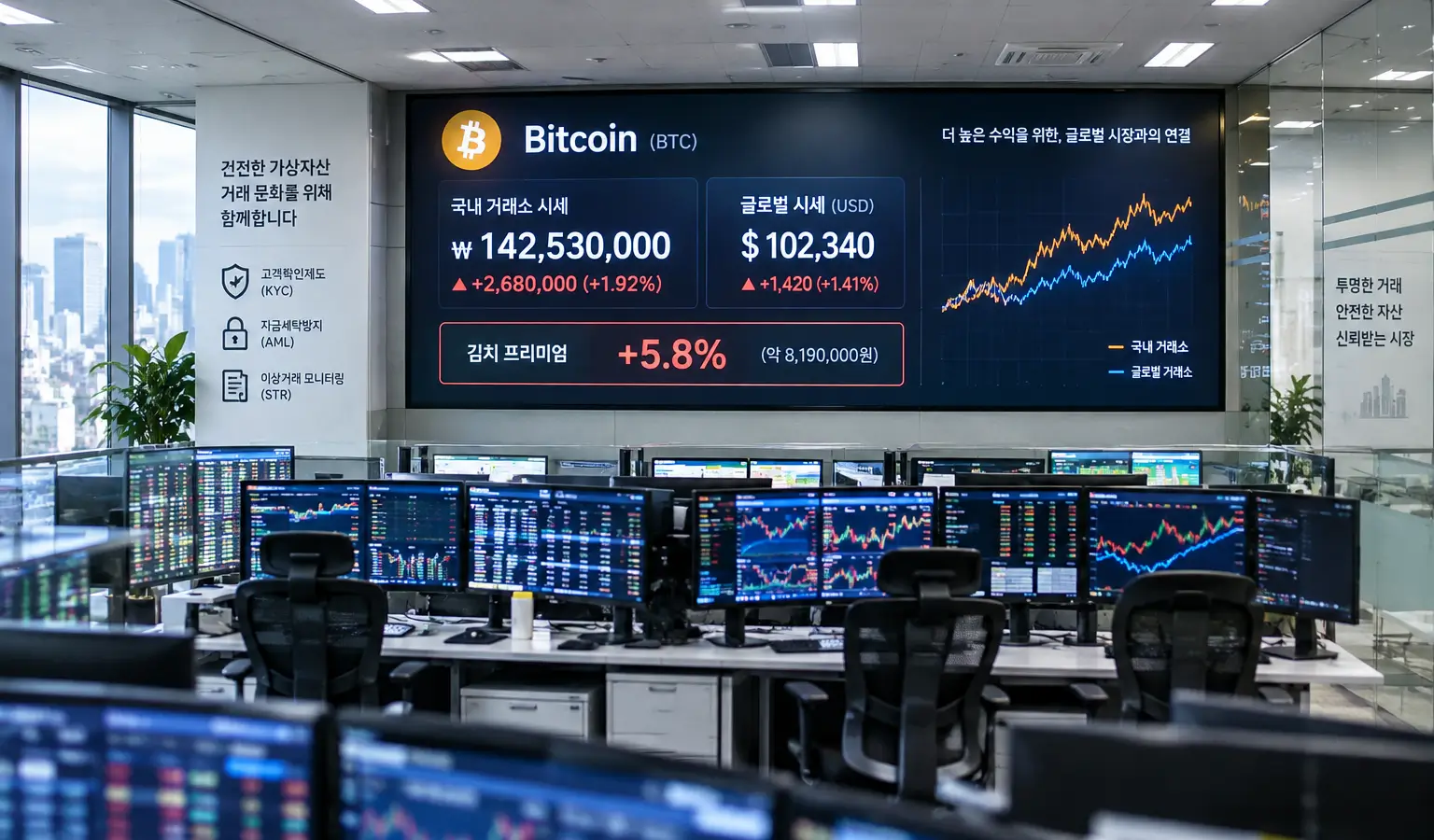
Key Takeaways
- The Kimchi Premium shows that Bitcoin in South Korea is often more expensive than in other markets.
- A June 2026 study found that 96% of 16,228 arbitrage transactions happened within five minutes, pointing to automated trading.
- Strict banking rules and oversight limit arbitrage, which can keep the premium in place despite visible opportunities.
Bitcoin is often more expensive in South Korea than in many other markets. That well-known price gap, the Kimchi Premium, says less and less clearly about local buying pressure. Automated trading is making the process faster, while strict banking rules still decide who can really take part.
Why the Premium Keeps Existing
The idea is simple: buy Bitcoin cheaper outside South Korea, move the coin to a Korean crypto exchange, and sell it there at a higher price. In practice, that is harder. South Korea limits cross-border money flows, which means profits cannot always be freely moved back abroad. That helps explain why the premium can keep existing, even when many traders see the gap.
The Kimchi Premium is also not a new thing. The price gap between South Korean markets and international markets has been tracked since early 2016. In January 2018, it rose to about 55%, a sign of strong local demand and limited arbitrage opportunities.
Bots Chase the Gap
According to a June 2026 study, 16,228 arbitrage transactions between Binance and Bithumb were analyzed. It found that 96% happened within five-minute intervals, pointing to possible automated trading. That does not prove that AI agents are driving the market, but it does show how hard manual traders have it against software.
South Korea’s stricter investor protection rules also play a role. Exchanges are under heavier oversight, and the limits on cross-border money movement continue to slow down who can take advantage of the spread.
What the Premium Still Tells Us
The premium can still rise when Korean buyers get aggressive. But it can also say something about slower selling, exchange-rate moves, or shifting market sentiment. Chainalysis estimates South Korea’s crypto economy at $449 billion (€401 billion) in the latest research period, with notable interest in AI-related tokens.
For European crypto readers, that matters because the Kimchi Premium shows how local rules and market structure can keep a price gap alive, even in a global market. Won-backed stablecoins could also become important for settlement over time, although that depends on approval from regulators.