Brent Rises Above $100 After Attacks on Saudi Oil Facilities
The attack on Saudi Aramco and the disruption in the Strait of Hormuz put pressure on the oil market. European gas and diesel prices are also reacting to the escalation.
Key Takeaways
- Brent crude rose above $100 per barrel on Tuesday, for the first time in three months, after attacks on oil facilities in southern Saudi Arabia.
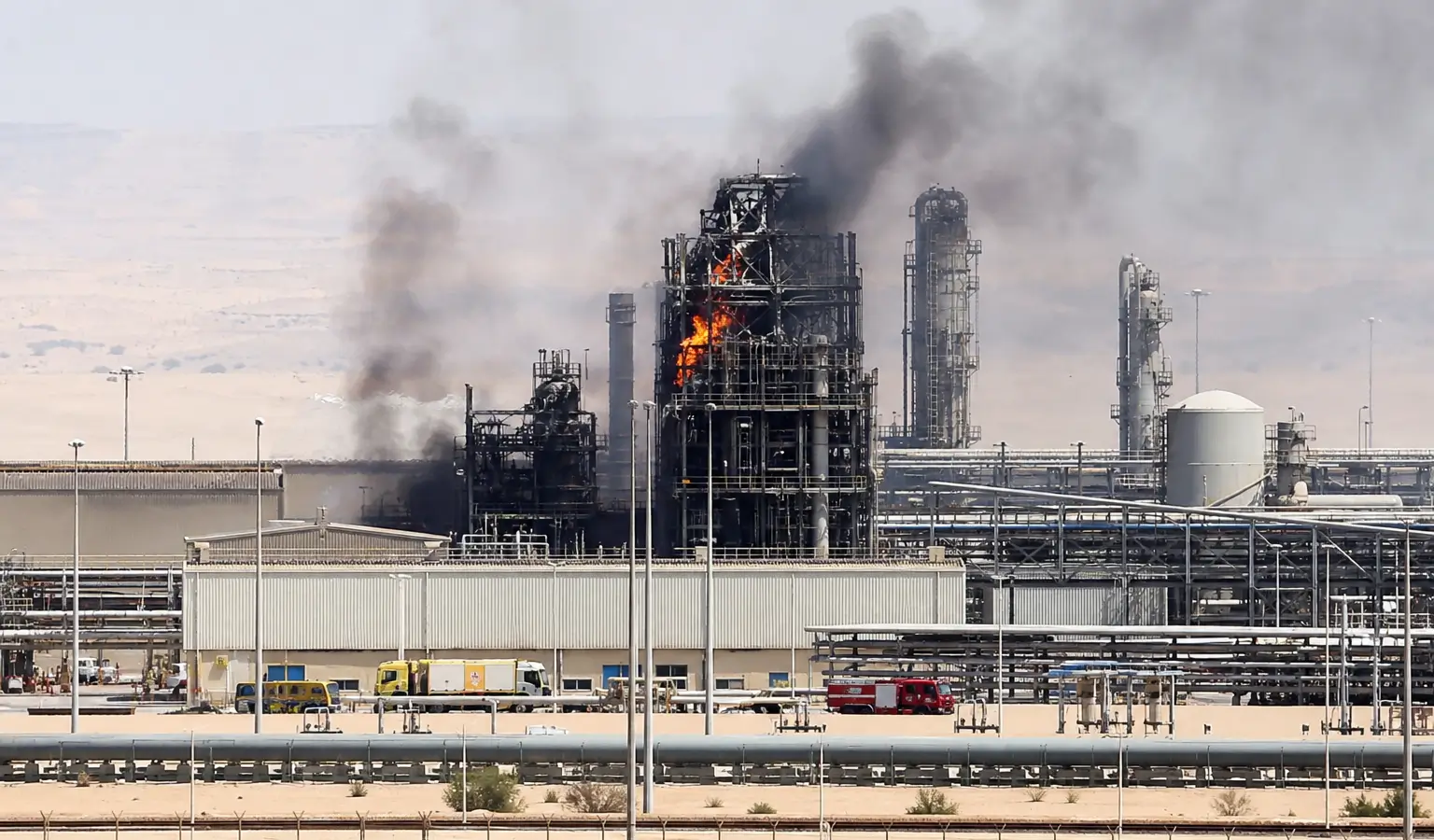
- Houthi fighters fired dozens of drones and missiles; fires broke out at Saudi Aramco sites and 73 people were injured.
- Oil and gas markets remain tight, while disruptions through the Strait of Hormuz and higher European gas prices are adding to the tension.
Brent crude oil rose above $100 (€86) per barrel on Tuesday, for the first time in three months, after Iran-backed Houthi fighters hit oil facilities in southern Saudi Arabia. The benchmark touched $100.03 (€86). A brief move above that level in late July did not hold, leaving May as the last month when Brent really closed above $100 (€86).
Attacks in Saudi Arabia
The Houthis fired dozens of drones and ballistic missiles on Tuesday at Abha, Jazan, Najran, and Khamis Mushait. Fires broke out at Saudi Aramco sites, and 73 people were injured, including women and children. Jazan has a refinery that processes 400,000 barrels per day.
Saudi military spokesperson Maj. Gen. Turki al-Malki called the attack a serious escalation and said retaliatory measures will follow. The attacks came after U.S. strikes on three Iranian oil tankers over the weekend. Behind that is the war between the United States and Iran, which has now been going on for seven months.
Oil Trade Remains Tight
According to Rystad Energy, shipping through the Strait of Hormuz fell sharply again after fighting resumed on August 30. Before the escalation, 8 million to 9 million barrels passed through there each day, but after that the figure dropped to below 2 million. That shows how sensitive global oil supply remains to tensions in this region, which handles about 20% of all oil.
The physical market also stayed tight. Dubai and Oman traded between $104 (€89) and $105 (€90), while diesel markets are crying out for supply, according to Argus Media. Brent was already at a five-week high last week and has since climbed about $5 (€4.30).
Why This Also Matters for Europe
For European readers, the key point is that the tension is affecting not just crude oil, but broader energy markets too. Last week, European gas prices already hit a three-year high, showing that the shockwave goes beyond Brent alone. Goldman Sachs raised its Brent forecast on Tuesday by $5 (€4.30) for December and 2027, but the bank tied that mainly to ongoing supply tightness.