Chip Stock Futures Lose $52 Million in 10 Minutes
Perpetual futures on chip stocks and semiconductor funds were heavily liquidated on Binance and Hyperliquid in ten minutes, with SOXL, SanDisk, and SK Hynix as the biggest victims.
Key Takeaways
- On Saturday, about $51.6 million in leveraged positions on chip stocks and semiconductor funds were liquidated in ten minutes.
- The biggest hit went to SOXL, with about $12.7 million in liquidations; SanDisk and SK Hynix were also hit hard.
- The sell-off started on Binance and quickly escalated because of leverage in perpetual futures, while the stock market was quiet for the weekend.
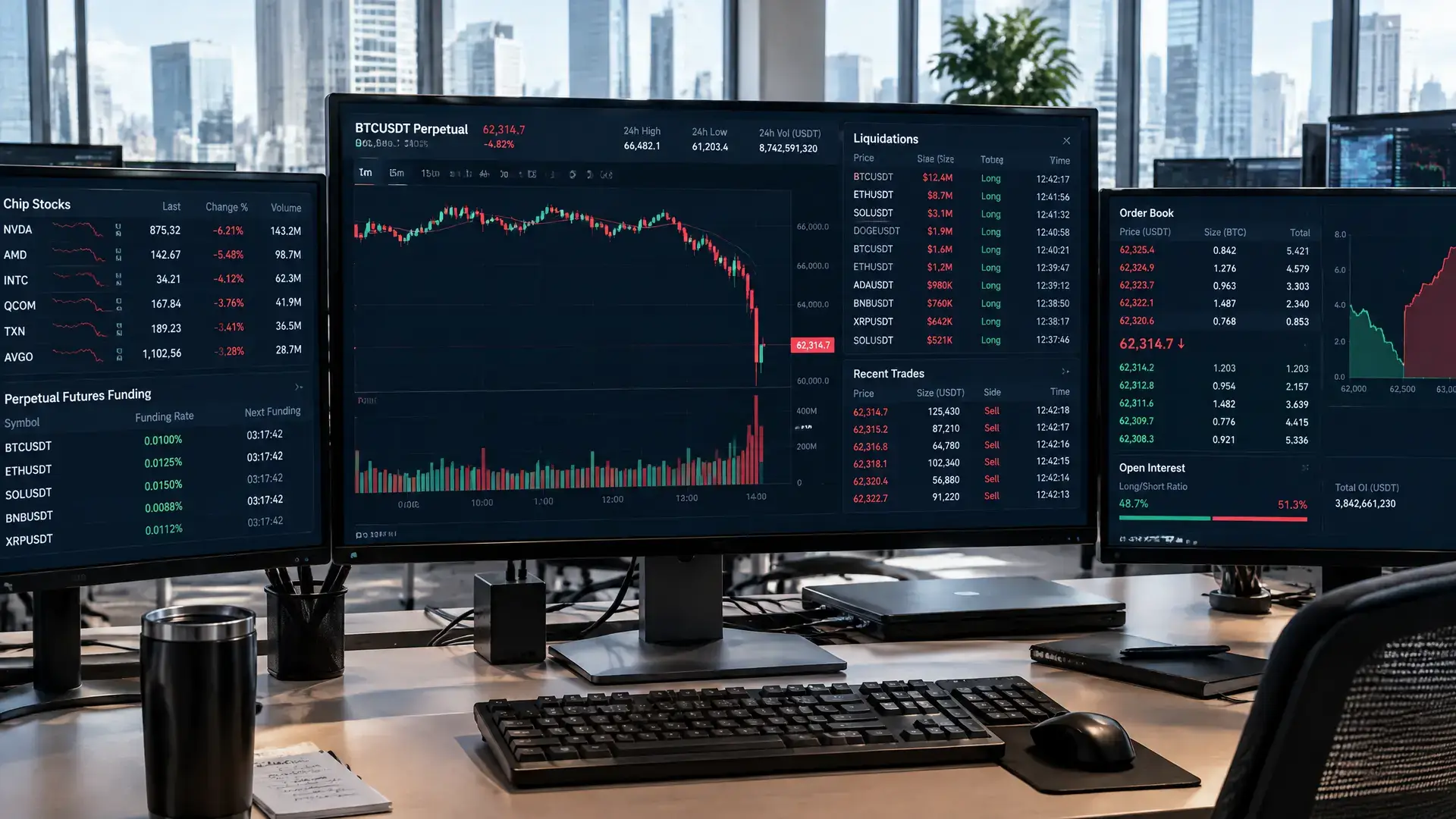
A sudden sell-off wiped out nearly $52 million (€46.2 million) in leveraged positions on chip stocks on Saturday in just ten minutes, while the underlying stocks were quiet for the weekend. These were perpetual futures, a type of contract that can be traded 24 hours a day on crypto exchanges and lets traders speculate on price moves without owning the stocks themselves.
Liquidations in Ten Minutes
According to CoinGlass, between 21:22 and 21:32 UTC about $51.6 million (€45.9 million) in positions on chip stocks and semiconductor funds were force-closed. About $38 million (€33.8 million) of that came from bets on higher prices. SOXL, a fund that triples the daily move of chip stocks, took the biggest hit with about $12.7 million (€11.3 million) in liquidations. Contracts on SanDisk and SK Hynix were also hit hard, with about $10.8 million (€9.6 million) each.
The sell-off started on Binance, according to an analysis of the trades by David Jeong, CEO of trading firm Tread.fi. At 21:21:59 UTC, he placed the first large sell orders on SanDisk and Micron there. Less than a second later, orders appeared on Hyperliquid, where Trade XYZ lists stock-tracking contracts, and within 1.8 seconds about ten addresses opened short positions in six chip-related contracts.
Why This Escalated So Fast
With perpetual futures, even a small move can snowball fast when traders use a lot of leverage. If losses get too large, the system automatically closes positions, which creates extra selling pressure for the next trader in the market. That makes these contracts especially sensitive to fast liquidations, especially when there are few real price signals to fall back on.
Why This Matters for European Readers
For European crypto readers, this shows how far crypto infrastructure now reaches beyond classic coins like Bitcoin or Ethereum. Stock exposure can also be traded 24 hours a day through crypto exchanges, but on weekends there is often no real reference price from the stock market. That makes these contracts vulnerable to sharp swings once traders start reacting mostly to each other's orders.
The move fits into a broader trend where crypto exchanges use perps for Wall Street markets, with products that offer 24/7 exposure to stocks and other traditional assets. On Monday, when the U.S. market opens again, it should become clear how far Saturday's prices moved away from the real stock prices.