Clarity Act Stays Alive as Wall Street Picks Its Crypto Bets
The U.S. market structure bill gets pushed into September, while Fidelity, Goldman Sachs, and Mastercard are mainly focusing on ETFs, staking, and stablecoins.
Key Takeaways
- The U.S. Clarity Act missed the Senate deadline in August, but it gets another chance in September.
- Wall Street keeps embracing crypto selectively through ETFs, staking, and stablecoin infrastructure, while some ETF plans are being scrapped.
- For Europe, this matters because U.S. crypto regulation and institutional choices often help set the tone for the market.
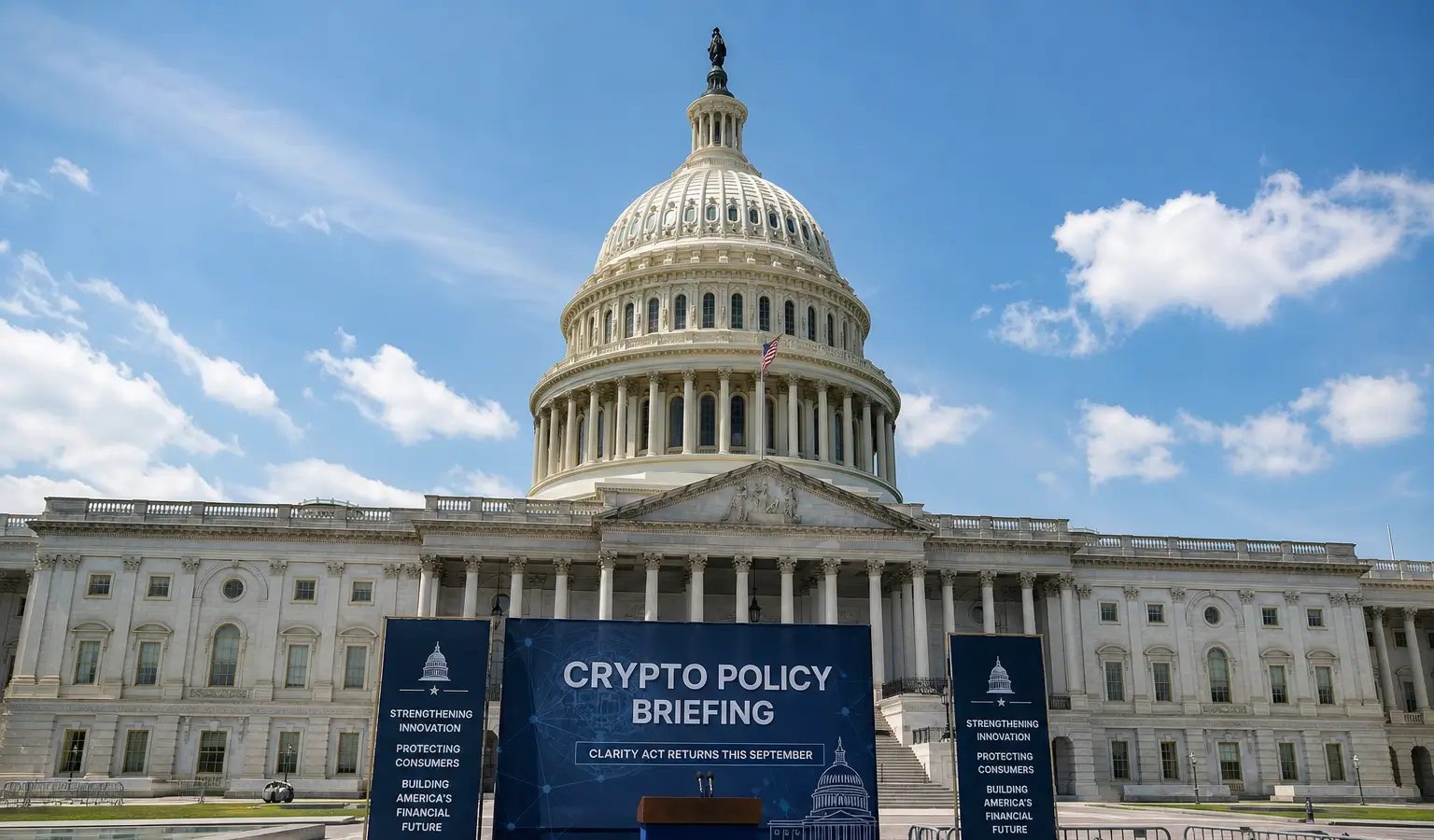
The U.S. Clarity Act missed the Senate deadline in August, but the main crypto market structure bill gets another chance in September. At the same time, the past week shows that Wall Street is still moving deeper into crypto, but in a much more selective way than before, while security incidents and technical disputes keep testing the sector.
Clarity Act Gets a Delay
The Digital Asset Market Clarity Act did not make it through the planned procedural vote before the summer recess. For the industry, that is not a final rejection, but it is a delay in a bill that has for months been seen as the most important attempt to sharpen U.S. crypto regulation.
The bill is meant to make clear how digital assets fall under regulation in the United States. That matters for crypto companies and institutional players, because legal certainty is often a requirement for broader participation by large investors. Based on the context around the bill, that clarity is exactly what is needed to support innovation and capital inflows.
The delay does increase the chance that the debate becomes tougher later on. If the current proposal stalls and lawmakers have to start over next year, Democratic members with a more critical view of crypto could play a bigger role in the next version of the bill.
Wall Street Chooses Selectively
While Washington is still negotiating, the business side of crypto keeps moving. Fidelity wants to add staking and quarterly payouts to its nearly $900 million (€778 million) ether ETF, Goldman Sachs is buying NEOS for $2.25 billion (€1.9 billion), and Mastercard completed its acquisition of stablecoin company BVNK for $1.8 billion (€1.6 billion).
Those deals show that traditional financial firms are not just embracing everything in crypto. They are mainly focusing on areas with a clear business model, such as ETF structures, staking, and stablecoin infrastructure. At the same time, Grayscale scrapped plans for ETFs tied to Cardano, Polkadot, and Hedera, which shows that not every product gets the same shot.
Tokenization also got a reality check. Securitize saw its stock drop 20 percent after its first quarterly report as a public company came in below expectations, despite record activity in tokenized assets.
Why This Matters for Europe
For European crypto followers, this matters because the U.S. still helps set the tone for market structure, institutional adoption, and the way major players package crypto products. If the Clarity Act moves forward, it could affect how international firms shape their U.S. offerings and which standards eventually become dominant.
On top of that, the combination of tougher political tradeoffs and selective institutional demand can also be felt outside the U.S. European firms working with ETFs, stablecoins, or tokenized assets often watch U.S. regulation closely, precisely because it sets the tone for the next phase of the crypto market.
The delay fits into a broader stalemate in Washington. The SEC is also pushing new crypto rules back, leaving the industry waiting longer for clarity on market structure and listing rules.