Zerohash Launches AUTH for Easier Wallet Transfers
The service links wallets and accounts without manually choosing addresses or networks. At the same time, Zerohash is building out its regulated position with a DNB license and MiCAR authorization.
Key Takeaways
- Zerohash launched AUTH to make crypto transfers between linked accounts easier, without retyping wallet addresses or choosing a network yourself.
- The service connects wallets and exchange accounts, handles routing and settlement, and according to Zerohash supports hundreds of integrations.
- Zerohash is also working on licenses; in Europe, the company already has an EMI license from the Dutch central bank.
Zerohash has launched AUTH, a service meant to make moving crypto between linked accounts easier. Users no longer have to retype wallet addresses or choose a blockchain network themselves.
Fewer Steps for Transfers
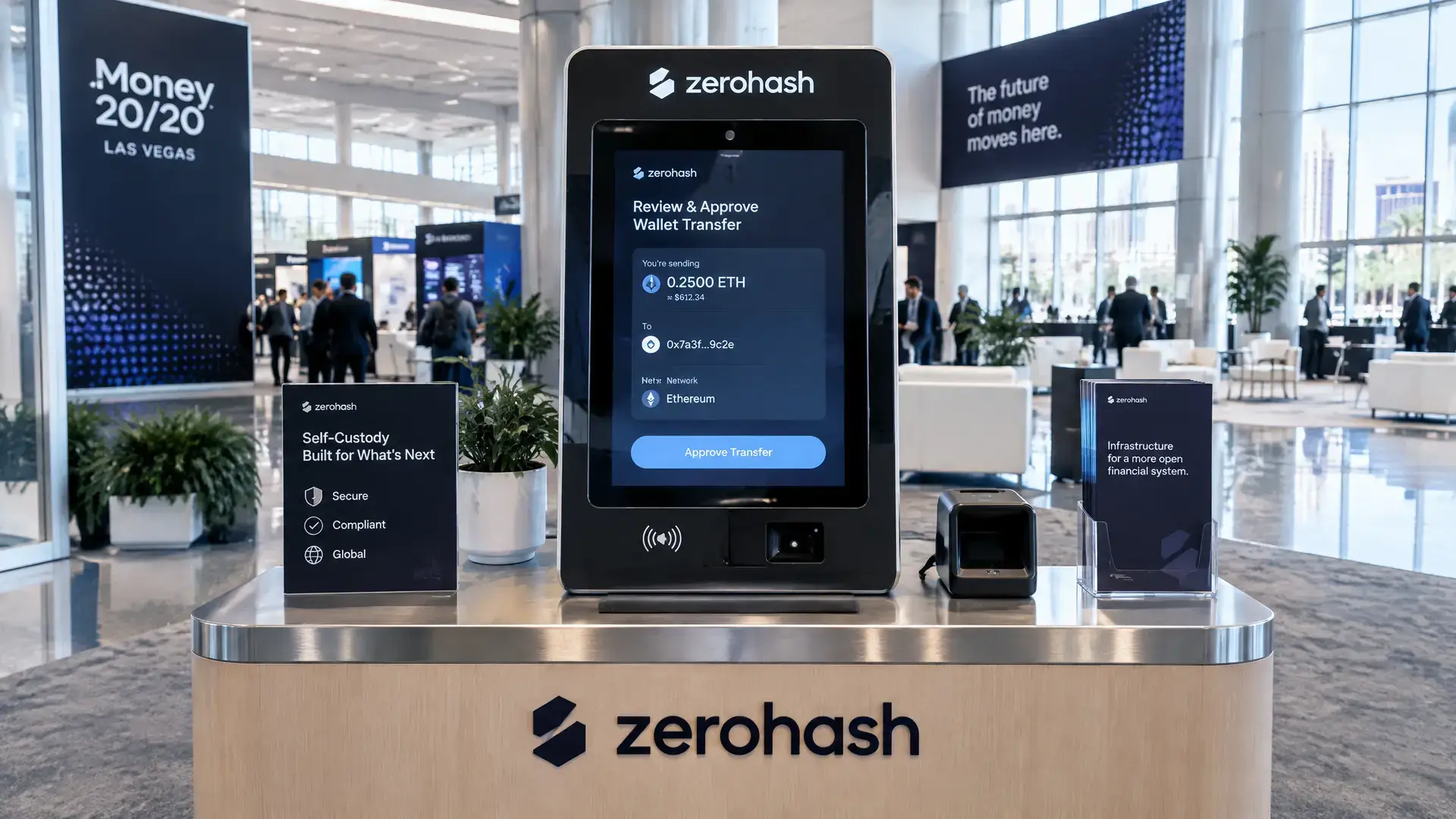
The crypto company introduced the tool during the Money20/20 conference in Las Vegas. AUTH lets users connect an exchange account or a self-custody crypto wallet and then approve a transfer in the app offering the service.
According to Zerohash, AUTH then handles routing and settlement. The app itself decides which assets, accounts, and transfer types are allowed. The company says the service supports more than 600 integrations, including Coinbase, Robinhood, Gemini, MetaMask, and Phantom. The developer documentation lists support for 639 wallets and four exchange or brokerage accounts. Coinbase, Robinhood, and Gemini are live, while Kraken is in beta.
Ryan Beaudry, general manager of AUTH, said onchain rails only become truly scalable once users no longer have to think about the underlying technology. He called ease of use, trust, and control the most important step toward broader adoption.
Regulatory Pressure Still Matters
The launch comes at a time when Zerohash is also working on its licenses. In July, the Office of the Comptroller of the Currency sent back the application for a national trust bank charter because, according to the regulator, it was materially incomplete. The company later called that an administrative step and resubmitted a narrower application on August 18. That application is still with the regulator.
For European crypto users, the most relevant part is that Zerohash already received an EMI license from the Dutch central bank this year. That license sits alongside the existing MiCAR license and shows that the company is trying to further expand its regulated position in stablecoin payments.
Why This Matters
AUTH shows where a lot of crypto infrastructure is heading: fewer manual steps and more connections between wallets, exchanges, and apps. For users, that can be the difference between a clunky transfer and a process that feels more like a normal payment. At the same time, the question remains how quickly these kinds of services will be widely built into apps and platforms that decide for themselves which transfers they allow.