Cronos Rolls Back 10,961 Blocks After Tectonic Hack
Validators rolled back 10,961 blocks to recover $111.2 million after an exploit on Tectonic. The move raises questions about finality and decentralization on Cronos.
Key Takeaways
- Cronos rolled back 10,961 blocks after the Tectonic hack, recovering $111.2 million, about 92% of the affected funds.
- The August 30 attack involved $120.4 million in borrowing activity; $9.19 million stayed out of reach because it had already been moved.
- The rollback also reversed non-attack transactions, fueling the debate over security, decentralization, and finality on Cronos.
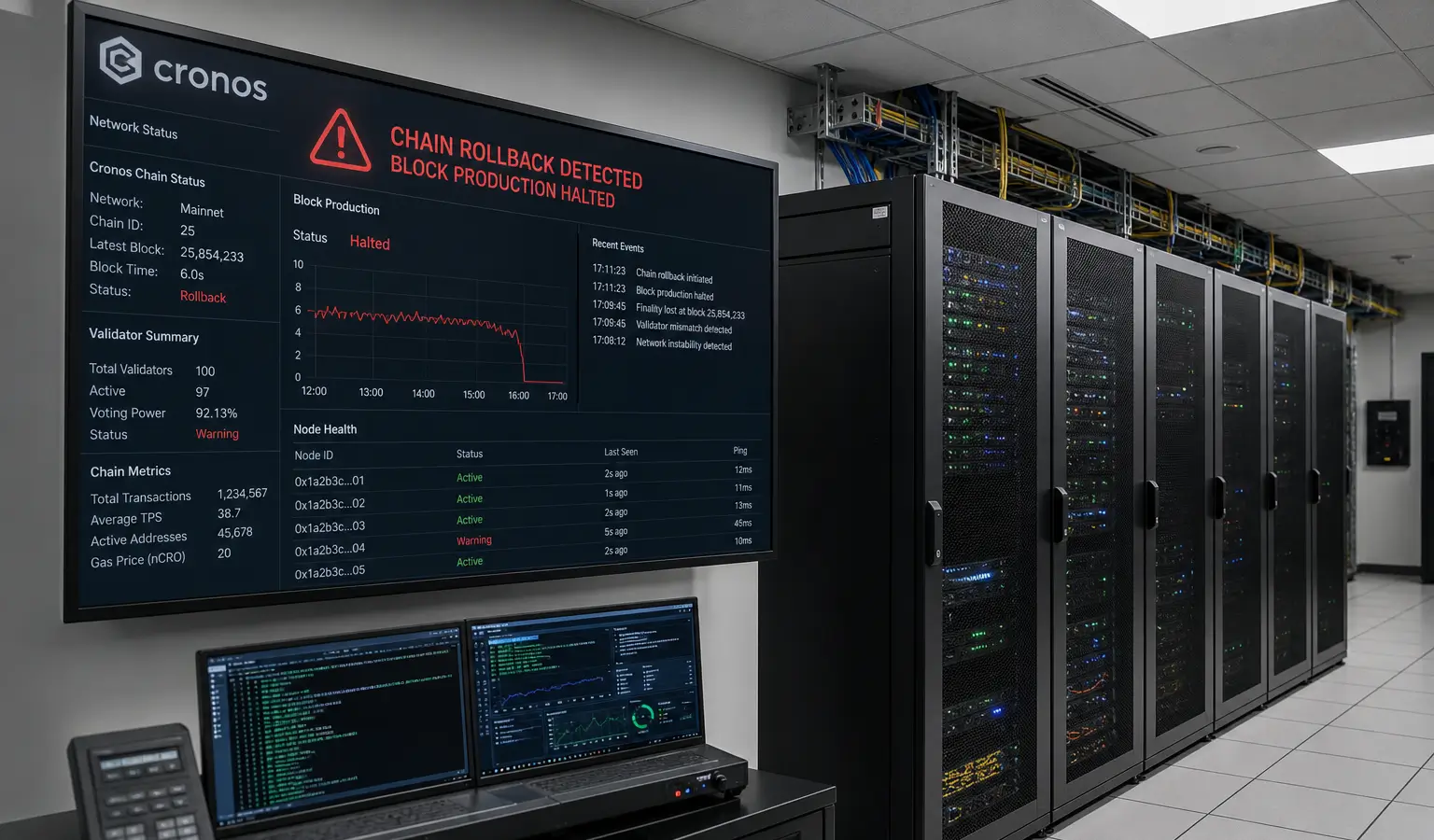
After the hack on lending platform Tectonic, Cronos rolled back 1 hour and 54 minutes of chain history to recover $111.2 million (€95.7 million). According to the network, this was a “hard decision” by validators, who recovered about 92% of the affected funds. The move shows how far a blockchain sometimes has to go to recover stolen crypto, but also how disruptive that kind of recovery can be for users and apps on the network.
What Happened
Cronos said the August 30 attack involved a total of $120.4 million (€104 million) in borrowing activity. That is more than was first believed. When the network was paused on August 31, the estimate was still around $75 million (€64.5 million) in stolen funds.
According to the post-mortem, $9.19 million (€7.9 million), or about 7.6% of the affected funds, stayed out of reach because it had already been moved before the network was stopped. The attacker used contracts and, according to Cronos, pushed the price of TONIC, Tectonic’s native token, up about 100 times in just a few minutes with thin DEX liquidity. After that, $120.4 million (€104 million) was borrowed in a single transaction across nine markets using the inflated collateral.
The validators shut the network down about two hours later and eventually rolled the chain back to the last block before the suspicious activity. Block production resumed about 11 hours after the exploit.
Impact on Users
The rollback meant that 10,961 blocks were reversed. All transactions in that window were undone, including transactions that had nothing to do with the attack. Cronos acknowledged that this caused disruption and said open positions on live apps were repriced when trading resumed.
That matters for users and developers outside Tectonic. A trade, transfer, or smart contract action on Cronos can later disappear from history if validators decide to roll the chain back. Bridges and other apps that already react to a Cronos transaction before that decision is carried out are especially exposed to errors or losses.
Debate Over Finality
The choice fits into a broader crypto debate about security versus decentralization. Rollbacks can recover stolen funds, but they also challenge the idea that a blockchain does not simply change transactions once they are recorded. Critics have long said moves like this put pressure on the reliability of the ledger.
Cronos has a relatively small set of up to 100 validators, which makes it easier to coordinate a halt and restart. That is exactly what made the rollback possible, but it also highlights that finality on the network in an emergency depends on consensus among validators.
Other DeFi attacks also show how quickly a protocol can step in after an exploit. For example, Bonzo Lend on Hedera was hit after an oracle bug sent the collateral price off track, leading to losses of more than $9 million (€7.7 million).