Crypto Falls After U.S. Strikes on Iran
Escalating tensions in the Middle East pushed Brent and WTI higher, while Bitcoin and Ethereum slipped in a broader risk-off move.
Key Takeaways
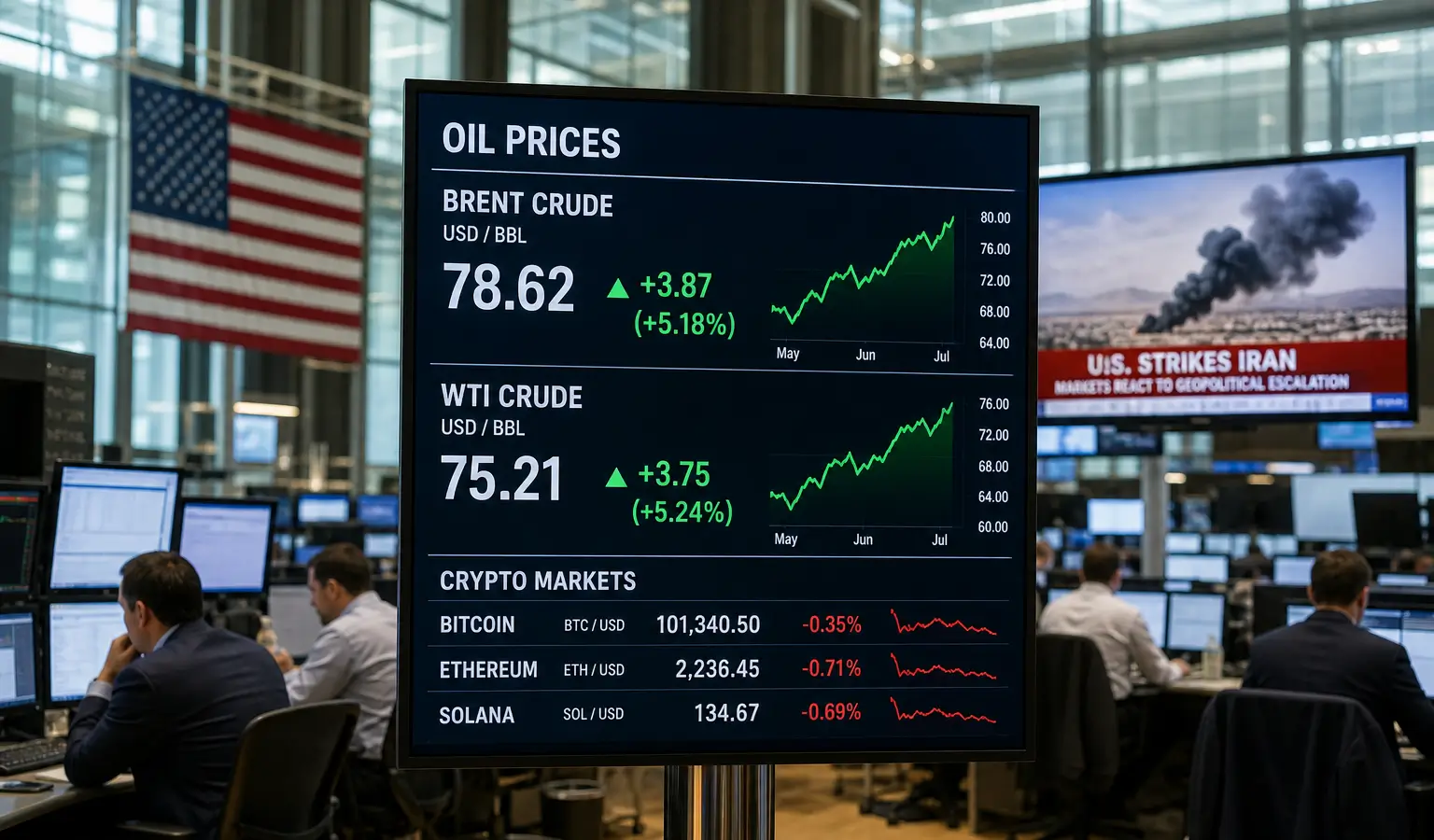
- The crypto market fell 1.24% on Wednesday after the United States launched military strikes on Iran.
- Brent and WTI gained 2.05% and 2.07%, respectively, as tensions in the Middle East intensified.
- Bitcoin and Ethereum edged lower, while the market stayed in risk-off mode amid higher oil prices and renewed inflation concerns.
Crypto markets slipped 1.24% on Wednesday after the United States launched military strikes on Iran. The escalation sent oil prices higher and made investors more cautious on risk assets, even as Bitcoin and Ethereum still held on to much of last week’s strong gains.
Oil Surges Higher
CENTCOM said it struck more than 80 targets in Iran with precision weapons on July 7. The action came after reports that Iranian attacks hit three ships in the Strait of Hormuz, one of the world’s most important oil shipping routes. That has put the Middle East tensions straight into focus for energy markets, where any disruption can quickly move Brent and WTI.
According to Trading Economics data, Brent crude rose 2.05% to $75.68 (€66) per barrel. WTI climbed 2.07% to $71.90 (€63). The U.S. decision to reimpose sanctions on Iranian oil added another layer of pressure, while Tehran said the move was a clear violation of the ceasefire agreement.
Crypto Stays in Risk-Off Mode
Crypto traded with a softer tone. Bitcoin was around $63,551 (€55,600), down 0.59% over the past 24 hours, while Ethereum fell 0.84% to about $1,776 (€1,550). Hyperliquid posted the steepest drop among the top 10, losing 3.38%, with XRP and Solana also under pressure.
The move fits a familiar risk-off pattern that tends to show up when geopolitical tensions rise. Higher oil prices can stoke inflation worries and delay expectations for rate cuts, and that still matters a lot for crypto because liquidity and risk appetite usually react quickly to those shifts.
Why This Matters for Crypto
For European crypto investors, the connection between geopolitics, energy prices, and macro expectations is especially relevant. If oil stays elevated for longer, it could bring inflation and monetary policy back to the center of the debate, and that kind of backdrop often adds extra volatility to Bitcoin, Ethereum, and major altcoins.